
What is a Functional Addict?
A functional addict is a person who may appear to lead a normal and healthy life, but behind the scenes, they may be struggling with a drug or alcohol addiction. From the outside, the person may appear steady, productive and in control. But the substance they are using still causes harm, risk and emotional strain on their mind, body and everyday life.

A substance addiction occurs when a person becomes physically and/or psychologically dependent on drugs or alcohol. It requires the person to continuously fulfill their cravings for euphoria because they can no longer achieve it on their own. Addiction doesn’t just happen overnight. It can take several months or years of abuse to develop. Recreational use or continued regular use of a substance leads to tolerance, which then leads to dependence and can then turn into an addiction.
A 2007 study by the National Institute on Alcohol Abuse and Alcoholism (NIAAA) categorized about 19% of alcoholics into a functional subtype. Recent studies have shown that between 9-13% of C-suite executives have struggled with drug or alcohol misuse. This number could be even higher in other industries. Functional addicts are not easy to recognize. Oftentimes, we miss the signs of addiction making it even harder to diagnose.
What is a Functional Addict?
Functional addiction is a colloquial term. It describes a person who may be in denial about their substance use habits and is unknowingly putting themselves at risk.
A functional addict is someone who has a substance use disorder but continues to function normally in visible areas of life such as work, school, parenting, finances and social obligations. A functional addict will typically be a person who has a great job, loving friends and family and a long list of hobbies, but still heavily relies on substances to make it through the day. High-functioning addicts are great at hiding their addiction and navigating daily life without seemingly letting drugs and alcohol interfere.
The word functional can be misleading. It does not mean the addiction is mild or less serious. It simply means the consequences are hidden, delayed, or occur behind closed doors, where they are not visible to others. Some may be able to keep a job and maintain their daily responsibilities, all the while their health is slowly declining. They may be able to pay bills, while also spending a significant amount of money on substances.
In reality, a functional addiction can look polished on the surface, while the person quietly depends on substances to sleep, socialize, manage day-to-day stress or to avoid withdrawal.
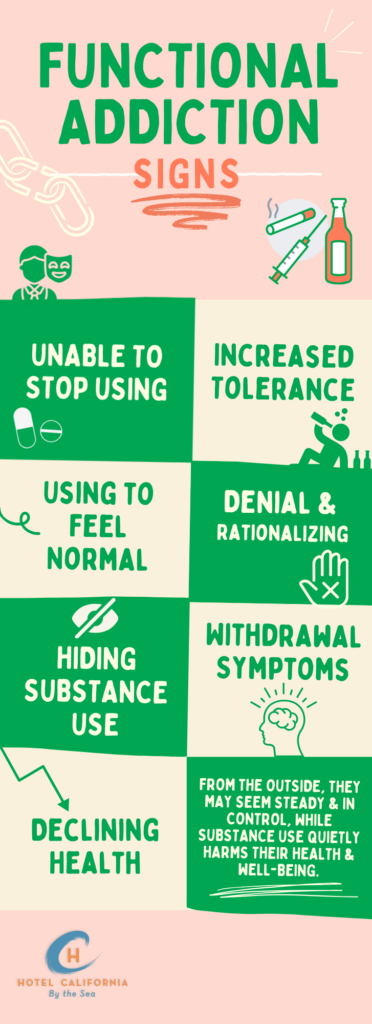
Signs of a Functional Addict
- Unable to stop drug use. People with a high-functioning addiction often still go to work or school and can maintain their daily responsibilities. All the while, they are unable to stop their drug use. They often wait to be used after work, in the car or in the bathroom away from the sight of others. It doesn’t have to be every day. In fact, your drug use can be occasional. But when it comes down to it, you are unable to stop, despite it negatively impacting your health and life.
- Increased tolerance. The frequency and dosage of drug use begin to increase and you need to consume more to experience the desired results.
- Denying and rationalizing. Functional addicts often deny their drug problems because it keeps them from facing the truth. They lack self-reflection and purposefully try not to think about it. They often take great measures to avoid talking to others who are concerned about their behavior and try to rationalize it with the excuse of stress or anxiety. It becomes a justification for using drugs. They will also refuse to get help because “it’s not that bad” and they have not hit rock bottom.
- Hiding and lying about substance use. Functional addicts want to keep up the appearance of not having a problem. They lie to themselves and others about their drug use. They may avoid friends and family while under the influence and lie about their location or their activities. Addicts will also hide their drug use and then attempt to cover up their unusual behavior when it is pointed out by others.
- Worsening health. The symptoms of an addiction may not be as physically obvious in some people. But symptoms like a weakened immune system, brain damage, cardiovascular issues, liver issues, chronic pain and vitamin deficiencies can all be kept hidden in plain sight. Physical characteristics like drastic weight gain or loss and physical exhaustion may be easier to spot.
- Going to great lengths to make family and friends believe everything is ok. Tending to daily responsibilities, hiding physical symptoms, making excuses, and trying to distract from feelings are all signs a person is trying to cover up their addiction. They may even try to gaslight and manipulate others in order to continue hiding their problems.
- Prioritizing success. Functional addicts will prioritize their success and achievements over being healthy. This can mean maintaining financial stability and having a high income, having high social status and a good reputation. However, these things can become more difficult to maintain as the addiction progresses.
- Being around friends who abuse drugs and alcohol. Functional addicts may easily be influenced by others who use drugs. They face peer pressure, lack of support to be healthy and sober, are enabled by other drug users and see a normalization of drug use and addiction.
Check Your Insurance Coverage for FREE
Find out if your insurance covers addiction treatment in minutes. We accept most insurance!
What is a Functional Drug Addict in everyday life?
A functional drug addict is someone whose drug use has become compulsive or dependent, while still maintaining an outward stability to avoid detection. When people ask “what is a functional drug addict,” they are usually trying to understand how the person can appear successful and lead a normal life while still having a serious substance use disorder.
A functional drug addiction can involve prescription medications, stimulants, opioids or cannabis. It might look like a person who never misses a deadline at work but needs to use drugs to get through the day. It could also be a student who gets good grades and does sports but relies on substances to stay awake, calm down or go to sleep. Some typical warning signs include:
- Needing the drug to feel normal rather than occasional or social use.
- Increasing the amount or frequency of drug use in order to experience the same effects.
- Planning life around access to the drugs, even if it may be subtle.
- Becoming defensive when someone starts to express concern about drug use.
- Experiencing withdrawal symptoms like anxiety, nausea, and sweating when not using.
- Taking risks that seem out of character, like hiding drug use from friends and family.
- Losing interest in activities once enjoyed or relationships that matter.
How to help someone who is a Functional Addict
- Serious conversations are more productive when the person is not intoxicated, rushed or publicly embarrassed. Find a private and sober moment to speak to the person about your concern over their drug use.
- Use specific observations. Use examples of what you have seen rather than making broad accusations.
- Avoid arguing over the label. The person might not believe they have an addiction and reject the term used on them. But they may be willing to discuss adjacent issues of stress, health and secrecy.
- Set healthy boundaries. Compassion does not require you to ignore unsafe behaviors like dishonesty or dangerous risk-taking.
- Encourage professional support. A healthcare provider, addiction counselor or treatment program can assess risk and recommend the next steps.
Reach out to Hotel California by the Sea
We specialize in treating addiction and other co-occurring disorders, such as PTSD. Our Admissions specialists are available to walk you through the best options for treating your addiction.
Treatment for Substance Use Disorder
A functional addict is someone who may appear fine on the outside but behind closed doors may be struggling with a serious alcohol or drug addiction. Professional behavioral health programs like Hotel California by the Sea offer treatment for drug and alcohol addiction. We offer treatment at all levels of care including detox, residential, PHP and IOP. We offer evidence-based methods such as CBT, DBT and EMDR therapy. Hotel California by the Sea is dedicated to helping our clients reach their goals in sobriety and overcome their addiction.
References:
https://www.addictioncenter.com/community/10-signs-high-functioning-addict
https://www.addictions.com/blog/9-signs-youre-a-high-functioning-addict
https://recovery.com/resources/functional-addiction-are-you-living-a-double-life
https://www.bicyclehealth.com/blog/high-functioning-drug-users