
Is there a relationship between ADHD and Alcohol Abuse?
Is there a relationship or correlation between ADHD and alcohol abuse? Yes. Several studies have suggested there is a link between the two mental health conditions and that ADHD can contribute to the development of an alcohol use disorder. In fact, they often occur alongside one another, known as co-occurring mental health conditions or a dual diagnosis.

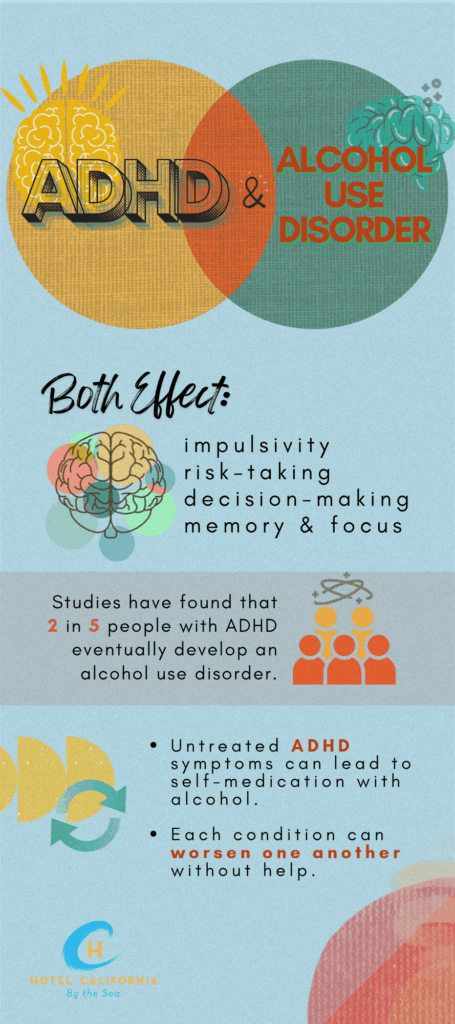
Because alcohol use disorder and ADHD are often co-occurring conditions, they should also be treated simultaneously for an improved outcome. Research has found that almost one in four people with a substance use disorder including alcohol addiction, also meet the criteria for having ADHD. Other studies have found that two in five people with ADHD eventually develop an alcohol use disorder.
However, not everyone with ADHD will go on to have an alcohol use disorder in the future. ADHD is just a risk factor that makes it more likely that a person can develop an alcohol addiction. If you have both ADHD and alcohol use disorder, it is important to work with your healthcare provider to determine which condition came first. This can help you better assess your treatment plan in treating both conditions simultaneously.
What is ADHD?
Attention-deficit hyperactivity disorder is a mental health condition characterized by inattention, impulsivity and hyperactivity. According to the American Psychiatric Association, the rate at which ADHD occurs in children in the United States is between 3 to 7%. ADHD is typically diagnosed during childhood.
Research and studies are now finding that this mental health disorder is one of the many risk factors that can lead to the development of an alcohol use disorder. ADHD can also increase the risk of developing other substance use disorders such as cannabis use disorder, opioid use disorder and nicotine addiction. However, ADHD seems to be most closely associated with the risk of alcohol addiction.
The Effects of Alcohol
Alcohol is a central nervous system depressant. Oftentimes, it is used as a temporary fix for relaxation of the mind and body. It can provide temporary relief from anxiety and other mental conditions. However, with continued use, it can actually worsen mental health problems. Alcohol impacts the frontal lobe of the brain. Research has found that ADHD is also affected by this area of the brain.
Both conditions significantly impact one area of the brain, which makes it more likely that they can have an influence on each other. There are some cases in which ADHD can be a cause of alcohol use disorder.
There are three distinct conditions that must be met in order to demonstrate that ADHD can be a cause of alcohol related issues. All three conditions must be met simultaneously to provide the minimal conditions for demonstrating causation.
ADHD must precede the effect, which is alcohol consumption. ADHD and alcohol use must be correlated. ADHD must be a unique cause of the alcohol related issues that are independent of other variables that could also cause alcohol abuse.
ADHD and Alcohol Abuse: Is There a Correlation?
Early Adolescence and Alcohol Abuse
ADHD is often diagnosed during early adolescence and childhood. It is known that ADHD generally precedes alcohol use. Studies have found that alcohol use during this period can lead to alcohol dependence in early adulthood. Oftentimes, alcohol is used to self-regulate or self-medicate distressing symptoms of ADHD during childhood.
When they are introduced to alcohol, it makes them feel calmer. However, it is only temporary. But the brain associates that temporary calm with a positive association and continues to seek out alcohol in order to manage their ADHD symptoms. This can also be said for marijuana use in teens. Marijuana provides a temporary sense of calm. Because of this, experts have found that marijuana and then alcohol are the top substances of choice when it comes to those who are diagnosed with ADHD.
Ironically, kids and teens with ADHD aren’t really looking to actually get high. In the majority of cases, they are looking for a way to self-medicate and effectively manage their emotions and symptoms associated with ADHD. Because their minds are more hyperactive, impulsive and move at a quicker pace, at times it can be exhausting. These kids and teens will tend to gravitate towards anything that will help decrease the racing thoughts going through their minds.
Check Your Insurance Coverage for FREE
Find out if your insurance covers addiction treatment in minutes. We accept most insurance!
ADHD and Alcohol Use Disorder share similar symptoms and traits
- ADHD symptoms include hyperactivity, impulsivity, poor decision-making, and a constant need for stimulation. Impulsivity and poor decision-making are also common traits put a person at risk for alcohol use disorder.
- People with ADHD are vulnerable to depression, have impairments in educational, occupational and interpersonal functioning. These are also traits for those with an alcohol use disorder.
- People with both ADHD and alcohol use disorder tend to have more severe psychiatric symptoms and are more likely to carry additional mental health diagnoses.
- The effects of ADHD and alcohol use disorder both impact the front lobe of the brain and dampen the person’s ability to think clearly. Research found that scans of a smaller prefrontal cortex in patients with ADHD impact executive functions such as thinking, problem solving, attention, memory and organization. This part of the brain is also affected by alcohol abuse and can negatively impact important executive functions.
Known links between ADHD and Alcohol Abuse
A 2018 study of twins found that more severe forms of ADHD were associated with earlier alcohol use as well as more frequent or heavy alcohol use.
ADHD can increase the risk of binge drinking. People with ADHD were found to be more likely to engage in binge drinking during early adulthood. They were also found to have increased sensitivity to the effects of alcohol compared to their peers who did not have ADHD. They were more likely to experience alcohol effects more intensely even if they consume the same or in lesser amounts than people with ADHD.
Alcohol impairment such as when a person is drunk, can aggravate symptoms of ADHD. including impulsiveness and difficulty focusing. Studies found that long-term alcohol use is associated with impairment of cognition, decision-making, memory and speech. All of which can worsen symptoms of ADHD.
ADHD generally precedes alcohol use and studies have shown that childhood ADHD is a significant risk factor for inappropriate levels of alcohol use and eventually the development of alcohol use disorder.
Reach out to Hotel California by the Sea
We specialize in treating addiction and other co-occurring disorders, such as PTSD. Our Admissions specialists are available to walk you through the best options for treating your addiction.
Treatment for ADHD and Alcohol Abuse
ADHD and alcohol abuse are very closely correlated. One condition has the ability to trigger the development of another. ADHD or alcohol use disorder are often missed or go undiagnosed when treating either one of these conditions. It is important to check for both. The general length of time between the recognition of ADHD and the onset of alcohol use can provide enough time and opportunities for interventions to prevent the development of alcohol related issues.
Hotel California by the Sea provides a comprehensive alcohol use disorder treatment program as well as treatment for co-occurring mental health disorders like ADHD. We offer treatment at all levels of care including detox, residential, PHP and IOP. We utilize evidence-based treatment methods such as CBT, DBT and EMDR therapy. Hotel California by the Sea is dedicated to helping our client reach their goals of sobriety and overcome their alcohol addiction.
References:
https://pmc.ncbi.nlm.nih.gov/articles/PMC6683828
https://www.alcoholhelp.com/resources/dual-diagnosis/alcohol-and-adhd
https://pmc.ncbi.nlm.nih.gov/articles/PMC6370516