
What is the importance of Aftercare Planning?
Addiction recovery is a lifelong process that doesn’t end once rehab is completed. Having an aftercare plan after addiction treatment is just as important as active treatment itself. Aftercare planning is a term used to describe ongoing recovery efforts after the initial drug and alcohol treatment program.

The National Institute on Drug Abuse defines addiction as a medical disorder that affects the brain and can change behaviors. It can affect anyone without discrimination. The most effective method in treating a substance addiction is through a comprehensive treatment program.
Substance use disorder treatment is a powerful tool to help a person reflect, review and make necessary changes to their lives through targeted interventions, medication and evidence-based efforts. Once formal treatment is completed, many patients will continue to need more informal support. An aftercare plan for substance abuse recovery will help clients through barriers, crisis events and drug relapse.
What is Aftercare Planning?
Sometimes, the term aftercare can suggest there may be an end to care. Many professionals now refer to this point in treatment as continuing care or follow up care. However, it is also still universally referred to as aftercare.
Many studies have found that patients who participate in aftercare programs have a much lower rate of relapse and higher levels of overall functioning during their recovery. Continuing aftercare for a longer period can also help keep individuals engaged, producing more consistent and positive results.
The main goal of an aftercare plan after addiction treatment is to actively help the patient build a long-term support system of professionals and resources to continue recovery efforts in the early days of recovery. Therapists, case managers and physicians alike all emphasize the importance of having an aftercare plan. Aftercare programs exist to ensure a patient continues to remain healthy and sober long after formal treatment has been completed.
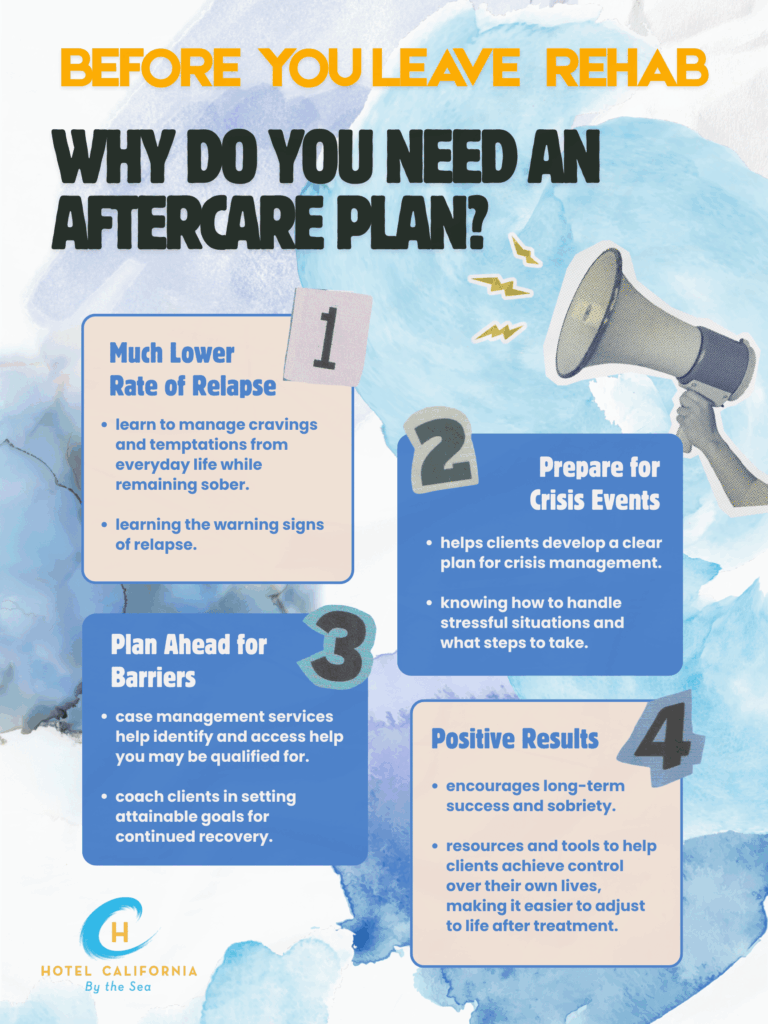
Benefits of having an Aftercare plan for Substance Abuse recovery through Hotel California by the Sea
- We offer resources and tools to help clients achieve control over their own lives, making it easier to adjust to life after treatment.
- We help clients form a social support network of sober peers, community members and therapists.
- We help coach clients in setting attainable goals for continued recovery.
- We offer regular drug and alcohol testing to encourage ongoing abstinence.
- We offer case management services to help identify and access help you may be qualified for.
- We offer financial planning to address specific issues after reentering society after treatment.
- We help clients locate legal advice and support.
- We help clients boost their confidence in their ability to maintain sobriety.
- We help patients learn to manage cravings and temptations from everyday life while remaining sober.
- We offer resources for continuing counseling, therapy and support.
- We make formal treatment more effective by encouraging continued support, which lowers the chance of relapse and encourages long-term recovery.
Check Your Insurance Coverage for FREE
Find out if your insurance covers addiction treatment in minutes. We accept most insurance!
What does an Aftercare plan after Addiction Treatment consist of?
Peer Support Services
Participating in peer support recovery groups is important and considered practical in order to maintain long-term success. Popular recovery groups include Alcoholics Anonymous, Narcotics Anonymous and SMART Recovery. These support groups encourage individuals to attend 90 meetings in 90 days after they have graduated from formal treatment. This helps build a strong and supportive community network.
Professional Support Services
This type of service would include ongoing therapy such as individual and group therapy with a professional therapist, counselor or psychiatrist. Examples of professional support services include medication assisted treatment, psychiatric medication management, family therapy and group therapy.
Patients can also turn to their primary care provider for aftercare services. Regular follow ups from a doctor can also help guide clients to resources and tools during their appointment. Doctors can check up on progress and suggest any prescription medications that may be needed in order to continue sobriety in a safe, healthy and controlled manner. Prescription medication can help reduce cravings and even help manage other mental health issues that may be occurring.
Environmental Support Services
Oftentimes, clients are escaping an environment that triggers or promotes drug use. It can be difficult to find a sober environment at home. Aftercare services can help clients locate a sober and safe environment to continue their recovery efforts once they have left formal treatment. There may be religious support groups willing to help, there are sober living options and some may be able to turn to supportive friends and family for resources.
Sober living homes provide a safe and controlled environment for clients at the beginning of their recovery journey. Clients have a lower chance of drug use, a lower risk of getting into legal troubles and they are able to maintain a steady and reliable job. Having a sober environment is critical when it comes to early sobriety.
Relapse Prevention Planning and Services
Relapse prevention is an important aspect of aftercare planning. It helps clients develop a clear plan for crisis management, knowing how to handle a crisis, learning how to manage cravings and learning the warning signs of relapse.
Many times, individuals struggle to leave a structured treatment setting as they reenter the community. Studies show that an estimated 40-60% of addicts relapse in the first month after leaving rehab. An estimated 85% relapse after the first year of rehab.
Relapse is part of the recovery process. It can happen to anyone. But how we manage and move on from a relapse is what keeps it from happening again. Aftercare planning for substance abuse recovery can help prevent episodes of relapse through writing down triggers, listing out coping techniques, making sure they have a list of emergency contacts, developing and maintaining a schedule and asking for help when needed.
What does Aftercare Planning look like with Hotel California by the Sea?
Some of the most challenging work when it comes to sobriety occurs after rehab addiction treatment. Most people spend an average of 30 to 90 days in formal rehab treatment. After formal treatment, clients are at a higher risk of relapse when they return to the community. At Hotel California by the Sea, we are dedicated to helping our clients achieve sobriety as well as continuing to maintain a healthier lifestyle through aftercare planning.
Hotel California by the Sea, our treatment program works with clients to help them prepare individualized aftercare plans for when they leave treatment. We encourage and help our clients maintain individual therapy such as CBT and DBT. We also suggest incorporating other types of continuing therapy such as family therapy.
We encourage joining a peer-supported addiction recovery group as well as participating in our alumni support meetings. This is a meeting where former clients from our substance use disorder program can get together, talk, discuss and share their struggles and support with one another.
Our main goals for aftercare recovery with Hotel California by the Sea are to help clients find ways to prevent relapse, help clients find a renewed sense of purpose, help clients learn to change their behaviors and outlook on addiction, help clients find the necessary support services and help clients build a solid foundation to continue a sober lifestyle.
Reach out to Hotel California by the Sea
We specialize in treating addiction and other co-occurring disorders, such as PTSD. Our Admissions specialists are available to walk you through the best options for treating your addiction.
Are you ready for Addiction Treatment at Hotel California by the Sea?
Aftercare planning is a map of how to manage the challenges of daily life outside of treatment when a person is new to recovery from substance addiction. It is an important step that is part of the ongoing treatment for drug addiction. Professional behavioral treatment programs like Hotel California by the Sea work with clients to help them recover and maintain sobriety through aftercare planning.
We offer treatment at all levels of care, including detox, residential, PHP and IOP. We utilize evidence-based treatment methods such as DBT, CBT and EMDR therapy. Hotel California by the Sea is dedicated to helping clients achieve long-term sobriety.
References:
https://www.addictioncenter.com/rehab-questions/aftercare-plan
https://pmc.ncbi.nlm.nih.gov/articles/PMC2670779
https://zinniahealth.com/substance-use/levels-of-care/aftercare-programs