
What to pack for Rehab: A Checklist
Taking that first step to rehab will be one of the bravest decisions you can make. Once you have made that choice, smaller ones that can overwhelm you include: “What to pack for rehab.” It’s normal to feel anxious about it. Deciding what to bring can be an empowering way to prepare yourself for the journey ahead.

In 2019, more than 4.2 million Americans received treatment for substance use disorder and entered into drug residential rehab programs. According to the 2021 National Survey on Drug Use and Health, over 70 million Americans have admitted to having a substance use disorder or mental health problems. Substance use disorder is a common disorder where many people seek treatment through inpatient residential treatment programs.
Your time spent in rehab is meant to be free of distractions, triggers and temptations. The last thing you want to do is have something you brought be a hindrance to your addiction disorder and prevent you from getting the most out of your treatment. Oftentimes, residential rehab programs have their own policies about what to bring and what not to bring.
Typically, when you arrive at a rehab and begin the admissions process, the team will inspect your bags and belongings to make sure there are no prohibited items being brought in. Some places have a packing checklist for clients. And for some uncertain items, it is best to contact them directly beforehand to ask if it is ok to bring.
What to pack for Rehab
Comfortable Clothing
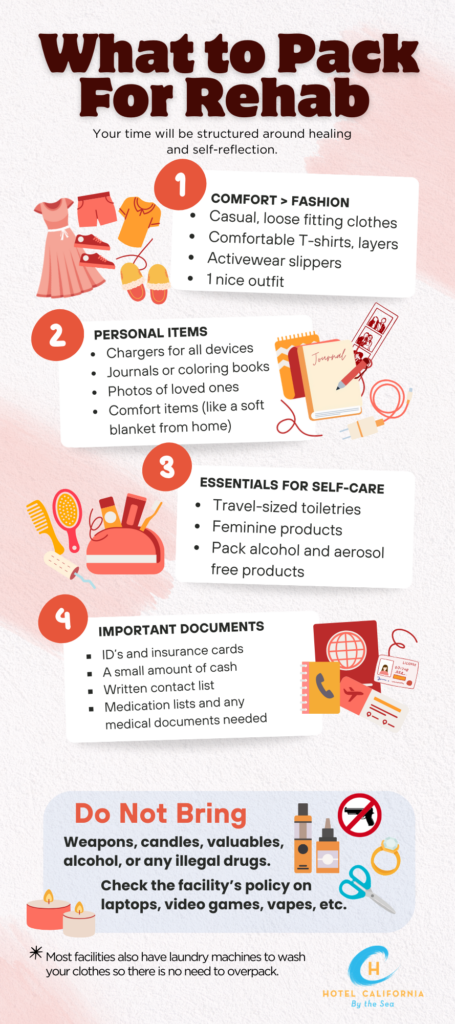
When packing, it is best to prioritize comfort over fashion. Your time in rehab will be structured around healing and self-reflection. The last thing you want is to be distracted by restrictive and uncomfortable clothing. Most residential rehab stays last around 30 days or longer. Most facilities also have laundry machines to wash your clothes so there is no need to overpack.
- Tops – A mix of casual t-shirts and long-sleeved shirts, along with a few sweatshirts for layering if it gets cold. Don’t forget a weather-appropriate jacket.
- Bottoms – Think sweatpants, yoga pants or loose-fitting shorts.
- Workout/Activewear – Bring a few pairs of appropriate clothing for exercising or physical activities if you plan on using fitness facilities.
- Socks, Underwear and PJ’s – Its always good to have some extras
- Shoes – Comfortable everyday shoes, sneakers for physical activity and slippers/flip flops for indoor use.
- One “nicer” outfit – One or two dressier outfits for special occasions like family visit days.
Essential Toiletries
After clothing, toiletries are the most personal items you’ll need to pack. But there are rules and policies around these items designed to keep everyone safe. The most important rule: no products that contain alcohol. This helps to keep a substance-free environment for everyone, which is essential for the early stages of recovery.
A common policy is that all personal hygiene products must be alcohol free and aerosols are not permitted. Things like spray-on deodorant or hairspray are typically prohibited because their contents can be misused. Bring non-aerosol alternatives like stick deodorant and pump sprays.
Some programs require products to be new and sealed for safety reasons to make sure the product is what it says it is. It ensures the products have not been tampered with.
- Deodorant
- Toothbrush and toothpaste
- Shampoo and conditioner
- Hair brush
- Hair styling products
- Feminine hygiene products
- Lotion, sunscreen and makeup
Important Documents and Paperwork
The list of required documents is short and simple. Before treatment, gather these few items into a folder to make sure you can easily hand them to the intake staff upon admission.
- A list of names, addresses and numbers of the people you wish to be involved in your treatment. This can be friends, family and healthcare providers.
- Your ID or driver’s license
- Your insurance card
- Prescription card for medication and information on them, including name of medications and dosages
Check Your Insurance Coverage for FREE
Find out if your insurance covers addiction treatment in minutes. We accept most insurance!
What should you leave at home?
Knowing what to leave behind is just as important as knowing what to bring. The list of prohibited items is meant to ensure the physical and emotional safety of all clients within the treatment facility. It helps to create an environment where you can completely focus on your recovery without outside distractions.
Do NOT bring the following:
- Weapons
- Drugs, alcohol, narcotics, non-prescribed medications or other illegal substances
- Aerosols, nail polish remover, mouthwash or any products containing alcohol
- Cleaning supplies
- Candles and incense
- Laptops, tablets and video games. You can verify with your specific treatment facility
- Offensive clothing
- Vape or cigarettes may be banned in some facilities, but it is best to check in with your specific treatment program
- Cell phones are often allowed but clients may only have access to them at certain times
- Valuables
The most common question is about cell phones. If you do bring your phone, it will most likely be checked in and stored in a secure place, allowing you limited access to it. This is to help clients effectively disconnect from daily life stressors and triggers. You will be most focused on your treatment. The best way to find out what you can and cannot bring is to check in with your treatment program.
Miscellaneous things to consider bringing to Rehab
It’s normal to want to bring things that will bring you a sense of comfort while you are away from home. However, it is important to choose things that will help support your recovery efforts and not distract from them.
- Credit card or a small amount of cash just in case
- Notebook or journal – Can give you a private space to reflect and process your experience
- Photos of loved ones – Can be a positive and powerful reminder of your motivations
- Current prescription medications in the original bottle
Reach out to Hotel California by the Sea
We specialize in treating addiction and other co-occurring disorders, such as PTSD. Our Admissions specialists are available to walk you through the best options for treating your addiction.
Are you ready for Treatment for Substance Use Disorder?
The simple act of packing for you is the first step towards treatment that can be empowering. You are preparing yourself for important work free of distractions and setting yourself up for a smooth admission and focused start.
Professional behavioral treatment facilities like Hotel California by the Sea provide programs that treat substance use disorders and co-occurring mental health conditions. We offer treatment at all levels of care including detox, residential, PHP and IOP. We utilize evidence-based methods such as CBT, DBT and MAT. Hotel California by The Sea is dedicated to helping our clients reach their goals of sobriety and overcome their addiction.
References:
https://www.addictioncenter.com/rehab-questions/what-to-bring-to-rehab
https://rehabs.com/blog/packing-for-rehab-what-should-you-bring
https://www.sanastowe.health/blog/what-to-bring-to-rehab-your-inpatient-treatment-packing-list