
How long can you stay Drunk?
You stop drinking at midnight, but when your alarm goes off early the next morning, there is still a lingering fog in your head. How long can you stay drunk after your last drink? Is it possible that you might still be intoxicated from last night? Unfortunately, a night of heavy drinking can leave you just as impaired into the next afternoon.
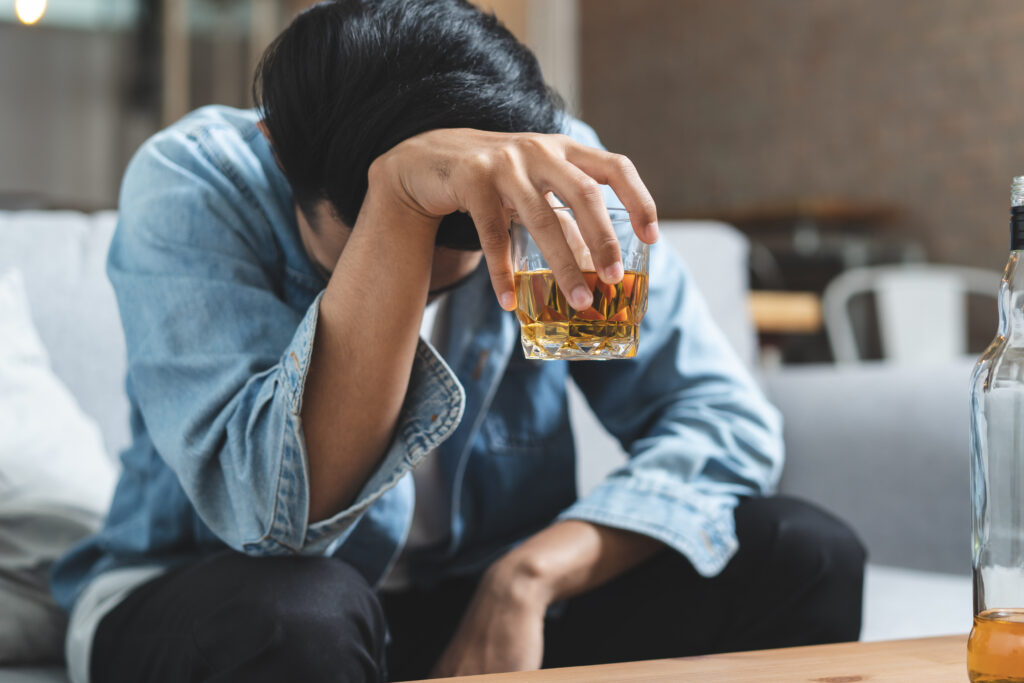
It can take anywhere from 14 to 45 minutes for the average person to feel the full effects of an alcoholic drink. Basically, you can get drunk fairly quickly. Symptoms like cognitive dysfunction, reduced coordination and sedation are all signs of intoxication.
Most people consider themselves to be drunk when their judgment has been impaired, they have lowered alertness, slurred speech and difficulty concentrating. When you are drunk, it is a sign your body is busy processing alcohol at a fixed rate that, despite all the tips, tricks and hacks, cannot be sped up no matter what.
On average, it takes the body about one hour to process one alcoholic drink. How long you stay drunk is dependent on many different factors. One of them includes the average rate of alcohol metabolism. Other factors include how much a person drinks, the type of alcohol they are consuming and personal biological factors. Ultimately, how long you can stay drunk is a matter of biology rather than willpower.
The Phases of Alcohol Intoxication
- During the first phase, drinkers will experience reduced awareness of information processing and visual acuity. They may come off as more self-confident, have a shorter attention span and be more impulsive and careless. Their blood alcohol content level ranges from 0.01 to 0.12%.
- In the next phase, drinking will experience reduced muscle coordination, difficulty understanding and remembering things and experience slow reaction time. Their BAC level ranges from 0.09 to 0.25%.
- During the next level of intoxication, drinkers will experience confusion about where they are, may be highly emotional, unable to control their movements and have slurred speech. Their BAC level ranges from 0.18 to 0.30%.
- During the stupor phase, drinkers are no longer responding to stimuli; they are unable to stand or walk and are probably experiencing nausea and vomiting. Their BAC level ranges from 0.25 to 0.50%.
- In the next phase, drinkers are prone to coma, unconsciousness, lowered body temperature, slowed breathing and slowed heart rate. Their BAC level ranges from 0.35 to 0.50%.
- A drinker with a BAC of 0.50% or more will experience a shutdown in their autonomic nervous system and will likely succumb to death.
The legal drinking limit for alcohol is a person who has a BAC of 0.08%. At this rate, it can take up to 5 hours for a person to return to full sobriety. At a BAC of 0.15%, they are considered severely impaired and it could take up to 10 hours to return to sobriety. A BAC of 0.20% or more is considered blackout level, where it can take up to 13 hours or more to return to sobriety.
Why your Liver is the most powerful factor in how long you can stay Drunk
Your liver is basically the body’s clean-up crew. It has strict limits on how much it can handle at once. Whether you sip on a single beer or down three shots of liquor, the metabolic rate at which your liver processes the alcohol will move at the same pace. If you drink more or faster, the alcohol will just build up and create a backlog in your bloodstream. This is when you experience the feelings of drunkenness.
Your liver is the only organ that matters when getting sober. It handles about 90% of the body’s alcohol elimination. It works at a constant rate regardless of your body size and cannot be sped up by external factors. In fact, it gets less efficient as you age.
The biological speed limit handles about one standard drink per hour for the average person. It is often referred to as the “zero-order metabolism.” Your heart rate speeds up when you exercise. However, your alcohol metabolism rate per hour ignores all external efforts.
You may notice friends drinking the same amount as you, but they seem far less affected. This isn’t just because their liver is working faster. It is because their body is filtering the alcohol differently, along with other factors that determine how long you stay drunk and when alcohol leaves your system.
How long can you stay Drunk?
After you stop drinking alcohol, your BAC can continue to rise for up to 90 minutes. This is because the alcohol in your stomach can still be absorbed while your liver is working to catch up. This delay is peak intoxication, which means that your highest BAC level can occur after you’ve stopped drinking.
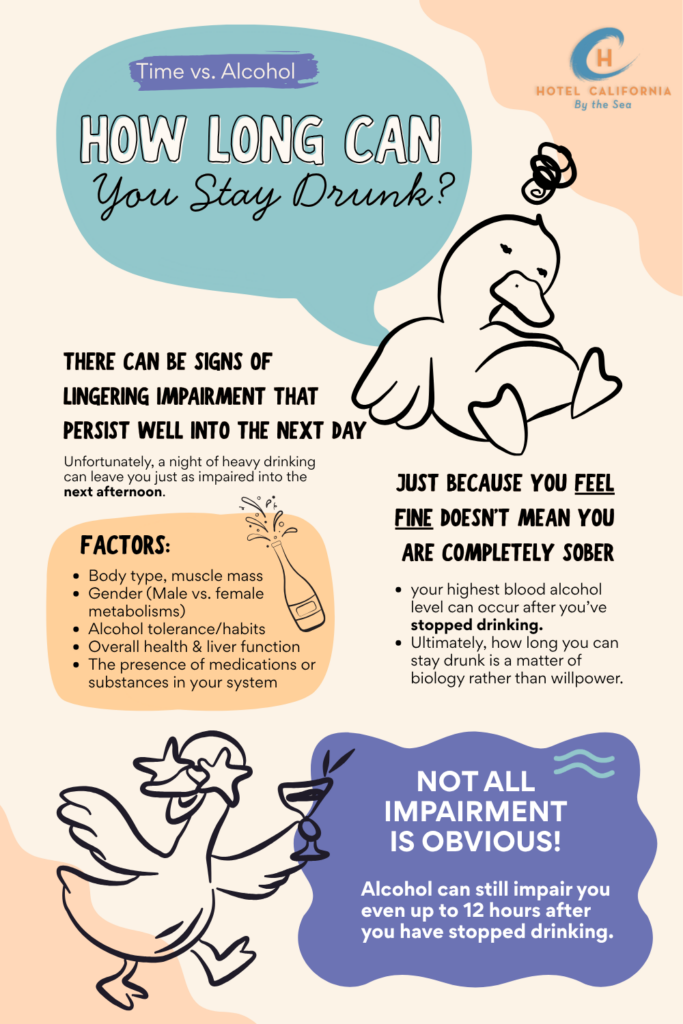
Not all impairment is obvious. Not all impairment is obvious. But being drunk significantly impacts your abilities compared to being sober. Very few people realize that alcohol can still affect you even up to 12 hours after you have stopped drinking.
Check Your Insurance Coverage for FREE
Find out if your insurance covers addiction treatment in minutes. We accept most insurance!
Why do people process Alcohol differently?
Alcohol enters the bloodstream within minutes of ingestion. There are many different environmental and biological factors that influence how people process alcohol. Common factors include alcohol tolerance, overall health, body size, gender, how fast you are drinking and the presence of other medications and substances in your system.
Body composition impacts how long you can stay drunk. A person with higher muscle mass can dilute alcohol more quickly compared to a person who has higher body fat. Fat tissue tends to hold on to alcohol longer and, therefore, results in alcohol lingering in the body for longer, contributing to ongoing intoxication.
Males and females have different metabolism speeds. Female bodies contain less total water and higher fat concentration. They also have fewer active enzymes in their stomach lining that break down alcohol. This results in women experiencing higher intoxication levels than men, even when consuming the exact same amount of alcohol.
Having food in your stomach while drinking alcohol can slow down the absorption rate and make you stay drunk longer. The food acts as a blockade that allows alcohol to slowly make its way through your system. You cannot speed up the liver’s metabolism rate, but these variables can change how intense your intoxication is and how long you can stay drunk.
Why feeling fine isn’t the same as being sober
Just because you feel fine doesn’t mean you are completely sober. The alcohol buzz has faded so many assume that it has left your system. While you may feel confident enough to drive, your body is still on a strict timeline of when your BAC reaches legal limits and alcohol has been eliminated from your system.
Functional tolerance can further complicate the perception of being sober. A seasoned drinker might not slur their words at 0.08% BAC, but their ability to brake suddenly for a pedestrian is just as compromised as that of a new driver.
Even when levels of impairment drop, there can be signs of lingering impairment that can persist well into the next day.
Reach out to Hotel California by the Sea
We specialize in treating addiction and other co-occurring disorders, such as PTSD. Our Admissions specialists are available to walk you through the best options for treating your addiction.
Treatment for Alcohol Use Disorder
Alcoholism is a dangerous disease. You can stay drunk for much longer than expected based on many different factors. If you are looking for help with your alcohol consumption, Hotel California by the Sea provides the resources, tools and support clients need to address their relationship with alcohol.
We offer treatment at all levels of care including detox, residential, PHP and IOP. We utilize evidence-based methods such as CBT, DBT and EMDR therapy. Hotel California by the Sea is dedicated to helping clients reach their goals in sobriety and overcome their addiction.
References:
https://www.medicalnewstoday.com/articles/how-long-does-being-drunk-last
https://www.healthline.com/health/how-long-does-being-drunk-last
https://www.addictioncenter.com/alcohol/how-long-is-alcohol-in-your-system
https://www.chooseyourhorizon.com/blog/how-long-does-drunk-last
https://www.verywellhealth.com/how-long-does-it-take-to-sober-up-8638111