
How to stay Sober
It takes more than willpower to maintain sobriety. Embarking on this journey requires dedication and a willingness to change for the better. Staying sober isn’t just about abstaining from substances. It is about embracing a new way of life. There are many effective strategies built around how to stay sober.

Addiction to substances is both biologically and socially motivated. Research has found that relapse rates of alcohol use disorder go up about 62% within the first year of sobriety. The numbers are similar to those with substance use disorders. On average, it can take a person up to 8 years of trying to get sober before they reach their first year without drug use.
The more tools and resources you have at your disposal, the better you will become at identifying triggers and managing stress. Building a strong support system and developing coping mechanisms will also help empower you in recovery.
Although setbacks and relapses are common in addiction treatment, sobriety is a long-term practice and takes continued efforts.
Understanding Sobriety
Sobriety is more than not drinking or using drugs. It is about healing your mind and body by building a positive future. It’s important to recognize that it is not a one-size-fits-all process. Every person’s recovery journey is unique.
Some key components to a successful recovery include developing self-awareness and understanding of personal triggers, building new and healthy relationships, and continuously setting and working towards personal goals.
Understand that addiction is a chronic condition. It requires continuous management and commitment. Relapse is a part of recovery. Just know that it is not a sign of failure, but an opportunity to learn and grow.
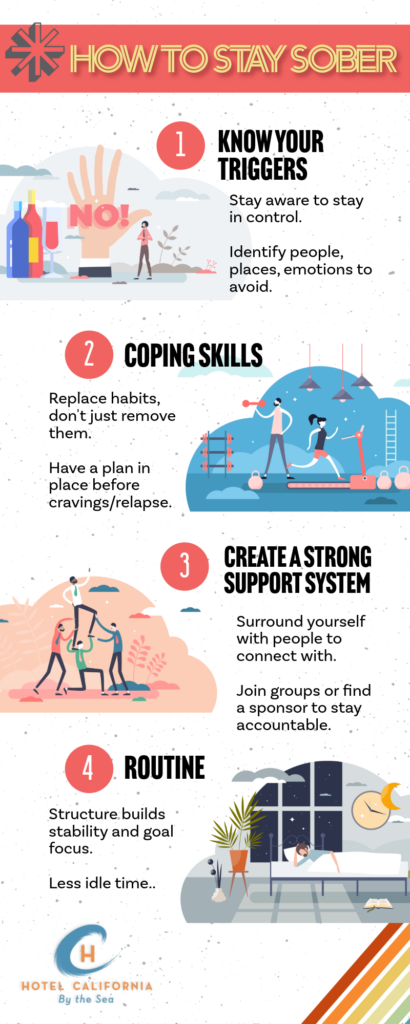
Effective Strategies on how to stay sober
- Know your personal triggers. Understand your external triggers. They can be things like places, things and situations in which you associate with your addiction. Internal triggers can include feelings, thoughts, and emotions you associate with your addiction. Once you identify them, you can create a plan to prepare for them. Other triggers can include emotional stress, environmental cues, people who do drugs or relationships with certain people.
- Recognize the warning signs. Relapse can begin before you even pick up a glass of alcohol. There are three phases of relapse: emotional relapse, mental relapse and physical relapse. Warning signs can include a return to addictive thinking patterns, engaging in impulsive behavior, looking for situations that involve drug use, and irrational thinking.
- Avoid old routines and habits. Avoid hanging out with old friend groups who were associated with your drug use. Change your route to work or home to avoid triggers like people or places that make you want to use again.
- Build health relationships and get support. Consider joining a support group, getting a sponsor, building a sober community and spending more time with people who care about you and your well-being.
- Develop a structured schedule. Structure and routine are helpful in helping you achieve your goals and maintain sobriety.
- Practice healthy living. Regular exercise, find new activities and hobbies, eat well, get plenty of sleep and practice relaxation and meditation.
- Professional support. Individual therapy, group therapy and counseling can provide important components to recovery. Clinical tools and methods used can help patients navigate challenges during sobriety.
Identify and manage triggers
Recognizing triggers is critical in maintaining sobriety. Triggers can include anything from people, places or situations that provoke cravings for drug use. Common triggers include social gatherings where alcohol is present, emotional highs and lows or stressful work settings.
Once you have identified your triggers, set up a plan to manage them. This might include avoiding certain environments or practicing stress relief techniques. Develop effective strategies to handle these triggers. You can practice mindfulness or seek out professional support to help you maintain control.
Develop healthy coping mechanisms
Building healthy coping mechanisms is key to staying sober. These strategies can help you manage stress and emotions effectively. It reduces the urge to use substances. It’s important to build a set of diverse coping skills by exploring different techniques and finding which one works best for you.
Some effective coping mechanisms include daily exercise and physical activity to release tension, mindfulness and meditation, engaging in arts and crafts or connecting with nature, like walking outside or gardening. The goal is to have an arsenal of skills that you can turn to when you become triggered.
Check Your Insurance Coverage for FREE
Find out if your insurance covers addiction treatment in minutes. We accept most insurance!
Build a strong support system
A strong support system is essential to maintaining long-term sobriety. Your community provides the foundation for both emotional and practical support. When surrounding yourself with people who understand and encourage your journey, it can make a huge difference.
Key elements for a strong support community include trusted family members who respect your journey, friends who encourage sober living and positivity and support groups that offer shared experiences, understanding and accountability
Create a structured daily routine
Having a structured daily routine can significantly aid in maintaining sobriety. A well-planned day minimizes idle time, which then reduces the risk of engaging in harmful habits. Consistency provides stability.
Your routine should be realistic and cater to your needs and goals. This allows for predictability to help you focus on constructive activities. Sticking to a routine helps you create a foundation for sobriety. It can help build positive habits and ensure each day contributes to your recovery journey.
How to help a family member stay sober
If you have a loved one in recovery, there are many ways you can help them in their sobriety journey. By focusing on creating a recovery home environment and maintaining open and non-judgmental communication, addicts and families in recovery thrive when working together. Sobriety is not a solo journey. It requires consistency, community and the right clinical tools to maintain sobriety.
- Understand their unique recovery plan. There is no one-size-fits-all when it comes to recovery. Understanding your loved one’s specific recovery framework and supporting them is important. This may be a 12-step program or an IOP.
- Build a recovery environment. Help eliminate environmental cues that can trigger the brain’s reward system. Clear the space by removing alcohol from the home. Encourage physical wellness and social connection by attending sober-friendly events with your loved one.
How to navigate social gatherings
Navigating social gatherings can be difficult and challenging. It’s important to plan ahead for these environments and circumstances. Knowing your limits can help you handle the pressure.
Be honest with yourself. You know there is a possibility of alcohol being around. Think about it and prepare for it rather than being caught off guard. You may even want to suggest a change in venue or activity. If you don’t feel comfortable, you can always opt out.
Prioritize where you go and who you spend time with. Prioritize the most important relationships with those who support your well-being and sobriety.
Practice saying no. Practicing what to say in advance can ease anxiety. A simple no is clear and firm. This avoids any misunderstandings.
By preparing for social situations and setting boundaries, you can safeguard your sobriety.
Reach out to Hotel California by the Sea
We specialize in treating addiction and other co-occurring disorders, such as PTSD. Our Admissions specialists are available to walk you through the best options for treating your addiction.
Treatment for Substance Use Disorder
No one ever plans on becoming an addict. It is a disease that can affect anyone. Sobriety is a lifelong process that yields the greatest results in the addiction and recovery journey. Professional behavioral health programs like Hotel California by the Sea provide substance use disorder treatment.
We offer treatment at all levels of care including detox, residential, PHP and IOP. We utilize evidence-based methods such as CBT, DBT and EMDR therapy. Hotel California by The Sea is dedicated to helping our clients and overcoming their addiction.
References:
https://www.verywellmind.com/tips-for-staying-clean-and-sober-67900
https://www.cnn.com/2023/11/02/health/staying-sober-matthew-perry-wellness
https://projectcourageworks.com/how-to-help-someone-stay-sober/