
Is Tizanidine a Narcotic?
Muscle relaxants like tizanidine help treat conditions of cramping and tightness of muscles caused by medical issues such as multiple sclerosis or spinal injury. It is considered a central nervous system depressant that works to slow down brain activity and produce muscle-relaxant effects. Some depressant drugs, like morphine, are narcotics. Is tizanidine a narcotic?
Tizanidine is not a narcotic or a controlled substance. It does not create euphoric effects. But because it acts on the central nervous system, when misused, it can still cause the development of a physical dependence. It is a prescription medication that can cause symptoms of drowsiness, dizziness and extreme fatigue. These are all similar characteristics of a powerful opioid medication.
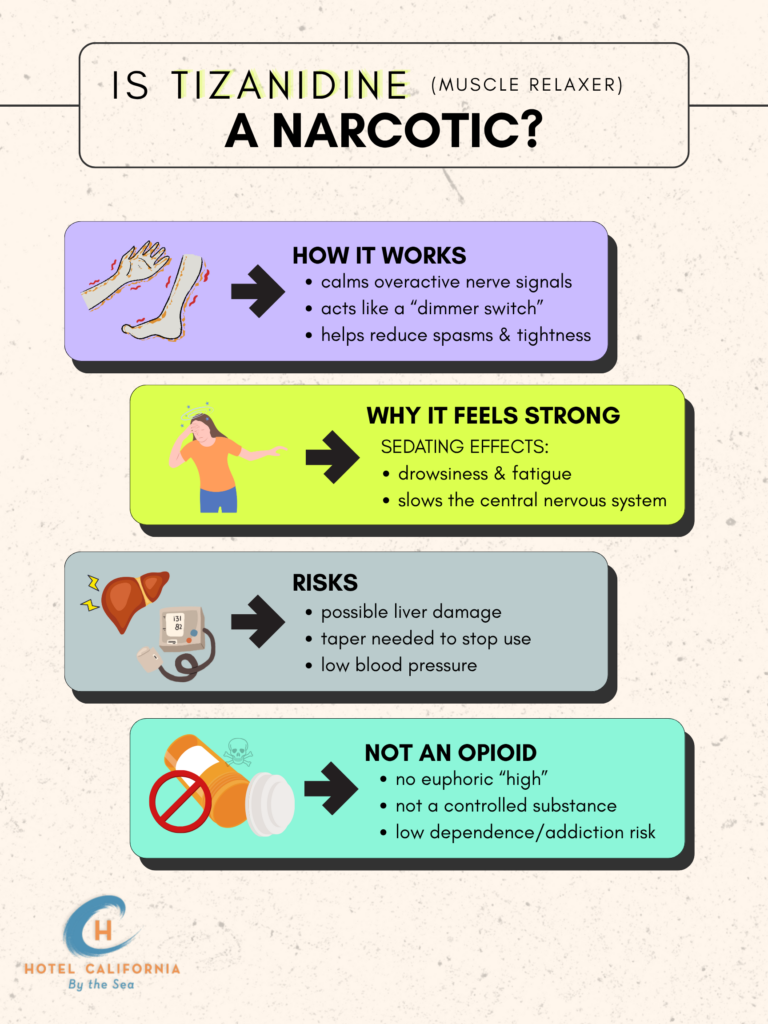
The drug was first approved by the FDA in 1996 and is classified as a skeletal muscle relaxant. Rather than completely numbing out the pain in the body as an opioid drug would, it acts more like a dimmer switch on the nerves. It works to block overactive signals in the spinal cord that cause painful back spasms, tightness and locked muscles.
According to pharmacists, the main reason why many people assume a connection between tizanidine and narcotics is because of the heavy sedation it can produce. It calms the nerve signals in the body so much so that you might feel like you took a strong allergy pill.
Muscle Relaxants and Tizanidine
Muscle relaxant medications are prescription medications. They generally fall into two main categories. Antispasticity medicines work on the spinal cord or skeletal muscles to improve muscle stiffness and spasms. Antispasmodic medicines impact the central nervous system and are typically prescribed for treating conditions such as low back pain and muscle spasms.
The nerves in your body control muscle movement. Sometimes those neural pathways fire too quickly. Tizanidine quiets the chaotic signaling through the alpha 1 adrenergic agonist mechanism of action. The medication acts like a dimming switch to turn down the overactive spinal signals, causing your muscles to painfully lock up.
It works by essentially reducing the activity of the nerves in the spinal cord that cause muscles to tighten and contract. This reduction in electrical signals flowing from the brain down to the muscles helps to control muscle tension and allow them to relax. It is available in both immediate-release and extended-release formulations.
Tizanidine is the generic form of the brand-name medications Ontralfy and Zanaflex. The muscle relaxant mimics the neurochemical norepinephrine at specific receptor sites. The medication typically takes effect in a few hours after initial ingestion. The duration of the effect can last anywhere from 3 to 6 hours. The drug can remain in your system for up to 13 hours.
Conditions treated by Tizanidine
- Multiple sclerosis spasticity – muscle stiffness and spasms that interfere with movement and daily activities.
- Spinal cord injury – muscle spasms and increased muscle tone resulting from damage of spinal cord
- Cerebral palsy – muscle tightness and spasticity
- Stroke recovery – muscle tightness and spasticity that affect movement and posture in people
- Stroke recovery – post-stroke muscle spasms and increased muscle tone that limit mobility during rehab
- Brain injuries
- Muscle strain injuries
- Chronic back pain
- Neck and shoulder tension
Narcotics vs Muscle Relaxants
When a doctor prescribes a strong pill for your back, you naturally assume it’s a heavy painkiller. However, there are some big differences between the two medications. Opioids like oxycodone bind directly to the opioid receptors in the brain to act like a blanket to block out the pain signals. Tizanidine ignores pain centers completely and instead focuses on quieting down overactive nerves in the spinal cord.
The two medications operate on different pathways. Narcotics aim at the brain’s pain receptors, while tizanidine focuses on spinal nerve signaling. The goal of opioids is to artificially numb your perception of pain, whereas muscle relaxants physically loosen the cramped tissue to provide relief. Narcotics trigger a chemical high that can create severe addiction risk, while tizanidine lacks the euphoric feelings with a lower potential for abuse.
Is Tizanidine a Narcotic?
No, tizanidine is not a narcotic. The DEA places drugs with high risks of addiction, like opioids or stimulants, into the controlled, scheduled category of drugs. Tizanidine is simply a standard prescription-only medication. It requires medical supervision to ensure proper dosing, but there are no heavy legal restrictions placed on the drug.
This means there is a very low abuse potential for the drug. It only quiets down overactive nerves rather than flooding the brain with euphoria and the potential to trigger dangerous cravings.
Even though it is not a scheduled drug, it is still a powerful relaxant that causes significant sedation. Though not common, the effects of the drug can put some at risk for drug misuse and abuse.
Check Your Insurance Coverage for FREE
Find out if your insurance covers addiction treatment in minutes. We accept most insurance!
Side Effects and Risks of Tizanidine
- Chest pain
- Fever
- Chills
- Nausea
- Blurred vision
- Itchy skin
- Difficulty breathing
- Risk of drop in blood pressure
- Risk of liver damage
- Risk of withdrawal
If you suddenly stop taking tizanidine after a long period of time, it can trigger withdrawal symptoms. These symptoms can include rebound muscle spasms, high blood pressure, anxiety, increased heart rate, shaking and sweating. Withdrawal can begin within 12 to 24 hours after the last dose. Gradual tapering is the most effective way to come off treatment.
Why can’t you quit Tizanidine cold turkey?
Tizanidine acts quickly and your body will also quickly adapt to its presence. This is a physical dependence. It is different from an addiction. You will not crave the medication, but your nervous system has become chemically adjusted to it.
In order to safely stop using the drug, it is recommended to consult with a medical professional for help.
Consult with your doctor. Discuss your timeline. This is important when navigating interactions with a central nervous system depressant. Taper your dose. Gradually reducing your daily intake over the course of days and weeks based on medical instructions, can lessen withdrawal symptoms. Monitor your blood pressure. Watching closely for unexpected spikes during the transition.
Safely tapering off the medication protects your heart and cardiovascular system, allowing your body to readjust smoothly.
Reach out to Hotel California by the Sea
We specialize in treating addiction and other co-occurring disorders, such as PTSD. Our Admissions specialists are available to walk you through the best options for treating your addiction.
Treatment for Substance Use Disorder
Like other muscle relaxants, tizanidine can cause extreme sedation, leading some to believe it is a narcotic. Though they produce similar effects, they are not the same and treat pain differently. Tizanidine carries a low risk for addiction and users can still develop a physical dependence on the drug. Professional behavioral health treatments like Hotel California by the Sea provide support for those who have developed a dependence and addiction to substances.
We offer treatment at all levels of care including detox, residential, PHP and IOP. We utilize evidence-based methods such as CBT, DBT and EMDR therapy. Hotel California by The Sea is dedicated to helping clients reach their goals in sobriety and overcome their addiction.
References:
https://www.mayoclinic.org/drugs-supplements/tizanidine-oral-route/description/drg-20066921
https://alpaswellnesscenters.org/is-tizanidine-a-narcotic
https://www.singlecare.com/blog/is-tizanidine-a-controlled-substance/