
How long does alcohol fatigue last?
After a night of drinking, you fall asleep the minute your head hits the pillow. But when you wake up, you feel more exhausted, like you just ran a marathon in your sleep. How long does alcohol fatigue last? This delayed slump is more than just a typical bad night of rest.
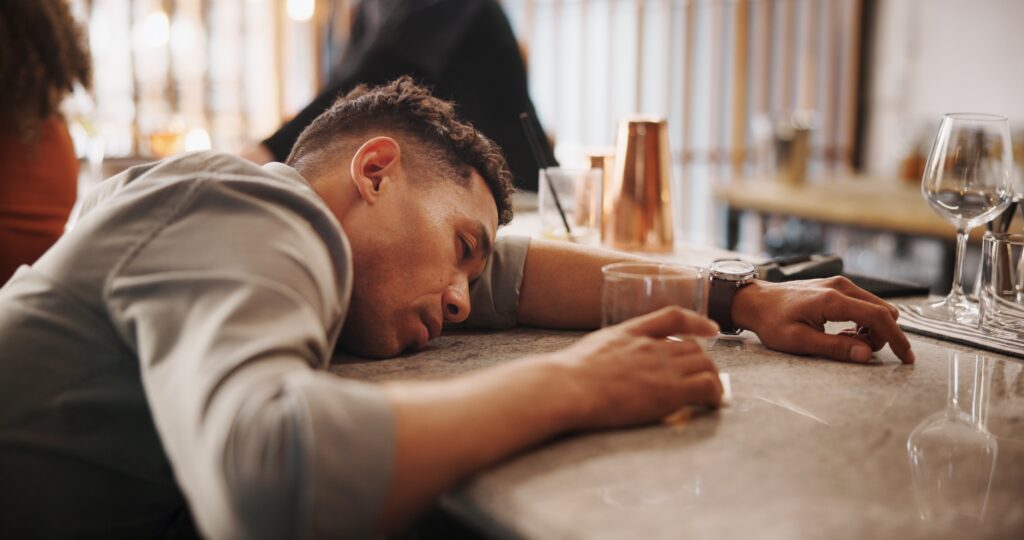
According to health experts, processing those weekend drinks can force your internal system to work overtime to flush it out. This severe fatigue after drinking is a result of your organs being exhausted from performing emergency metabolic clean up.
People with substance use disorder or alcohol use disorder often experience alcohol fatigue or what is also known as sobriety fatigue. It is a condition that causes tiredness of the mind and body due to prolonged alcohol or drug use. It is typical for those in early recovery to experience this type of fatigue and may struggle as their body’s adjust to life without substances.
Alcohol and Fatigue
Is there a relationship between alcohol and chronic fatigue?
Alcohol is a depressant that slows down your brain and nervous system. It can also cause sleep issues such as sleep apnea and insomnia. It disrupts your sleep. Alcohol may initially make you feel relaxed and drowsy, making you fall asleep fast. But it is not a deep, restful sleep often followed by interrupted bladder issues and even nightmares.
Alcohol fatigue syndrome is not an official medical diagnosis. It is a common term to describe the deep tiredness and brain fog people often feel after drinking alcohol or when they stop after heavy alcohol misuse.
It is often linked with early sobriety. Many factors link alcohol and fatigue. Alcohol fatigue can cause sleep to feel light or broken, you wake up with low motivation, you have difficulty focusing and you can experience headaches and body aches. Alcohol drains you of energy in many ways. It wrecks your sleep, alcohol dries you out, and alcohol throws off your blood sugar and stress levels.
Alcohol fatigue is the feeling of both physical and mental exhaustion that commonly occurs when a person who has been drinking for a long time stops drinking.
How long does Alcohol Fatigue last?
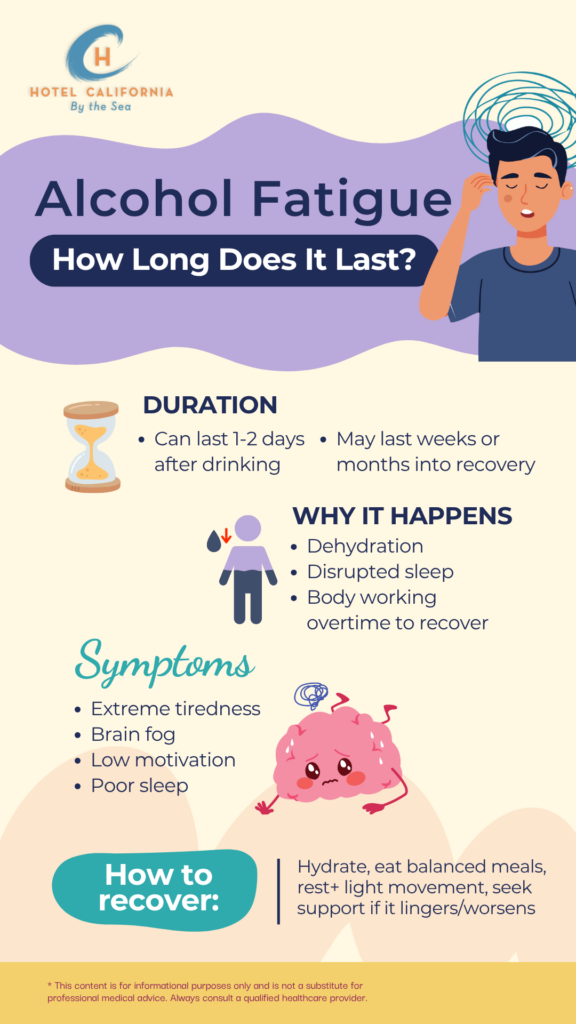
The duration of post alcohol fatigue looks different for each person. It can last anywhere from days after a bad night’s sleep to months if the person is experiencing alcohol use disorder. Other factors, such as how the person manages their symptoms, the severity of alcohol addiction, and if the person has received support when quitting, are all important when it comes to the duration of alcohol fatigue.
The first 12 hours after you stop drinking are referred to as the Acute Phase. During this time, you may experience withdrawal symptoms like sweating and nausea along with dehydration as your liver works overtime to clear out the toxins from your body.
During this next phase of Metabolic Processing, the body begins to clean up the residual byproducts of alcohol. But even after your withdrawal symptoms begin to fade, your body can enter what is known as a metabolic slump, which is another dip in energy caused by your organs working extra to restore itself to baseline function. Many organs and systems are working hard and fast to expel all the alcohol from your body. This can cause heavy, full-body fatigue to set in.
In the last phase, this is when the system works to rebalance itself without the presence of alcohol. Brain chemistry and internal hydration levels start to stabilize. In cases where alcohol fatigue can linger on for longer, it is due to factors such as poor sleep, poor nutrition, high stress, trauma, medical issues and the use of other substances.
Check Your Insurance Coverage for FREE
Find out if your insurance covers addiction treatment in minutes. We accept most insurance!
Signs you are developing Alcohol Fatigue Syndrome
- You feel extremely tired and have a strong desire for sleep.
- You experience slurred speech, impaired motor skills and coordination, which can lead to difficulty articulating words when speaking.
- You have impaired cognitive function. Poor concentration, memory lapse and slow thinking all contribute to cognitive functioning.
- Restless sleep as a result of waking up multiple times in the middle of the night and low sleep quality.
- Low motivation due to feeling slow, fatigue and unable to concentrate.
- You are experiencing emotional mood swings, irritability and emotional detachment.
- You may have increased anxiety and experience depressive episodes.
Why does Alcohol Fatigue happen?
Alcohol can do a lot of damage to the body, including inducing chronic fatigue. Alcohol accounts for an estimated 10% of cases of persistent insomnia. Alcohol can relax the throat muscles that worsen sleep-related breathing problems and contribute to conditions such as sleep apnea. Alcohol can also increase urination at night, which constantly wakes you up so you never get into your REM sleep cycle.
When you drink alcohol, your brain, liver and hormones have to work overtime to repair the damage to the body. During this time, you can feel exhausted, have low energy and are often unable to think clearly through the brain fog.
Alcohol can also change blood pressure and heart rate, which again only makes it so your organs like your heart, have to work extra hard to repair damage and bring themselves back to baseline functioning.
Strategies on how to treat and manage Alcohol Fatigue
A massive cup of caffeine won’t cure your alcohol fatigue. In fact, it might make it worse. What will work is replenishing and refueling your body with essential nutrients for a boost of energy.
Drinking water mixed with sodium and potassium to replenish your electrolytes can help your body rehydrate and refuel your sluggish cells.
Eat oatmeal or whole-grain complex carbohydrates to help rebuild your depleted blood sugar levels. Paring lean protein with complex carbs can also provide the steady glucose your body desperately needs after all of that alcohol consumption.
Alcohol heavily flushes out crucial energy-producing vitamins like vitamin B- complex. Replacing them through food and supplements can help your liver process any remaining toxins.
Daily movement and exercise can help circulate fresh oxygen without over-exhausting your already recovering system.
Temporary exhaustion usually resolves itself within a day or two of proper care. But when it starts bleeding into the entire week and your recovery timeline keeps getting longer and longer, it is time for professional help. Alcohol fatigue may have developed into long-term chronic fatigue.
Reach out to Hotel California by the Sea
We specialize in treating addiction and other co-occurring disorders, such as PTSD. Our Admissions specialists are available to walk you through the best options for treating your addiction.
Treatment for Alcohol Use Disorder
Alcohol fatigue is a condition in which those who have abused alcohol over a long period of time can feel physical and psychological exhaustion. It is caused by a combination of many factors associated with alcohol use disorder. Professional behavioral treatment programs such as Hotel California by the Sea provide tools and resources to help clients manage their alcohol fatigue.
We offer treatment at all levels of care including detox, residential, PHP and IOP. We utilize evidence-based methods such as CBT, DBT and family therapy. Hotel California by The Sea is dedicated to helping clients reach their goals in sobriety and overcome their addiction.
References:
https://step1recovery.com/what-is-alcohol-fatigue-syndrome
https://www.health.harvard.edu/mind-and-mood/alcohol-and-fatigue
https://www.novarecoverycenter.com/alcohol-abuse/alcohol-fatigue-syndrome-quitting-drinking
https://recovered.org/treatment/the-treatment-process/sobriety-fatigue