
What percentage of homeless people are Drug Addicts?
The number of unhoused people increases every year. And one of the most common questions raised by policymakers, community members and other advocates is, what percentage of homeless people are drug addicts?
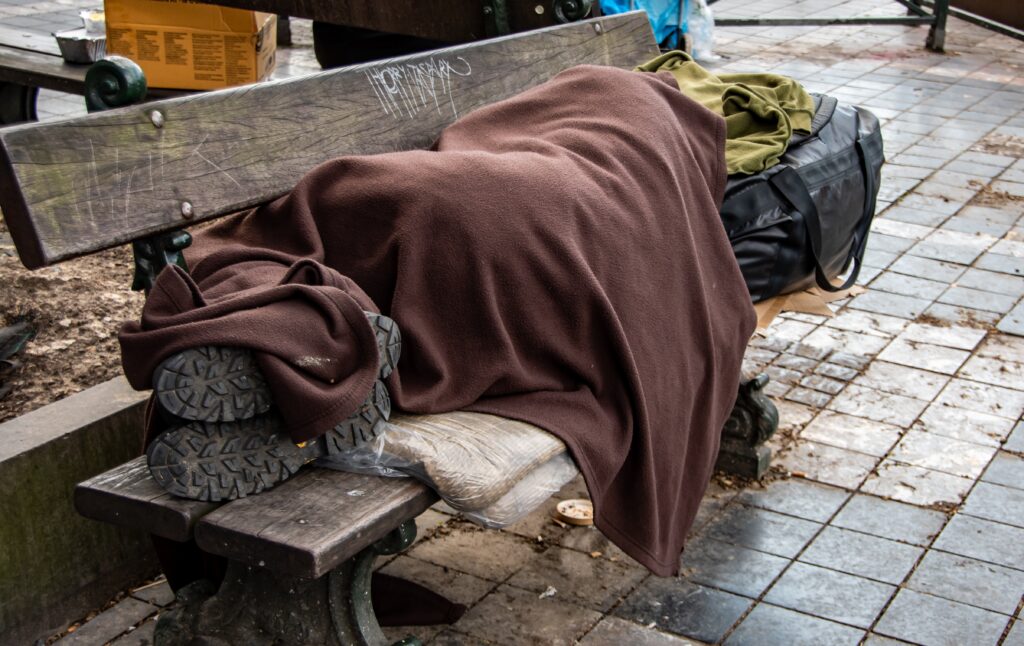
Homelessness is a term used to describe someone who doesn’t have a permanent residence. It is often associated with living on the street or living in a car. Some individuals also live in shelters or in transitional housing. According to the National Alliance to End Homelessness, in 2020, more than 500,000 individuals in the United States were considered unhoused on a nightly basis.
Homelessness and substance abuse often go hand in hand. Factors such as systemic failures, psychological trauma and economic hardship all contribute to the combination of homelessness and drug addiction. The reality of homeless drug addiction is very complex and understanding the root causes and the relationship between housing instability and substance use can be the first step towards an effective solution.
The Statistical Reality
To really understand what percentage of homeless people are drug addicts, we have to closely look at the data. This number might be a surprise to some. The public perception often assumes that most if not nearly all of unhoused people are battling some sort of substance addiction. Data and research show a much different picture.
According to various surveys, research and the latest stats from the Substance Abuse and Mental Health Services Administration, about 30% to 40% of homeless people struggle with substance addiction. This means the majority of unhoused people do not have a drug addiction.
A 2022 annual homeless assessment report found that over 122,000 people who were unhoused were suffering from a severe mental illness. Mental illness and substance use disorder often overlap and can be catalysts for one another. The report also found that over 30,000 homeless youth and young adults in the US are commonly victims of substance addiction and polydrug use.
What percentage of Homeless people are Drug Addicts?
The percentage of homeless people who are addicted to substances is far less than people realize. Research has found that about 65% of people experiencing homelessness reported using illicit drugs at some point in their lives. Despite the high number of those who have used illicit and recreational drugs, only about 38% of all homeless people abuse alcohol. About 26% of all homeless people abuse drugs.
In some cases, those who are unhoused who are trying to come off their addiction to drugs, are unable to receive help and treatment due to their living circumstances. Financial issues and access to mental health care contribute to the reasons why some unhoused individuals suffer from substance addiction.
The relationship between Addiction and Homelessness
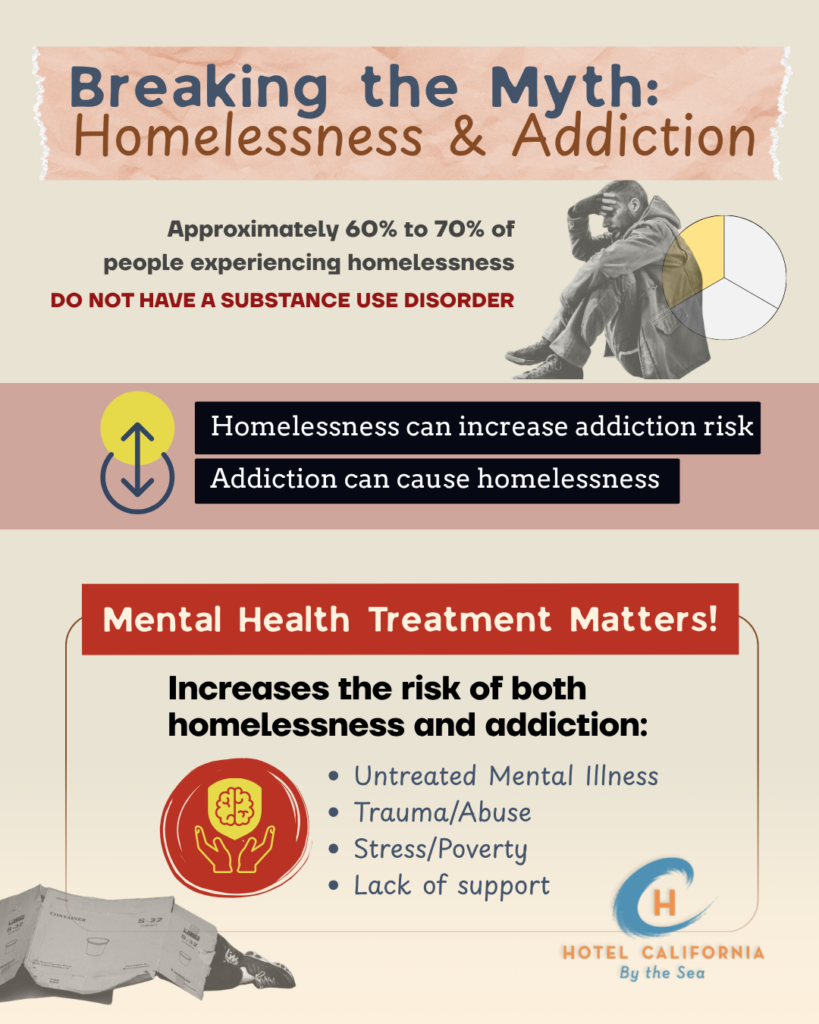
Does addiction cause homelessness or does homelessness cause addiction? It can go both ways. In some people, addiction is the catalyst for homelessness. Severe substance abuse can lead to job loss, strained relationships with friends and family, depleted finances and ultimately eviction from their home. An example of this is during the opioid crisis, when prescription painkillers and illicit opioids began to devastate communities. Many people found themselves stripped of their livelihood and homes.
In other cases, homelessness may come first. The trauma of losing a home, combined with the harsh and dangerous reality of sleeping on the streets, can lead people to seek comfort in chemicals as an escape. Drugs and alcohol become a coping mechanism to endure extreme temperatures, physical pain, fear and isolation.
Abusing substances can increase the risk of homelessness. Becoming homeless also increases the risk of becoming dependent on illicit substances. The two conditions have a close relationship and often go hand in hand.
Main Causes of Homelessness and Substance Addiction
- Self-medication for stress and trauma. Homelessness is often accompanied by stress, exposure to traumatic events and untreated mental health conditions. This creates a cycle of self-medication, which quickly turns to substance addiction.
- Social Isolation. Oftentimes, unhoused people lack social support networks like family and close friends. This increases the risk of substance abuse.
- Co-occurring mental health disorders. Mental health conditions like depression and anxiety are highly prevalent in homeless populations.
Meth and Homelessness
Studies have found that methamphetamine seems to outpace opioids when it comes to the most used substances among the homeless population. This may be due to the fact that unhoused people use meth to help them stay alert in unstable situations. It keeps them aware of their surroundings for fear of physical safety when they are so vulnerable.
Check Your Insurance Coverage for FREE
Find out if your insurance covers addiction treatment in minutes. We accept most insurance!
The relationship between Mental Health and Addiction
The crisis of mental health homelessness is intricately tied to substance abuse. In fact, many unhoused individuals suffer from dual diagnosis and experience both mental illness and substance use disorder.
The most commonly occurring mental health conditions include major depression, schizophrenia, schizoaffective disorder, PTSD and severe anxiety. According to the Treatment Advocacy Center, an estimated one-third of homeless individuals suffer from a serious mental illness.
Co-occurring mental health and addiction in the homeless population creates a compounding cycle of vulnerability. A person suffering from untreated paranoia or severe anxiety may turn to recreational street drugs to self-medicate because they cannot afford or access professional care.
Who is the most vulnerable Population?
Veterans and young people are some of the most vulnerable populations of people facing both homelessness and substance use disorder.
Veterans are about 50% more likely to become homeless compared to the general public due to poverty, lack of support, lack of affordable housing, lack of healthcare and addiction. About two-thirds of homeless veterans suffer from alcohol or drug abuse. In fact, substance abuse and mental health conditions like PTSD are the two most common conditions impacting homeless veterans, according to the US Department of Veterans Affairs.
When examining the root causes of substance abuse among homeless youth, data and research point overwhelmingly to trauma. According to the National Network for Youth Study, about 1.7 million youths experience at least one night of homelessness yearly.
Many unhoused youths have fled abusive homes, aged out of foster care without support or have been rejected by their family due to issues like sexual orientation or gender identity. For this young population, drugs and alcohol become a way to self-medicate untreated stress, trauma and mental illness.
Other factors that contribute to homelessness and substance use disorder within young adults are the development of maladaptive coping mechanisms, early use of substances and sexual and emotional abuse.
What are some steps you can take to make a difference?
Understanding what percentage of homeless people are drug addicts is important, but taking action is what creates lasting change. There are many avenues to action to take to get involved.
- Support specialized outreach programs that center specifically around homelessness and substance use disorder.
- Advocates for Dual Diagnosis funding can help direct local funds towards treatment options for this vulnerable population.
- Challenge stereotypes and stigma around homelessness and drug addiction and remind others around you that about 60% to 70% of the unhoused population does not have problems with chemical abuse.
- Volunteer your time and efforts to help the community.
Reach out to Hotel California by the Sea
We specialize in treating addiction and other co-occurring disorders, such as PTSD. Our Admissions specialists are available to walk you through the best options for treating your addiction.
Treatment for Substance Use Disorder
So, what percentage of homeless people are drug addicts? Data and research tell us it is roughly one-third of the population. The homeless population is fighting a daily battle for survival against systemic poverty, mental health crises, and the physical chains of dependency.
Professional behavioral health programs like Hotel California by the Sea provide treatment for substance use disorder and alcohol use disorder. We offer treatment at all levels of are including detox, residential, PHP and IOP. We utilize evidence-based methods such as CBT, DBT and group therapy. Hotel California by the Sea is dedicated to helping clients reach their goals in sobriety and overcome their addiction.
References:
https://www.ucsf.edu/news/2025/02/429486/how-common-illegal-drug-use-among-people-who-are-homeless
https://www.addictionhelp.com/addiction/homelessness
https://www.addictioncenter.com/addiction/homelessness