
What is a Meth Lab?
When people ask what is a meth lab, they usually picture a high-tech experimental space filled with bubbling flask tubes and scientists in full hazmat jumpsuits. This is because pop culture and media have heavily influenced what the public believes is a highly sophisticated and clinical operation hiding in plain sight.

The reality is that meth labs are illegal drug manufacturing sites containing various types of materials used to create street meth. In other words, meth production looks more like a pile of hazardous trash.
Meth labs revolve around extremely dangerous substances. According to the DEA, these hidden labs can be a chemical ticking time bomb where everyday substances turn volatile solvents and acids into a haphazard mixture. Meth lab environments pose an immediate explosive risk and can create invisible chemical contamination.
Meth production is essentially different combinations of chemicals and different chemical reactions and techniques combined. It is not complicated. But it is extremely dangerous.
More on Meth
Methamphetamine is a powerful psychostimulant. The central nervous system stimulant is associated with serious health risks. In 1983, laws were passed to prohibit the sale and possession of meth. It also prohibited the possession and use of meth-producing equipment. Before this law was enacted, meth production was primarily in California due to its ties with Mexican meth labs.
In 1989, the US government began restricting over-the-counter sales of cold medicines like Sudafed and Contac because the main ingredients, pseudoephedrine and ephedrine, were being used as ingredients for at-home meth labs. In further attempts to discourage meth labs, in 2005, the Combat Methamphetamine Epidemic Act placed restrictions on the sale of non-prescription cold and allergy medications containing the ingredient pseudoephedrine.
According to data from the DEA, in 2022, more than 7,500 drug and meth labs were seized across 44 states. Meth labs continue to become more and more common in the US.
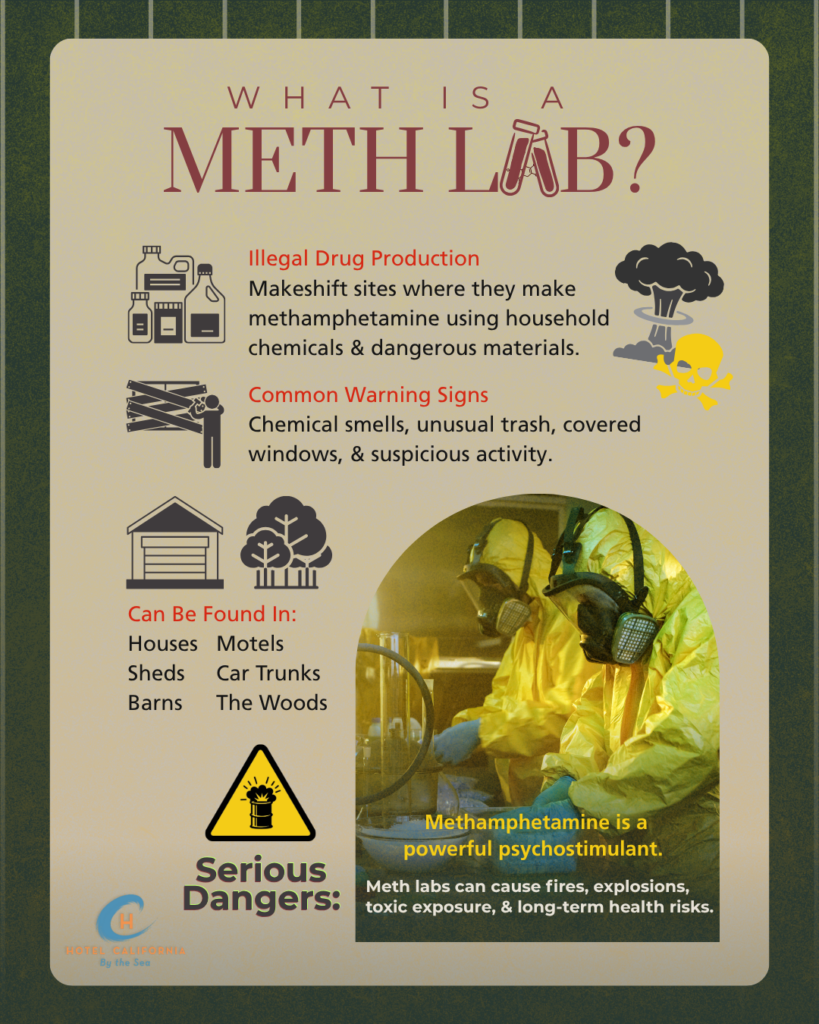
The Modern Meth Lab
Meth labs are illicit operations with the tools and chemicals needed to produce a powerful stimulant drug. Meth can be made from common household items that are readily available at supermarkets, drug stores and hardware stores. There are all types of meth labs: residential labs and super labs.
Super labs are massive, stationary operations that can produce hundreds of pounds of meth per production cycle. They are usually located in remote areas away from typical neighborhoods. One-pot method labs are portable meth labs that use a handful of crushed pills and basic hardware store chemicals and ingredients.
Meth labs have been found in all sorts of places. They can be found in homes, sheds, barns, motels, hotel rooms, car trunks, and even outside in the woods. In the early 2000s, mobile meth labs were popularized by TV shows such as Breaking Bad and the increasing number of these portable labs began making more headlines.
The most common chemicals used in meth manufacturing are solvents, metals, salts and a strong acid or base. There are many different “recipes” and techniques for making meth. One common technique is called the red, white and blue technique, which produces a very toxic and foul-smelling odor. A newer technique is called the shake and bake, which can produce a higher flammable liquid.
How to Spot a Meth Lab
The amount of hazardous garbage produced during an illegal meth manufacturing is staggering. Production can generate five to seven pounds of highly toxic waste. And it’s usually discarded directly onto the ground or irresponsibly poured down drains, severely impacting environmental health.
Modern setup of street meth labs can look sloppy and rarely stays hidden for long. There may be piles of hazardous trash, the smell of chemical odors and strange-acting neighbors can sometimes be a dead giveaway. Because of this, meth labs can sometimes be easy to spot.
- Unusual odors or strong chemical smells coming from the residence may be a sign of a meth lab.
- An excessive amount of trash that includes chemical containers and evidence of chemical waste piling up.
- The curtains are always drawn or there is aluminum foil or cardboard covering the windows.
- Frequent visitors in and out of the residence at all hours of the day.
- Extensive measure taken for the security and privacy of the residence.
- Secretive, unfriendly or paranoid occupants are also a sign they may be involved in a meth lab.
- They seem to have plenty of money, but don’t appear to be going to a regular job like the average person.
- There may be signs of neglect in children or pets associated with the residence.
- Heavily stained sink or corroded exterior plumbing vents.
Check Your Insurance Coverage for FREE
Find out if your insurance covers addiction treatment in minutes. We accept most insurance!
The Dangers and Risks of Meth Labs
Exposure to high levels of meth lab contaminants can cause many symptoms, including shortness of breath, cough, chest pain, lack of coordination, chemical irritation, and chemical burns to the eyes, skin, nose, and mouth. It can also lead to serious health risks such as cancer, brain damage, liver and kidney damage.
- The chemical byproducts of meth production are extremely hazardous and can even be a risk of fire or explosions if chemicals are mixed or stored improperly. This poses a risk not only to the cook, but to the surrounding neighborhood and community. Being exposed to these toxic chemicals can put you at risk of intoxication, dizziness, nausea, disorientation, lack of coordination, pulmonary edema, serious respiratory issues, severe chemical burns and damage to internal organs.
- Inhalation of chemical vapors and gases can cause serious respiratory issues like shortness of breath and chest pain. When these chemicals are synthesized, they give off toxic fumes.
- Skin contact with a chemical can easily lead to chemical burns.
- Ingestion of meth manufacturing products can cause fatal poisoning, internal chemical burns, damage to organs and even neurological functioning.
- Waste dumped from meth labs can lead to exposure to very dangerous chemicals. They can even become embedded into the walls, floor and ceiling. This contamination can remain on surfaces for years if not properly decontaminated.
How household chemicals can turn into a Meth Lab
Plastic bottles, rubber tubing, stained coffee filters, cold medicine and lithium batteries are all commonly found household items that are important parts of a meth lab. These are all “everyday” ingredients. Mixing these innocent products together can generate a harsh environment full of solvents and corrosive acids.
The most popular chemical ingredients used are cold medicine, lithium batteries, and camping fuel. Mixing acids with reactive metals from lithium batteries can create extreme internal pressure. This can react with the cheap plastic bottles and cause a sudden eruption and create an explosion. It’s basically a recipe for disaster.
Reach out to Hotel California by the Sea
We specialize in treating addiction and other co-occurring disorders, such as PTSD. Our Admissions specialists are available to walk you through the best options for treating your addiction.
Treatment for Methamphetamine Addiction
Don’t believe everything you see in the media. Hollywood tends to glamorize most things, including the sophistication of meth labs. The reality is, meth labs are dirty, makeshift experiments that are at high risk of going completely haywire. They are invisible hazards that can lead to dangerous outcomes.
Professional behavioral health programs like Hotel California by the Sea provide treatment for methamphetamine addiction. We offer treatment at all levels of care including detox, residential, PHP and IOP. We utilize evidence-based methods including CBT, DBT and group therapy. Hotel California by the Sea is dedicated to helping clients reach their goals in sobriety and overcome their addiction.
References:
https://www.justice.gov/archive/ndic/pubs7/7341/index.htm
https://www.ebsco.com/research-starters/health-and-medicine/meth-labs
https://doh.wa.gov/community-and-environment/contaminants/drug-labs/meth-labs