
What is the Relationship between Alcohol and GERD?
Many people often wind down the night with a glass of wine or a cold beer with dinner. But if you are one of the millions of people worldwide who suffer from gastroesophageal reflux disease (GERD), that relaxing drink can quickly lead to uncomfortable sensations in your chest. And even if you don’t have GERD, excessive alcohol consumption could potentially lead to the development of GERD.
The relationship between alcohol and GERD is complex. For some, even a casual drink of a certain type of alcohol can trigger severe discomfort. While others only experience symptoms with heavy drinking. GERD is one of the most common disorders with increasing prevalence. Alcohol consumption can be a risk factor for developing GERD. In fact, alcohol can impact the entire digestive system at every level.
Persistent GERD symptoms such as heartburn, regurgitation and a sour taste in your mouth can significantly impair your quality of life.
More about GERD
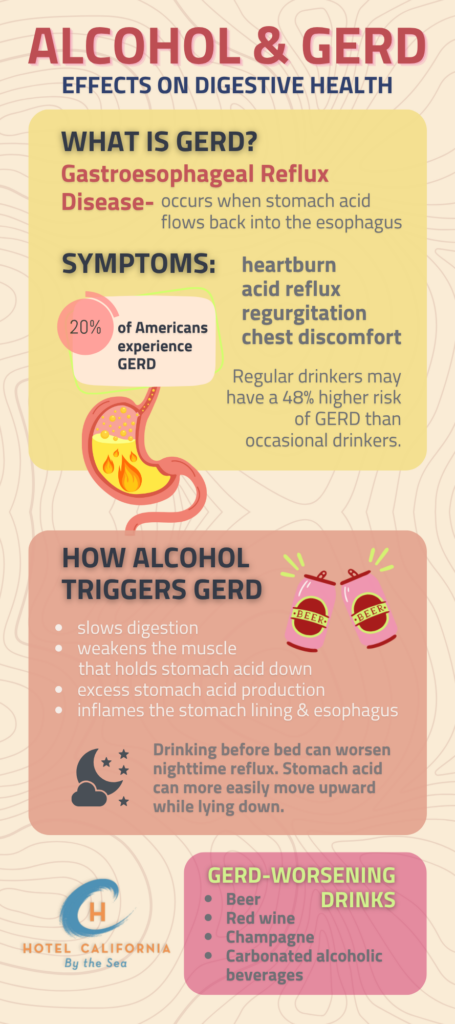
Gastroesophageal reflux disease or GERD, is characterized by the sensation of burning in the chest caused by gastric contents moving backwards up into the esophagus. It’s basically when your acidic stomach contents flow back up into your esophagus, causing a burning sensation often referred to as heartburn. Experts believe about 20% of the population in the US suffers from GERD. It is also a condition more common in older adults.
How does GERD occur? GERD is caused by the inability of the lower part of the esophagus to function properly. As a result, acid and stomach contents are able to flow back up and repeatedly irritate your esophageal lining. This is the burning sensation you often feel when experiencing heartburn.
GERD typically has two different manifestations. Reflux Esophagitis or RE and Non-Erosive Reflux Disease NERD are the two main types of GERD. Foods and drinks that can trigger GERD include fatty foods, chocolate, foods and drinks that contain caffeine, tomatoes, mint, citrus, spicy foods, greasy foods and alcohol.
What is the relationship between Alcohol and GERD?
Alcohol is one of the most commonly abused drugs worldwide. Heavy drinking and even occasional drinking can put a person at risk for developing GERD. Alcohol can interact with the stomach and esophagus on many different levels. Researchers have found that different types of alcohol have different impacts on a person.
A 2010 study found that red wine specifically was prone to increasing acid production in the stomach, which could lead to or worsen acid reflux. Carbonated beverages and acidic beverages are also common triggers for GERD. But on the other hand, high proof spirits are less likely to stimulate stomach acid secretion compared to drinks with a lower alcohol content.
How does it work?
When consuming alcohol, your body goes through many physiological changes that can create the perfect storm for heartburn. One of the main reasons for GERD is due to acid and stomach contents working their way back up into the esophagus, causing a burning sensation along the lining.
At the bottom of the esophagus is a band of muscles called the lower esophageal sphincter (LES). When functioning normally, this muscle acts like a cap, and its job is to open up to let food and liquid pass into the stomach and then closes to keep acidic stomach contents from flowing backwards. In those who have GERD, the LES muscle does not function normally and is not able to completely seal, allowing acid to flow back up.
Alcohol is a muscle relaxant. When consumed, alcohol has the ability to relax the LES muscle and loosen the cap barrier. Stomach acid can easily splash back up into the sensitive lining of the esophagus to cause heartburn. Research has found that those who drank regularly had about a 48% higher risk for GERD than those who only drank on occasion.
Alcohol causes stomach acid production
Alcohol doesn’t just open the door for stomach acid to escape; it can actively make the body produce more acid. There is a connection between gastric acid secretion and ethanol. Beverages like beer, champagne and wine can work to stimulate the stomach’s parietal cells to produce excess gastric acid. When you combine the increase in stomach acid with a weakened LES, it can be a recipe for heartburn disaster.
Check Your Insurance Coverage for FREE
Find out if your insurance covers addiction treatment in minutes. We accept most insurance!
Alcohol causes direct irritation and slowed digestion
Alcohol itself is damaging enough to the digestive system. It can directly irritate the mucous lining of your esophagus and stomach. This can make your esophagus super sensitive, making even the normal amount of stomach acid against it feel painful and irritating.
In addition, alcohol can also slow down digestion and the stomach emptying process. When food and alcohol linger in the stomach rather than moving into the intestines, it can build up internal gastric pressure. This pressure forces its way upwards and forces the LES to open, which then increases the likelihood of acid reflux occurring.
How to reduce symptoms of GERD
There are many different strategies you can implement in order to avoid suffering symptoms of GERD.
First off, try limiting the amount of alcohol you drink. The less you drink, the less risk you are of experiencing acid reflux. Drink less often and drink at a slower pace. Avoid drinking alcohol a few hours before bed. This gives your body enough time to process it before you lie down. Lying down can make your acid reflux worse because it makes it easier for acids to work their way back up the esophagus.
Another option to reduce symptoms is to embrace the mocktail movement. Sometimes the best choice for your body is to skip alcohol entirely. The non alcoholic alternative drink movements have exploded over the years. Non alcoholic beverages and mocktails are becoming increasingly popular among the latest generation of adults.
Other strategies to help manage GERD
- Hydrate frequently. Drink water in-between every alcoholic beverage.
- Never drink alcohol on an empty stomach. Food can act as a physical buffer.
- Pace yourself when it comes to alcoholic drinks. Stick to a limit of one drink per hour.
- Have a post-party routine and avoid snacking on greasy foods afterward.
- Check your sleep position. The most effective way to prevent nighttime acid reflux is gravity. So elevating your head slightly while sleeping will help avoid the acid coming back up your esophagus.
Reach out to Hotel California by the Sea
We specialize in treating addiction and other co-occurring disorders, such as PTSD. Our Admissions specialists are available to walk you through the best options for treating your addiction.
Treatment for Alcohol Use Disorder
The relationship between alcohol and GERD is complicated. Researchers have found that alcohol impacts many systems in the body including the digestive system. Alcohol is known to damage the esophagus and gastric lining, resulting in uncomfortable heartburn. GERD is a serious condition that can significantly impact daily life. With excessive alcohol consumption, GERD conditions only get worse and more intense.
Professional behavioral health programs like Hotel California by the Sea provide treatment for alcohol use disorder. We offer treatment at all levels of care including detox, residential, PHP and IOP. We utilize evidence-based methods such as CBT, DBT and group therapy. Hotel California by the Sea is dedicated to helping clients reach their goals in sobriety and overcome their addiction.
References:
https://pmc.ncbi.nlm.nih.gov/articles/PMC2880354
https://www.healthline.com/health/gerd/alcohol
https://hartfordhospital.org/about-hh/news-center/news-detail?articleid=49441&publicId=395
https://www.everydayhealth.com/gerd/can-you-drink-alcohol-if-you-have-gerd
https://www.medicalnewstoday.com/articles/alcohol-and-gerd
https://www.gerdhelp.com/blog/how-alcohol-affects-different-parts-of-your-body/