
How Medically Supervised Detox Lowers Withdrawal Risk
Medical detox is often described as “getting toxic substances out of your system.” But it is more than that. The goal of medically supervised detox is to lower risks and ensure safer withdrawal. Professional medical detox services provide the clinical support and safety patients need during this first critical stage in substance addiction recovery.

Withdrawal can range from uncomfortable to life-threatening. This is especially true with certain substances like alcohol, benzodiazepines and some opioids. Detoxing from an addictive substance can result in intense withdrawal symptoms that can lead to life-threatening events or to the return of addictive drug use.
With medical detox, patients don’t have to guess what their body is about to do next. A trained clinical team of doctors, nurses and other clinicians anticipates the complications, adjusts treatment in real time, coordinates the next steps and keeps the patient as safe and comfortable as possible. Medically supervised detox contributes greatly to withdrawal risk reduction.
Why Withdrawal Can Be Dangerous
Withdrawal is your nervous system rebounding after it has adapted to a substance. This rebound and recalibration of your nervous system can cause a rapid shift in your body physically and psychologically.
Typical withdrawal symptoms can include:
- Elevated heart rate and blood pressure
- Insomnia and fatigue
- Increased body temperature, sweating and dehydration
- Development or worsening of anxiety, agitation, confusion and hallucinations
- Increased seizure risks and respiratory instability
In a home setting or detoxing without professional help, some of these signs can be missed. Early relapse signs or overdose risks might be overlooked and can lead to dangerous yet preventable outcomes.
Medical detox reduces the dangers of withdrawal through careful supervision and the assistance of FDA-approved medications used to ease or prevent serious symptoms. Supervised detox vs home detox isn’t just about comfort; it is about helping to prevent serious medical events.
Substance-specific Withdrawal Symptoms and Medications used for Treatment
Specific substances can produce certain types of withdrawal symptoms that can be treated with medication-assisted treatments in a professional detox setting. In a study of detox facilities, addiction treatment medications were used in about 80% of all detoxes. The primary reason for approved medication use is to help stabilize the brain, reduce withdrawal symptoms, keep the patient safe and reduce the likelihood of relapse.
- Alcohol Withdrawal – Anxiety, confusion, fear, hallucinations, increased heart rate, insomnia, depression, fatigue, mood swings and delirium tremens. Medications used include Valium, Ativan, acamprosate, Klonopin and naltrexone.
- Benzodiazepine Withdrawal – Changes in appetite, anxiety, changes in mood, delirium, insomnia, seizures, panic, rebound symptoms and psychotic reactions. Medications used include buspirone, Klonopin, Valium and gabapentin.
- Opioid Withdrawal – Anxiety, high blood pressure and insomnia. Medications used include Clonidine, naltrexone, Suboxone, and methadone.
- Stimulant Withdrawal – Fatigue, panic, slowed thinking, suicidal ideation, and nightmares. Currently, there are no approved medications able to treat stimulant withdrawal.
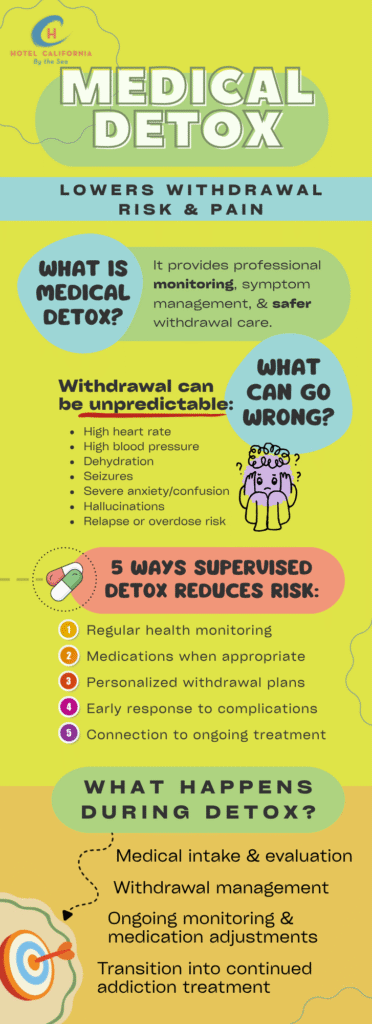
How Medically Supervised Detox lowers withdrawal risk
1. Continuous assessment and early intervention
Withdrawal does not occur on a predictable schedule. Each individual experiences withdrawal differently. Under a supervised setting, detox clinicians are able to monitor and track symptoms, while providing safety measures before medical emergencies can occur or progress.
This allows for withdrawal risk reduction through frequent reassessments after medication doses. Clinicians enact specific safety protocols when there is worsening confusion, vomiting or chest symptoms. Monitoring detox vital signs is important. Checking for rising pulse, elevated blood pressure, temperature and abnormal breathing keeps a patient safe.
2. Individualized treatment support
One of the most powerful tools for withdrawal risk reduction is medication-assisted withdrawal support. These approved medications can help reduce seizure risk, stabilize the nervous system and ease insomnia. They can tremendously help prevent dangerous spikes in autonomic activity in the brain, which causes intense withdrawal symptoms that can become dangerous and life-threatening.
Clinicians have the knowledge and experience that they are able to avoid dangerous combinations that the average person wouldn’t know. This can be important to help adjust for liver or kidney issues. They take into account many patient factors such as age, gender, tolerance and the presence of co-occurring conditions.
3. Tapering protocols
Some withdrawals are more risky than others. In these cases of opioid dependence treatment, supervised tapers can be life-saving. They are designed specifically for treating opioid withdrawals and are adjusted per the patient by supervising clinicians to maintain safety and comfort.
4. Managing hidden risks
Many people with substance addictions aren’t just withdrawing from one substance. Sometimes it can be alcohol and benzodiazepines, opioids and stimulants or prescribed medications and other unreported substances. A supervised program can help identify dangerous interactions and overlapping withdrawal symptoms. It can also help screen patients for psychiatric risks like psychosis or suicidal ideation, all of which can complicate the detox process.
5. Reduce relapse risk
Detox can lead to a high-risk phase for relapse. In a supervised environment, detox can actually reduce access to substances, provide sleep support and help manage symptoms so patients don’t relapse while going through withdrawal.
Check Your Insurance Coverage for FREE
Find out if your insurance covers addiction treatment in minutes. We accept most insurance!
Benefits of Medical Detox Services as part of Addiction Treatment Services
- Comfort. During medical detox, there is emphasis placed on the patient’s physical and emotional comfort during this phase of treatment. Patients will be able to focus solely on their well-being without the stressors or distractions from daily life outside of treatment. Staff and clinicians are prepared to monitor patients 24/7 and provide physical and psychological support.
- Hydration, diet and nutrition. Issues like nausea and vomiting are common withdrawal symptoms that can be treated through hydration and even diet. Physically strengthening your body will help aid it in getting rid of the toxins during detox.
- Medication-assisted treatment. The ability to receive medication to help control, manage or alleviate uncomfortable or painful withdrawal symptoms can be a game changer. Side effects like nausea, diarrhea, muscle spasms, and headaches can be treated with medications and in turn, reduce the risk for drug cravings and relapse.
- Safety. Medically supervised detox is the safest method of drug detox. Because you are being carefully monitored during the entire process, unpredictable events that can occur will be treated before they can escalate into medical emergencies.
- Decreased pain. As toxins leave the body, patients can reach levels of discomfort so severe that they feel overwhelmed and even urged to use substances again just to numb away the pain. Medical detox offers pain-relieving options that won’t feed your addiction.
What Medically Supervised Detox looks like and the typical Timeline
Medical Intake is typically the first step, where clinicians will look into the patient’s substance history, last use, co-occurring conditions, medications and medical assessment. Lab work may be needed and screenings for other complications.
Next, a plan for medical detox withdrawal management will be created and tailored to the substance and risk level. Patients will receive around-the-clock monitoring with frequent check-ins. Once detox is finished, a transition plan to ongoing care or outpatient treatment coordination is created and executed.
Detox can last anywhere from 3 to 14 days. Patients can even experience lingering symptoms for weeks or months after detox before achieving full recovery. Intake and stabilization typically take about a day and consist of evaluation, initial symptom control, hydration and nutrition support.
On days 1 to 3, patients will receive closer symptom checks during this peak monitoring window. Medication adjustments may be made, sleep can be restored and together clinicians and patients will plan the next level of care.
On days 3 to 7, patients will continue to taper down, eventually plan discharge, continue therapy and medication. Patients and clinicians will also create relapse prevention plans to help support them as they transition to the next level of care.
Reach out to Hotel California by the Sea
We specialize in treating addiction and other co-occurring disorders, such as PTSD. Our Admissions specialists are available to walk you through the best options for treating your addiction.
Treatment for Substance Use Disorder
Medically supervised detox helps lower withdrawal risks and risks for substance relapse. Professional behavioral health programs like Hotel California by the Sea offer medical detox. We offer treatment at all levels of care, including detox, residential, PHP and IOP. We utilize evidence-based methods such as CBT, DBT and group therapy. Hotel California by the Sea is dedicated to helping clients reach their goals of sobriety and overcome their addiction.
References:
https://www.addictioncenter.com/treatment/benefits-medical-detox
https://www.rehabspot.com/treatment/before-begins/benefits-medically-supervised-detox
https://www.pyramid-healthcare.com/blog/2016/09/23/the-benefits-of-detox
https://www.psychologytoday.com/us/basics/medical-detox
https://kyleer.com/medical-detox-is-safer-than-going-cold-turkey/