
Why Medical Detox Referrals Get Delayed
Medical detox placement can be the safest first step for a person who is physically dependent on substances like alcohol, opioids and other drugs that cause severe withdrawal. The demand for detox and substance use disorder treatment therapies has increased and is being fueled by the ongoing opioid epidemic. But patients, families and loved ones seeking help are still finding it difficult to get substance use treatment access.

The CDC and NIDA consider substance use disorders like opioid addiction and alcohol addiction treatable chronic diseases. Despite being considered an official medical condition, there continues to be a gap between the need for treatment and receiving treatment in the US. Treatment remains inaccessible to many who need it.
There are many factors that impact why medical detox referrals get delayed or why patients are unable to access continuing treatment therapies. Some of these factors include difficulties determining patient eligibility, lack of transparency in treatment capacity, knowledge and understanding of treatment options and even issues of communication between the referral source and the recipient.
Understanding the reasons behind barriers to treatment can help families, care teams and community providers reduce friction and move faster when the window for help opens.
Why do Medical Detox Placements get delayed?
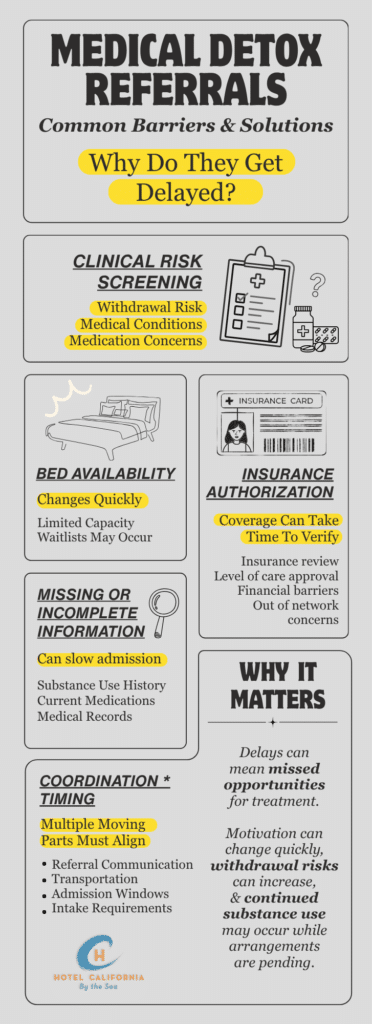
Medical detox referrals often get delayed because placement can depend on several factors that include clinical eligibility, bed availability, insurance payment or clearance, transportation, documentation and communication between different parties included in treatment care. Even when detox is agreed upon, the treatment facility must also confirm they are able to safely manage withdrawal risks, medical conditions, medications and behavioral needs of the patient.
These delays can be frustrating. A person may be ready for help in the morning, but with delays and time to kill, they may change their mind by the evening. The actual addiction treatment placement process can require assessment, authorization and real-time bed matching. All of these factors take time.
Common barriers to Detox as well as general Substance Use treatment access
Most detox referral barriers and barriers to addiction treatment placement aren’t caused by a person failing to act. It is typically caused by gaps in information, limited capacity or misunderstanding of the patient’s needs versus resources available.
Incomplete Clinical Information
Detox facilities and treatment programs need enough information to decide whether the person can be admitted safely. Details regarding substances used, amounts used, withdrawal symptoms, current medications and seizure history are important to make sure detox programs can treat patients safely and effectively.
Patient eligibility, medical or psychiatric complexity
There are a lot of time and resources that determine patient eligibility for treatment. In some cases, there is a lack of clear eligibility requirements, making it difficult to determine if the patient will be the right fit for the treatment program.
Some people need a higher level of care than standard detox can offer. Those with a severe withdrawal history, unmanaged psychiatric symptoms or specific medication monitoring may need hospital-based care or more specialized programs. This type of situation can create a medical detox placement delay because the care team must find the safest option, not just the quickest option.
Insurance, costs and authorization
Coverage verification and authorization through insurance can take time. This is especially true when the patient requires a clinical review before approving a level of care. Some delays in substance use treatment access are because the insurance information is missing or the facility is out of network.
For both insured and uninsured patients, financial constraints and cost can be a contributing factor. Lack of insurance can make it more difficult for someone to get treatment. It can be difficult to find the funds, scholarship options, public health programs or alternative payment arrangements.
Provider knowledge or misunderstanding of options
The lack of provider education and knowledge of available options can hinder and delay treatment. The lack of online resources, inconsistent terminology being used and no standardization of applying for care can confuse patients and their families, creating a barrier to detox and continuing therapy treatments.
Lack of bed availability
The demand for drug addiction treatment is growing. The industry is having a hard time keeping up with the number of patients in need of beds for detox and residential programs. Some people travel great distances just to be able to access treatments, only to be placed on waitlists because there isn’t enough room.
Bed availability changes quickly as patients move in and out of detox at varying time lengths. A facility may have space when the first call is made, but then fill it before a person’s paperwork has been approved or transportation is complete. Sometimes discharges can happen later than expected, which also leaves others waiting longer than anticipated for detox.
Timing
Timing conflicts are common barriers to treatment. Some programs have admission windows, nursing or staffing shift considerations, pharmacy deadlines or intake cutoff times. If referral is approved too late in the day, treatment placement may be pushed to the next day.
Patients may be ready first thing that morning. But with unavailable beds or long wait times for authorization, they may begin to change their minds and will have to go through the process again the next day because they missed their window of opportunity to get into a specific detox facility.
Check Your Insurance Coverage for FREE
Find out if your insurance covers addiction treatment in minutes. We accept most insurance!
Why delays in detox and treatment are so risky
Waiting for detox can be risky. Motivation to get help and change can change at the drop of a hat. Withdrawal from substances can escalate quickly and worsen. Dangerous substance use can continue while patient detox arrangements are pending. The longer the delay, the more chances for missed windows for intake, transportation problems, second thoughts, medical complications and return to use.
Stronger Medical Detox Coordination can improve access to treatment
Medical detox placement works best when the handoff from one phase to another is organized and realistic. A warm handoff means the referral source helps connect the person in need of treatment to the next provider, confirms what information is needed and helps keep the process moving along.
People seeking detox can feel overwhelmed. With clear explanations, calm communication and practical support, the process can feel less confusing and more of a helpful journey.
For providers, documenting clearly, responding quickly to requests and being honest about risks is important. For families, staying available, being patient, and helping with logistics can be critical. For treatment facilities, communicating admissions criteria and realistic time frames as clearly as possible will only be beneficial for the potential client.
All the moving parts need to work together in order to improve access to treatment in a timely manner.
Reach out to Hotel California by the Sea
We specialize in treating addiction and other co-occurring disorders, such as PTSD. Our Admissions specialists are available to walk you through the best options for treating your addiction.
Treatment for Substance Use Disorder
Substance use disorder and the ongoing opioid overdose public health crisis have created a great need for addiction treatment access. Current gaps in the referral process can cause delays to care that could be crucial for those in need. Other barriers to addiction treatment involve many moving factors that range from individual and organizational levels.
Professional behavioral health programs like Hotel California by the Sea provide addiction treatment resources. We offer treatment at all levels of care including detox, residential, PHP and IOP. We utilize evidence-based methods such as CBT, DBT and EDMR therapy. Hotel California by the Sea is dedicated to helping clients reach their goals in sobriety and overcome their addiction.
References:
https://pmc.ncbi.nlm.nih.gov/articles/PMC6066414
https://pmc.ncbi.nlm.nih.gov/articles/PMC2396562
https://www.drugrehab.com/treatment/barriers-in-seeking-treatment
https://www.rehabtoday.com/overcoming-barriers-to-addiction-rehabilitation
https://www.promises.com/addiction-blog/addiction-treatment-barriers/