Can Dramamine Get You High? Risks & Side Effects
Dramamine is a common brand name over-the-counter motion sickness medication. It helps manage dizziness, nausea and vomiting. It is generally safe when used as directed, but “over the counter” does not mean risk-free. Can Dramamine get you high? In short, yes. Like any medication, there is a risk and potential for misuse.

When misused, Dramamine can cause dangerous physical and mental effects, including confusion, hallucinations and overdose emergencies.
The risk for misuse increases tremendously when Dramamine is used with alcohol consumption. It can lead to severe central nervous system depression, which results in drowsiness, dizziness and impaired cognitive functioning, among other things. The combination of the two can change brain chemistry by inhibiting multiple neurotransmitter systems.
Can Dramamine get you High?
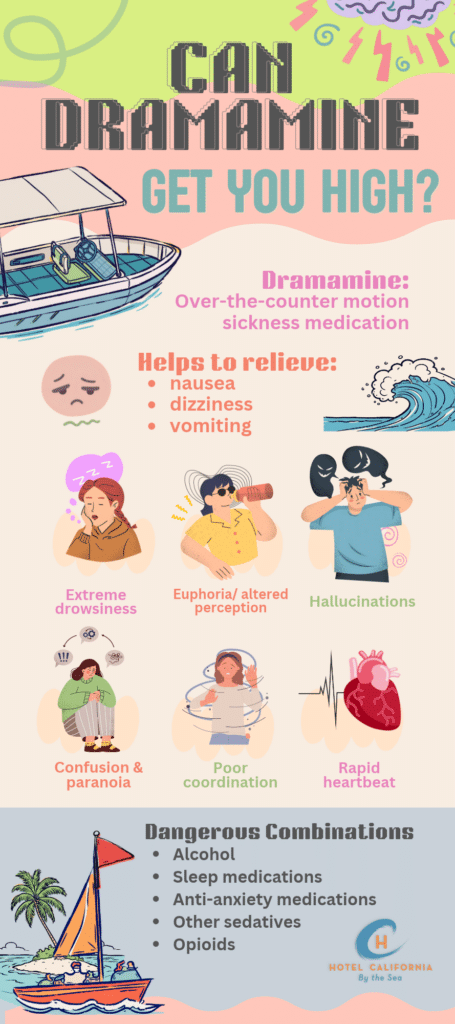
Yes, Dramamine can produce a psychoactive effect when it is misused. There are reports and clinical studies that describe people taking large amounts of Dramamine in an attempt to produce euphoria, sedation, altered perception or hallucinations. These symptoms are all closely linked to drug toxicity.
The reality is, misuse of Dramamine can produce seriously frightening delirium, paranoia, impaired coordination, rapid heartbeat or severe drowsiness. When a person experiences hallucinations, seizures or loss of consciousness, it is considered a serious sign of overdose. Urgent medical evaluation will be needed.
More on Dramamine
Dramamine is an over-the-counter motion sickness medication with two main active ingredients: dimenhydrinate, which is an antihistamine, and 8-chlorotheophylline, which is a stimulant. It helps reduce motion sickness-related nausea, vomiting and dizziness. Dimenhydrinate is a first-generation antihistamine and a category of medications that impacts the central nervous system, often causing drowsiness. The sedating effect often makes people feel foggy and less alert.
The drug works by stimulating the nerves in the inner ear and brain that affect balance. It helps the body gain stability to control vertigo and nausea when in motion. It is typically taken about 60 minutes before traveling or before engaging in activity that can cause motion sickness.
Common Dramamine effects
The most common Dramamine effects are related to its sedating properties, which help with treating and managing motion sickness. Most people feel relief from motion sickness symptoms and some notice sleepiness.
- Drowsiness or fatigue. This can make driving, working or lifting heavy machinery unsafe.
- Dizziness or poor coordination.
- Dry mouth, blurred vision or constipation. These are typical anticholinergic effects that can occur when taking antihistamines like Dramamine.
- Confusion and restlessness.
- Worsening impairment with alcohol and other sedatives, including sleep aids, anti-anxiety medications, opioids and other antihistamines.
When side effects become more intense, unusual or paired with mental status changes, that’s when it becomes concerning. If a person becomes extremely confused, difficult to wake up, agitated or hallucinatory after taking Dramamine, they may need immediate medical attention in case of an overdose situation.
Dramamine Misuse and Abuse
Dramamine misuse is using the drug in a way that it is not intended by the label or by a healthcare professional. That includes taking more than directed, taking it more often than directed or mixing it with other substances to intensify its effects. Clinical evidence reports that taking it in high doses can lead to hallucinations and euphoria.
When taken in excessively high doses, it can cause the sensation of excitement, euphoria, hallucinations and a state of confusion. These are part of the psychotropic effects that are often desired when misused.
Misuse and abuse happen for many different reasons. Some people like to experiment because it is inexpensive, legal and easy to find. Others may use it to self-medicate for anxiety, insomnia or emotional distress. It may be assumed that because the medication is over-the-counter, it is safe. But like all drugs, there can be a risk of dangerous side effects.
What are some examples of Dramamine misuse?
- Using Dramamine in an attempt to induce hallucinations, euphoria or an altered perception.
- Taking repeated extra doses because they do not feel the desired effects quickly enough.
- Combining use with other substances like alcohol, sedatives or sleep aids can increase drowsiness, confusion and overdose risk.
- Using it as a coping mechanism to numb anxiety and depression.
- Hiding use or needing it to function despite the consequences of continued use.
Check Your Insurance Coverage for FREE
Find out if your insurance covers addiction treatment in minutes. We accept most insurance!
Effects of chronic recreational misuse
- Hallucinations
- Loss of coordination
- Blurred vision
- Constipation
- Confusion
- Extreme drowsiness
- Dry mouth
- Cardiovascular issues
- Liver damage
- Neurological impairments
Can Dramamine lead to Addiction?
Dramamine addiction is possible, especially when someone continues to misuse the drug for its psychoactive effects or emotional relief. If someone craves Dramamine, is unable to stop using it, increases use and experiences problems due to drug use, this can mean they have become addicted. Psychological dependence can develop when a person starts relying on the drug to sleep, relax, escape reality or feel altered.
Signs of Dramamine Addiction
- Using Dramamine up too quickly
- Sleeping more than usual due to sedative effects
- Withdrawing from friends and family and antisocial behaviors
- They keep taking it for reasons other than motion sickness or nausea
- Neglecting responsibilities
- Mood swings and are unable to sleep without it
- Paranoia due to hallucinations
- Heightened anxiety and depression
- Impaired cognitive functions that impact learning, memory, problem solving and overall mental clarity
- Continuing to use Dramamine after experiencing hallucinations, blackouts, injuries or medical scares
Alcohol and Dramamine
The combination of alcohol and Dramamine can lead to an even higher risk of addiction to one or both substances. Dramamine and alcohol can work together to enhance sedative effects, which also increases the risk of psychological dependency.
Both are central nervous system depressants that can result in excessive drowsiness, impaired cognitive function, memory loss, sedation and reduced motor skills. The combination of the two impacts histamine receptors, which can increase GABA inhibition to produce relaxation and reduce glutamate excitation and trigger dopamine receptors in the brain’s reward pathways.
This enhances feelings of euphoria, which are often linked to drug misuse and the development of addiction.
Reach out to Hotel California by the Sea
We specialize in treating addiction and other co-occurring disorders, such as PTSD. Our Admissions specialists are available to walk you through the best options for treating your addiction.
Treatment for Substance Use Disorder
Can Dramamine get you high? Yes. Misuse of the medication can cause psychoactive effects including hallucinations and euphoria. The typical side effects of Dramamine can also become serious when the medication is taken at high doses and mixed with other sedative substances.
Hotel California by the Sea provides treatment for substance use disorders. We have treatment for all levels of care including detox, residential, PHP and IOP. We utilize evidence-based methods such as CBT, DBT and EMDR therapy. Hotel California by the Sea is dedicated to helping clients reach their goals in sobriety and overcome their addiction.
References:
https://www.floridarehab.com/drugs/dimenhydrinate
https://www.northpointrecovery.com/blog/understanding-dramamine-addiction/
https://betteraddictioncare.com/alcohol/addiction/dramamine
https://www.therecoveryvillage.com/dimenhydrinate-addiction
https://www.avenuesrecovery.com/understanding-addiction/depressants/is-dramamine-addictive