
What are Dual Diagnosis Treatment Centers?
Oftentimes, a substance use disorder is accompanied by a mental health disorder. This is referred to as a dual diagnosis or having a co-occurring mental health condition. When symptoms of one condition occur, it can make the condition of the other worse and vice versa. In 2023, an estimated 20.4 million adults in the US reported having co-occurring substance and mental health disorders. Dual Diagnosis treatment centers such as Hotel California by the Sea, provide a comprehensive program addressing every aspect of addiction.

According to a 2023 National Survey on Drug Use and Health, about 35% of adults age 18 and over in the US who reported having a mental health disorder also had a substance use disorder. Other studies have found even higher rates of co-occurring diagnoses. According to the Journal of the American Medical Association, an estimated 50% of people with severe mental health disorders are affected by substance abuse.
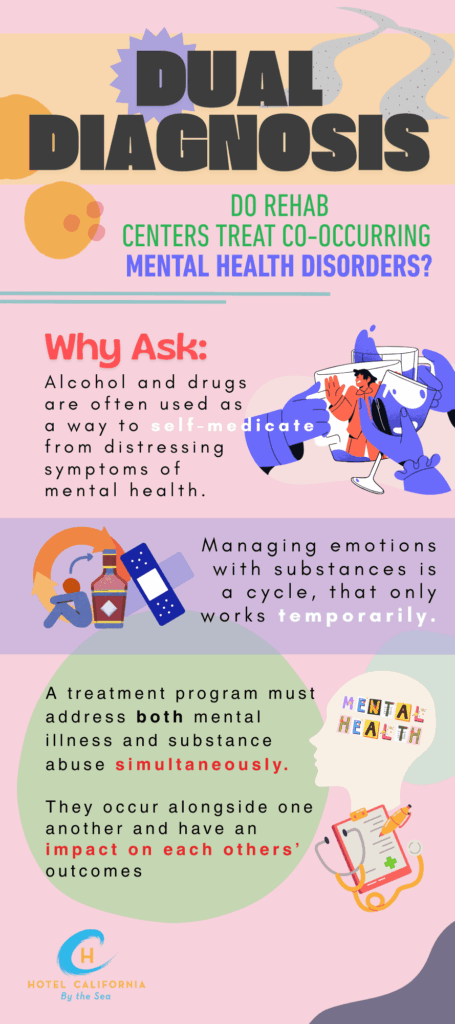
Co-occurring mental health and substance abuse issues are more common than people realize. Alcohol and drugs are often used as a way to self-medicate from distressing symptoms of mental health. It is used as a way to manage their emotions and temporarily alleviate pain both mentally and physically. On the other hand, alcohol and drug abuse can increase the risk that a person will develop a mental health disorder.
Dual diagnosis rehab centers like Hotel California by the Sea provide a full spectrum of care that includes treatment for both substance disorders as well as mental health disorders.
What is a Co-occurring Mental Health Disorder?
Mental health disorders that are commonly co-occurring with drug and alcohol abuse include anxiety, depression, PTSD, psychosis related disorders and borderline personality disorders.
Other terms to describe a dual diagnosis include co-occurring disorders and comorbidity. Like the chicken and the egg, it can be difficult to pinpoint which disorder came first. When the two issues occur alongside one another and interact with each other, it can more intensely affect symptoms and outcomes.
When having a dual diagnosis, the two conditions occur alongside one another. But it doesn’t always mean that one caused the occurrence of the other. However, when there is a presence of two or more mental health conditions such as a substance use disorder and depression, diagnosis and treatment can be more complicated.
Mental health disorders can contribute to the development of a substance use disorder. People who turn to drugs or alcohol to self-medicate and temporarily alleviate their symptoms will continue to do so because it makes them feel better. However, with continued use, it can actually make mental health symptoms worse.
Mental health conditions impact how your brain handles reward and it makes your brain more susceptible to the pleasant effects of drugs and alcohol. This can make substance addiction more likely to occur because the substances are providing the brain with a reward.
Substance use disorders can contribute to the development of a mental health disorder. This is because substance use problems can disrupt similar changes to the brain function as some mental disorders. For example, ADHD is associated with the same brain changes as those associated with alcohol and drug use. Substances can also disrupt other areas of the brain that other mental health disorders are linked to. These conditions include schizophrenia, anxiety, mood disorders and conditions involving impulse control.
Ultimately, alcohol and drugs can trigger changes in your brain chemistry, structure and function. It can make it more likely that you will develop a mental health condition due to continued abuse of drugs and alcohol.
How to Find Treatment Centers for Dual Diagnosis
When it comes to treating a substance or alcohol use disorder, treating co-occurring mental health disorders alongside the initial substance diagnosis is very important. In most cases, people who are suffering from a substance disorder are also suffering from a mental health disorder. Finding the right treatment centers for dual diagnosis can be challenging.
Factors to consider when choosing a dual diagnosis treatment center
- A treatment program must address both mental illness and substance abuse simultaneously since they occur alongside one another and have an impact on each other’s outcomes
- A treatment program should provide medical detox
- A treatment program should provide evidence-based therapies such as CBT, DBT and group therapy
- A treatment program should have an inpatient residential treatment program where their dual diagnosis can be medically addressed
- A treatment program should encourage clients to participate in support groups as a supplemental treatment on top of medically supervised methods
Check Your Insurance Coverage for FREE
Find out if your insurance covers addiction treatment in minutes. We accept most insurance!
Hotel California by the Sea’s Dual Diagnosis Rehab Centers
Our dual diagnosis treatment centers treat both substance use disorders and mental health disorders simultaneously. Treating these conditions together improves the outcome of recovery for the patient. At Hotel California by the Sea, our integrated approach to treating co-occurring mental health disorders has proven effective in many of our clients.
- We help clients examine the role alcohol or drugs play in their lives
- We teach clients more about the effects and impact that alcohol and drugs can have on their lives and well-being
- We help clients return to employment and locate other support services they may need after recovery treatments
- We help clients identify and develop personal recovery goals throughout the program stay and for aftercare planning
- We provide experienced counseling, therapy and medical assessment designed for those who have a dual diagnosis
- We utilize a fully integrated approach when it comes to treating a substance use disorder and a mental health disorder
Delivering Treatment for Co-occurring Disorders
There are three main methods for delivering care for co-occurring mental health disorders. The first is coordinated care. The second is co-located care. The third is fully integrated care. At Hotel California by the Sea, our dual diagnosis treatment centers provide fully integrated care.
During initial intake, each patient is carefully assessed and given a biopsychosocial assessment to routinely screen for the presence of a substance use disorder as well as any presenting mental health disorders.
Studies have found that integrated care can lead to more successful outcomes. Our programs have led to reduced or discontinued substance use, improvements in psychiatric symptoms, improvement in quality of life, decreased hospitalization, reduced medication interactions and improved housing stability in clients rejoining the rest of society after treatment.
Reach out to Hotel California by the Sea
We specialize in treating addiction and other co-occurring disorders, such as PTSD. Our Admissions specialists are available to walk you through the best options for treating your addiction.
Hotel California by the Sea’s Treatment Centers for Dual Diagnosis
A dual diagnosis of substance abuse and mental health disorder can be challenging to identify and treat. Diagnosis can be very complex because both conditions can have many overlapping symptoms depending on the substance being abused and the mental health condition that occurs. The need for an integrated approach to treatment is important and can help identify and treat any disorders effectively.
At Hotel California by the Sea, we provide dual diagnosis treatment for our clients with substance use disorders and alcohol use disorders. We treat clients at all levels of care including detox, residential, PHP and IOP. We utilize evidence-based treatment methods including CBT, DBT and family therapy. There are many different combinations of co-occurring mental health disorders. Our program can provide the support, tools and resources clients need to recover and overcome their addiction.
References:
https://my.clevelandclinic.org/health/diseases/24426-dual-diagnosis
https://www.samhsa.gov/mental-health/serious-mental-illness/co-occurring-disorders
https://www.helpguide.org/mental-health/addiction/substance-abuse-and-mental-health
https://www.verywellmind.com/dual-diagnosis-causes-diagnosis-treatment-6499948
https://nida.nih.gov/research-topics/co-occurring-disorders-health-conditions