
How long does Rehab Last?
Before considering formal treatment for a drug addiction, a common question asked is “how long does rehab last?” Addiction rehab is a long-term process that requires various evidence-based interventions, methods of care, and comprehensive treatment planning. Each individual case will be different and require different lengths of treatment.
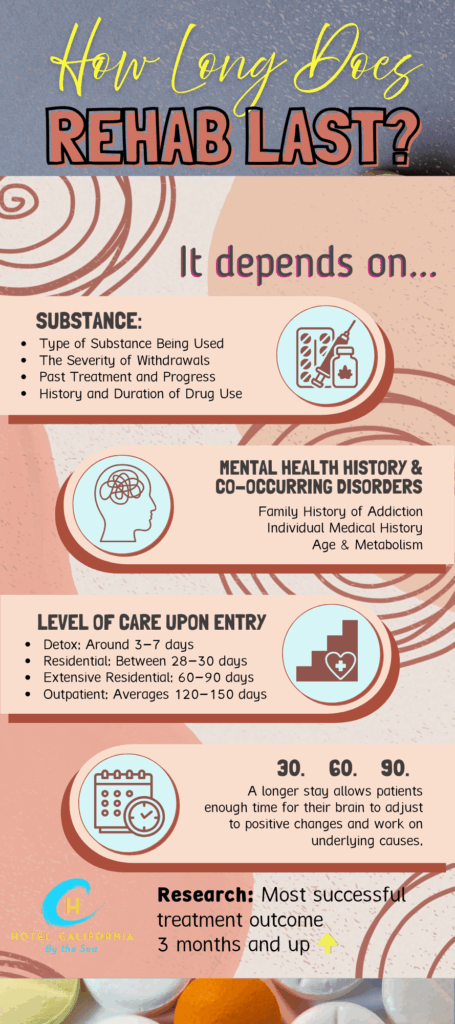
Some of the most common treatment programs include 30-day programs, 60-day programs and 90-day programs. However, research has found that recovery outcomes are the most successful when treatment extends for at least 3 months or more.
Addiction is a serious medical disease that impacts brain function and structure. It is treatable through drug rehab programs such as Hotel California by the Sea. Our drug rehab program helps those who are struggling with a substance use disorder move away from addiction to a healthier life in sobriety.
We offer detox, residential and outpatient care. Throughout each level of care, clients will receive carefully planned treatment methods designed to help them in their struggles with drug addiction. We provide clients with the tools, resources and support they need to overcome their addiction.
How long does Drug Rehab Last?
The duration of addiction treatment will vary depending on many factors. On average, a detox program can last anywhere from 3 to 7 days. A residential treatment program can last between 28 to 30 days. Extended residential programs for those who need more time in extensive care can last anywhere from 60 to 90 days. And on average, outpatient care can range from 120 to 150 days.
Every addiction is unique and is impacted by many factors. There is no formally set timeline for how long drug rehab can last.
Factors that can impact how long Rehab lasts
- The type of rehab treatment and level of care you enter
- The severity of your drug addiction
- Duration and frequency of substance use
- Your progress in inpatient residential care and outpatient programming
- The individualized treatment plan created by you and your medical provider
- Mental health history and co-occurring disorders
- Physical condition and medical history
- Family dynamics and family history of addiction
- Age and metabolism of the patient
- History of drug use
- The type of substance being abused
- The cost of treatment and insurance coverage
- Past treatment
- Whether or not detox is needed
- How quickly treatment is started
What is the difference between a 30-day, 60-day and 90-day program?
30-day Program
A 30-day treatment program can be a great way to start your recovery journey. These types of programs help clients get through physical withdrawal symptoms that are usually experienced in the early days of recovery. It helps clients learn new coping techniques and establish a solid relapse prevention plan. 30-day treatment programs can provide enough time for some patients to know that they might need more time in formal care.
These shorter programs provide physical and mental care at the lowest cost and are usually covered by most insurances. Less time in formal treatment results in lower costs.
60-day Program
A 60-day program has the added benefit of time and support throughout rehab treatment. The extra time can provide clients with the opportunity to dive deeper into emotions and experiences that may be an underlying cause of their substance addiction.
A longer treatment program can give clients more time to build a support network of people as well as ensure treatment mediations are working and can be adjusted as needed. It gives more time for clients to practice newly learned coping techniques in a controlled and safe environment. These longer treatment programs also offer tailored therapy sessions like family therapy and can provide more than adequate time for drug detox and withdrawal.
Unfortunately, most insurance plans do not cover longer 60-day treatments. But many behavioral treatment programs, including Hotel California by the Sea, will work with clients to explore payment options.
Check Your Insurance Coverage for FREE
Find out if your insurance covers addiction treatment in minutes. We accept most insurance!
90-day Program
The 90-day program can seem intimidating. However, research and studies have shown that the longer a person is in formal treatment, the more successful the outcome of long-term sobriety. The longer you have support from formal treatment, the higher the chances you have of a successful recovery and maintaining sobriety when you leave.
In long-term treatment, patients will have more time to slowly adjust to life without drugs. The program really allows patients to take their time in treatment and can help further strengthen their sobriety skills. They will be better able to identify triggers that cause relapse and practice prevention before it happens.
This type of treatment is often recommended for more severe or long-term addictions. However, most insurance will not help with the cost. But our treatment program at Hotel California by the Sea will be happy to work with our clients to explore alternative payment options.
Rehab Programs beyond the 90 days
In some cases, clients can attend a rehab program that is longer than 90 days. This can be beneficial for many reasons. People who suffer from addiction need time to cleanse their bodies and detoxing can be difficult when withdrawal symptoms turn deadly.
Longer treatment programs allow clients more opportunities to work on the root cause of their addiction and understand why they are using in the first place. It allows for more exploration of factors that may be contributing to addiction, how to identify it and effective ways to manage it.
This type of rehab program also allows for more time under the professional guidance of therapists, case managers, doctors and psychiatrists. It can take time to begin trusting the people on your care team and open up about your issues. Longer treatment allows clients to build up that trust with their clinical team and make treatment more efficient and successful.
There are many reasons why some clients prefer longer treatment programs. It may be a good option for those who have relapsed many times. It gives clients more time to learn life skills for when they leave formal treatment. It allows patients enough time for their brain to adjust to positive changes. It helps clients slowly rebuild relationships with their families and peers.
Things to consider when choosing a Rehab Program
- Do they have a detox program? During this beginning phase of treatment, clients will need professional help managing intense withdrawal symptoms.
- Do you have a history of prior relapse? Relapse is a part of the recovery process and might impact the level of care you are placed in.
- Any physical health concerns?
- Do they treat co-occurring mental health conditions?
Reach out to Hotel California by the Sea
We specialize in treating addiction and other co-occurring disorders, such as PTSD. Our Admissions specialists are available to walk you through the best options for treating your addiction.
How long does Rehab last at Hotel California by the Sea?
At Hotel California by the Sea, we have a team of clinicians, staff, doctors, nurses, psychiatrists, counselors and therapists all working to help our clients on their recovery journey. Our rehab treats drug and alcohol addiction alongside co-occurring mental health conditions.
We offer treatment at all levels of care and depending on the progress of each client, the duration of treatment lasts an average of 30 to 90 days. Research has shown that the best outcomes for recovery occur with longer durations of treatment. At our program, we offer detox, residential, PHP and IOP. We utilize evidence-based treatment methods such as CBT, DBT and MAT. Hotel California by the Sea is dedicated to helping our clients reach their goals of sobriety and overcome their addiction.
References:
https://rehabs.com/treatment/duration
https://www.addictioncenter.com/rehab-questions/how-long-does-treatment-take
https://addictionresource.com/rehab-answers/rehab-duration
https://recovered.org/treatment/the-treatment-process/how-long-is-rehab