
Rapid weight loss after Quitting Alcohol
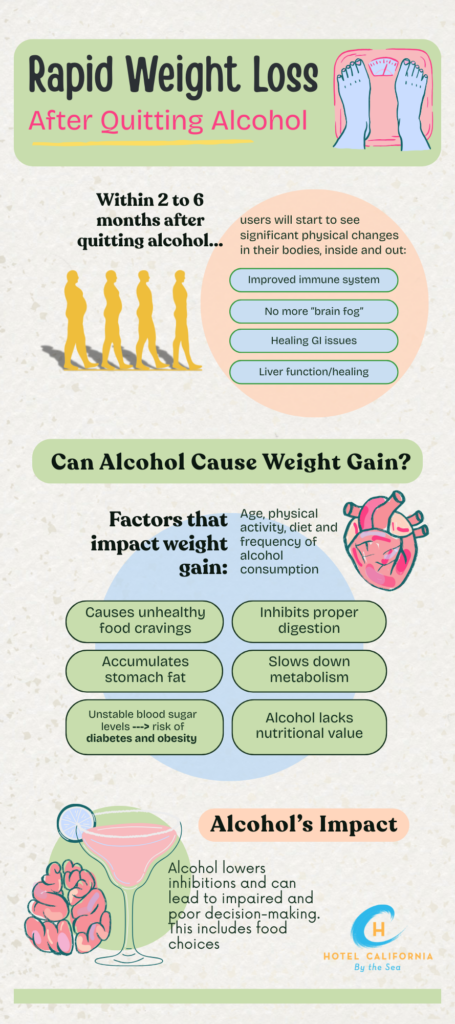
Rapid weight loss after quitting alcohol is one of many noticeable changes to a person’s health and well-being. Within 2 to 6 months after quitting alcohol, users will start to see significant physical changes in their bodies, inside and out. Organs and body systems take a few months to fully heal from alcohol injury. In many cases, weight loss is common when you stop consuming empty calories from alcohol.

The first few months after you stop drinking can be the most challenging period. This is because you may experience withdrawal symptoms that can be uncomfortable and painful both physically and psychologically. But the good news is, the longer you stay away from alcohol, the more your brain and body will heal and the better you will start feeling.
Can alcohol cause weight gain?
Alcohol contains empty calories. Meaning, it’s full of calories without any nutritional value. Alcohol can also slow down your metabolism and cause unhealthy food cravings. All of these factors add up to weight gain. When alcohol is finally removed from the equation, it can lead to weight loss and positive physical changes to the body. Stop drinking alcohol for a couple of months and you will notice yourself naturally losing weight.
A 12-ounce beer contains about 150 calories. A 5-ounce glass of red wine contains about 120 calories. And to top it off, cocktail drinks contain mixers that are full of added sugars. If you’re drinking multiple servings of beer, wine and cocktails, it can equate to a few hundred empty calories. Doing this regularly can easily lead to weight gain.
Can you experience rapid weight loss after quitting Alcohol?
There are many factors that impact weight loss. Some of these factors include age, level of physical activity, diet and frequency of alcohol consumption. A study on drinking and weight gain found that the connection between the two is mostly impacted by how much alcohol is consumed in one sitting. The results of the study found that heavier drinking or binge drinking is associated with an increased risk of obesity.
Binge drinking is also often associated with higher risks of diabetes and high blood pressure. If binge drinkers removed alcohol from their system for long enough, they would be able to see significant weight loss and improved body composition. This includes less stomach fat that usually accumulates around the abdominal area.
Alcohol impacts Metabolism
When alcohol is consumed, it is the first substance to be burned as a fuel or energy source for the body. When the body is using alcohol as a primary source of energy, the excess carbs, glucose and fats from the empty calories end up being stored in fat tissue. This means your body begins storing alcohol in your fat, ultimately increasing your body fat, which means increased weight.
Your metabolism is how the body processes food and turns it into energy. The body uses energy for everyday functions such as breathing, thinking, activities and exercise. When you consume alcohol, your metabolism focuses on removing alcohol instead of converting other sources of energy in your body. While it is busy metabolizing alcohol, the body is not able to process other food effectively. This contributes to weight gain because of how slow it takes the body to process the foods you eat.
Other ways Alcohol can cause unhealthy weight gain
- Alcohol lowers inhibitions and can lead to impaired and poor decision-making. This includes food choices. When we drink, we tend to crave unhealthy foods that are high in calories, salt and sugar. Foods such as burgers, fries, donuts and other non-nutritional foods are common when drunk, hungover or recovering from alcohol use. You eat more when you drink because it increases your appetite and influences hormones linked to satiety, the feeling of fullness. Alcohol abuse is often associated with midnight snacking, eating unhealthy and overeating.
- Alcohol can inhibit proper digestive function. Alcohol causes stress on the stomach and intestines. This leads to decreased digestive secretions and slower movement of food throughout the tract. Digestive secretions are part of healthy digestion. Any level of alcohol intake can lead to impairment in the digestion and absorption of nutrients. It slows down metabolism, which is linked with weight gain.
- Your liver is greatly impacted by alcohol use. Part of the liver’s primary role in the body is to filter out any foreign substances that enter the body. These substances include drugs and alcohol. When there is excess alcohol consumption, it makes it more difficult for the liver to filter out the alcohol toxins. This changes the way the body stores its energy into fat cells and ultimately makes it difficult to lose weight. The liver also prioritizes breaking down alcohol over other nutrients. This means foods like carbs, proteins and fats are not broken down as quickly or as efficiently as they would be if they were consumed without alcohol. As a result, the foods are then converted into fat and stored in the body for later use.
- Alcohol impairs pancreatic function. The pancreas plays a vital role in regulating blood sugar levels as well as aiding in the digestion of fats in the body. If pancreatic functions are impaired, blood sugar levels and insulin become unstable and there are higher risks of complications with diabetes, obesity and general weight gain.
Check Your Insurance Coverage for FREE
Find out if your insurance covers addiction treatment in minutes. We accept most insurance!
What happens to your weight when you quit alcohol?
How much weight you’re able to lose when giving up alcohol will depend on several factors such as how much excess weight you have, how much alcohol you typically drink and your eating habits. However, once you quit alcohol, there are several things that can happen to your body in terms of weight.
Your diet will improve. You are now eating more nutrient-dense foods instead of consuming tons of empty calories. You will learn how to eat whole foods and nutritious meals. This will help your body create a healthier metabolism and in turn help you shed unwanted alcoholic pounds.
When your diet improves and you lose weight, you might find yourself with more energy as well. You may find yourself doing more physical activities and exercising due to increased energy. Working out helps you drop the weight. Ultimately, when you quit drinking, your body will start burning calories more efficiently, increase your metabolism and help with weight loss.
Other physical improvements from Quitting Alcohol
- Improved liver function – The liver will finally have time to heal itself and resume functions such as blood clotting, fighting inflammation, vitamin production and balancing insulin levels. Removing alcohol from the system will help avoid fatty liver disease, alcoholic hepatitis, fibrosis, cirrhosis and liver cancer.
- Healing GI issues – When alcohol is removed, the lining of the gastrointestinal tract will begin to heal within the first month. Bleeding ulcers can take a while longer to heal.
- No more Brain fog – After alcohol use, users can feel a sense of improved mental clarity. They will have improvements in memory, concentration and less brain fog. The decision-making process will be easier, they will get better at problem solving, multitasking and see an improvement in overall mental state.
- Improved immune system – Users may find themselves getting sick less often and healing from scrapes and scratches faster.
Reach out to Hotel California by the Sea
We specialize in treating addiction and other co-occurring disorders, such as PTSD. Our Admissions specialists are available to walk you through the best options for treating your addiction.
Are you ready to Quit Alcohol?
Alcohol can lead to a whole spectrum of problems, one of them being weight gain. This is just one of many negative effects of alcohol abuse. Professional behavioral health programs like Hotel California by the Sea provide treatment for alcohol use disorder. We offer treatment at all levels of care including detox, residential, PHP and IOP. We utilize evidence-based methods such as CBT, DBT and EMDR therapy. Hotel California by the Sea is dedicated to helping clients reach their goals in sobriety and overcome their alcohol addiction.
References:
https://www.addictioncenter.com/community/first-year-after-you-stop-drinking
https://www.healthline.com/health-news/what-happens-to-your-body-when-you-quit-alcohol-for-30-days
https://zinniahealth.com/substance-use/alcohol/quitting-weight-loss-benefits
https://www.healthline.com/health/alcohol-and-weight-loss
https://health.clevelandclinic.org/does-drinking-alcohol-prevent-you-from-losing-weight