
Brain Recovery from Alcohol Timeline
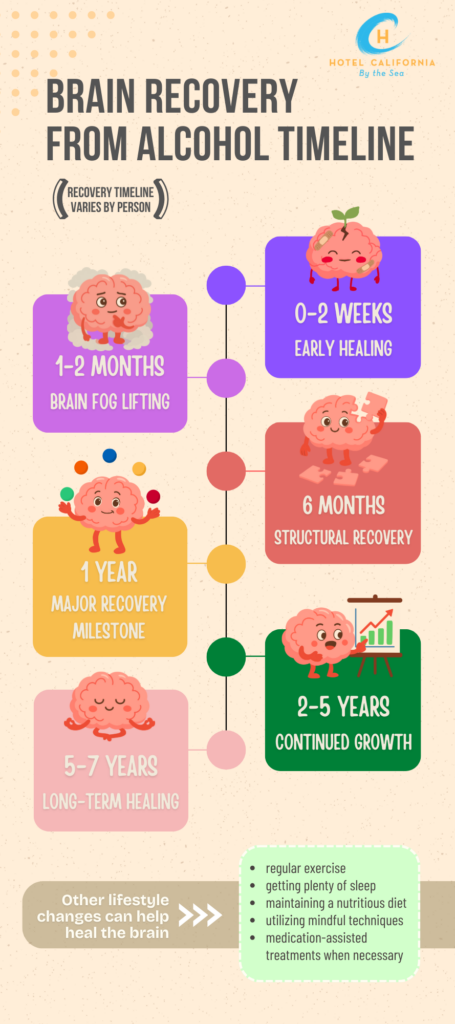
Alcohol use disorder is a mental health disease that can be severely damaging to the brain. But once alcohol use has stopped, can the brain recover? The brain recovery from alcohol timeline varies and is dependent on many factors. According to the National Institutes of Health, the majority of brain recovery occurs within the first year of abstinence and can continue for 5 to 7 years after.

There is no set timeline for brain recovery from alcohol. Different areas of the brain recover at different rates. Recovery can be quicker in certain areas of the brain, while in others, it can take a longer time to adjust.
New research suggests the brain can begin to heal in as little as 2 weeks after alcohol cessation. Much of the loss of functionality in the brain can return back to normal fairly quickly. But whether or not the brain can fully return to normal is still unknown.
Parts of the Brain that can be impacted by Alcohol
The cerebral cortex. This part of the brain is also referred to as the brain’s gray matter. It is responsible for the highest level of mental abilities, such as motor skills, sensory skills and association skills. Alcohol can impact this part of the brain by impairing how a person perceives things and the way information reaches the brain.
The frontal lobe. This part of the brain is the largest portion and a part of the cerebral cortex. It helps with planning, decision-making and maintaining self-control. Drinking alcohol can keep the brain from functioning properly and can lead to permanent damage. You can develop difficulty with impulse control. You can develop difficulty with problem-solving skills.
The hippocampus. This part of the brain is also known as the flash drive. It is responsible for memory and learning. Drinking excessive amounts of alcohol can cause you to black out and cause permanent damage. You can develop difficulty learning new information. You can develop difficulty recalling old memories.
The cerebellum. This part of the brain is important for thinking and movement. When you consume too much alcohol, you tend to stumble around because you have less ability to maintain balance and coordination. You can also develop difficulty with attention span and focus.
The hypothalamus. This part of the brain works to regulate the endocrine system and the autonomic nervous system, which influences body temperature and your appetite.
The medulla oblongata. This part of the brain controls your cardiovascular and respiratory systems in the body. Alcohol abuse can lead to slowed breathing, decreased heart rate and the inability to maintain a normal body temperature. Alcohol causes the medulla oblongata to shut down and this leads to a coma.
Alcohol’s Negative Impact on the Brain
- Long-term and heavy alcohol use can result in the thinning of the brain’s cortex. The cortex is the outer layer of the brain responsible for many important key functions such as decision-making, emotional regulation and self-control. This cortical thinning process impacts important brain areas involved in critical thinking and social interactions. Some research has found that cortical thinning can be reversed with the abstinence of alcohol as short as 6 months.
- Brain shrinkage can be caused by chronic alcohol abuse. It is when brain volume shrinks due to brain cell death. Once brain cells die, they do not regenerate and the effects can be permanent. Brain shrinkage occurs in areas responsible for cognitive functioning. The brain then becomes less efficient in processing information and impairs the ability to communicate between different regions of the brain.
- Wernicke-Korsakoff Syndrome is a severe brain disorder that is characterized by confusion, amnesia and abnormal eye movements.
- Increased risk of dementia. Dementia is characterized by severe cognitive decline that impacts daily life caused by brain cell damage.
- Increased risk of developing mental health disorders like depression, anxiety and other mood disorders.
Check Your Insurance Coverage for FREE
Find out if your insurance covers addiction treatment in minutes. We accept most insurance!
Brain Recovery from Alcohol Timeline
Brain recovery from alcohol is influenced by several factors like age, alcohol consumption history and overall health. Studies find that brain recovery from the effects of alcohol occurs more intensely at the beginning of alcohol abstinence and begins to slow down over time during recovery.
Within the first two weeks of alcohol abstinence, a person can experience deficits in cognitive thinking. This is because your brain is still slowly trying to adjust. Feelings of depression and anxiety and relapse are common during this early stage of recovery.
After about two months of alcohol abstinence, a person is at the highest risk of relapse. Feelings of confusion and irritability are common. But eventually that will begin to clear, and brain fog will also begin to clear up.
About 5 years into alcohol sobriety, your cognitive functioning of the brain should begin to improve. It can take anywhere from a few months to a few years after alcohol cessation to see major improvements in cognitive abilities. Some people may still have difficulty with abstract reasoning and short-term memory.
In some cases of recovery, it can take as long as 7 years after alcohol cessation for the brain to fully recover. The timeline for brain recovery from alcohol addiction is different for each person and is dependent on different variables. Some may recover in a few months, while others may need a few years.
Healing of the Brain from Alcohol Addiction
There are many studies that suggest the brain has the capacity for physical recovery with continued alcohol abstinence. This is supported by the brain’s neuroplasticity. Neuroplasticity is the brain’s ability to change its functions and physical structure based on experience and repeated thoughts, behaviors and emotions. During recovery, the brain’s neuroplasticity creates new neural pathways to help reorganize and form new connections.
Other lifestyle changes that can help heal the brain include regular exercise, getting plenty of sleep, maintaining a well-balanced and nutritious diet, utilizing mindful techniques and medication-assisted treatments when necessary.
Reach out to Hotel California by the Sea
We specialize in treating addiction and other co-occurring disorders, such as PTSD. Our Admissions specialists are available to walk you through the best options for treating your addiction.
Treatment for Alcohol Use Disorder
Alcohol use disorder can greatly impact brain health. It is one of the most common types of substance use disorder. Professional behavioral health programs such as Hotel California by the Sea, provide treatment for those with an alcohol problem.
We offer treatment at all levels of care including detox, residential, PHP and IOP. We utilize evidence-based methods such as CBT, DBT and MAT. Hotel California by the Sea is dedicated to helping our clients reach their goals of sobriety and overcome their addiction to alcohol.
References:
https://zinniahealth.com/substance-use/alcohol/brain-recovery-timeline
https://goldengaterecovery.com/brain-recovery-from-alcohol
https://www.recoveryanswers.org/research-post/brain-recovery-over-time-abstinence-after-alcohol-use-disorder/
https://www.matcareclinics.com/brain-recovery-from-alcohol-facts/
https://www.intoactionrecovery.com/blog/brain-recovery-from-alcohol/