
The relationship between Native Americans and Alcoholism
Native Americans, Alaskan Indians and other indigenous peoples only represent about 2% of the United States population. Yet they continue to have the highest rate of alcohol and drug use disorders. Native Americans and alcoholism have a long and tumultuous history.
An estimated 8.75 million people who identify as Native Indigenous Americans are met with obstacles involving politics, health and health disparities related to alcohol use and addiction. This has led to high rates of accidents, injuries, violence and mental health issues in this vulnerable population.
Native Americans are 5 times more likely to die of alcohol related causes than their white counterparts. They have a disproportionately high rate of alcohol related incarcerations compared to other racial groups, with 70-95% of all arrests being alcohol related crimes. A 2018 study from the Department of Health and Human Services found that Native Americans were 1.8 times more likely than their white counterparts to be diagnosed with a chronic liver disease associated with alcohol use.
Research has found that Native Americans have the highest rates of substance disorders and face higher rates of alcoholism compared to other racial groups and the general US population. This disparity is influenced by historical, cultural and socioeconomic factors, which continue to create challenges to Native American health.
Factors that influence the high rates of Alcoholism in Native communities
There are several important factors that contribute to alcoholism in Native communities. These factors include historical trauma and cultural disruptions, socioeconomic conditions such as poverty and unemployment and limited healthcare access and treatment facilities. The solutions to these issues must be multifaceted and culturally informed. Effective initiatives must also involve community members and leaders who are sensitive to the culture.
Historical Trauma and Cultural Disruptions
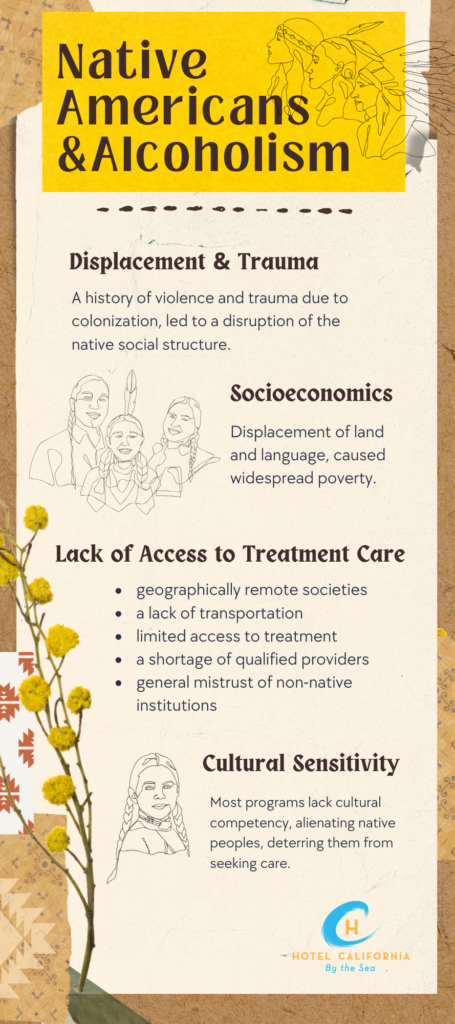
Historical trauma and cultural disruptions have played a major role in the relationship between Native Americans and alcoholism. The loss of traditional lands and practices has only increased mental health problems, which can often lead to substance abuse.
The history of Native and Indigenous Americans is filled with violence, oppression and displacement. This can lead to a loss of self-determination, trauma and social isolation from others in the general population.
Colonization upended the traditional ways of life and cultural practices. This disruption had a profound effect on many generations. When tribes were displaced, their cultural roots weakened. Cultural genocide only compounded the problem. The traditional practices and self-governance deteriorated as the colonial system began imposing its foreign values and power. Because of this, many Native American communities experienced depression and lost a sense of self, leading to alcohol to fill in the void.
Displacement from ancestral lands. Suppression of culture, practices and language. Disruption of social structures. All of these events have left a lasting negative impact on the community. Alcohol use was a way to cope with these deep-seated traumas.
Socioeconomics and Access to Treatment Care
Socioeconomic conditions play a significant role. Factors such as poverty, unemployment and lack of education often contribute to higher rates of alcoholism in the general population. This is also true for Native American communities. Financial constraints often prevent people from seeking out the help they need. These factors can create environments where stress and despair lead to looking for forms of escape through alcohol use.
Access to healthcare is another critical factor. Only an estimated 12% of native adults receive the needed treatment at specialized facilities for substance use disorders. Many Native American communities face significant barriers when it comes to obtaining quality health care.
Geographical remoteness and poor transportation infrastructure are some of the physical barriers this population deals with. Many live in remote areas with few healthcare facilities nearby, limiting access to treatment. Overall, only about 45% of Native Americans actually receive care.
A limited availability of treatment services, a shortage of qualified providers and a general mistrust of non-native institutions only further impedes treatment efforts.
Check Your Insurance Coverage for FREE
Find out if your insurance covers addiction treatment in minutes. We accept most insurance!
Cultural Sensitivity
Native communities continue to face huge obstacles when it comes to pursuing alcohol abuse treatment that is culturally sensitive. Cultural misunderstanding in treatment settings can deter people from seeking care. Most programs lack cultural competency. This can easily alienate Native communities. It is important to incorporate cultural values within treatment.
Additionally, the continued stigma behind addiction and recovery can prevent a person from seeking help and treatment. The fear of judgment or shame can be discouraging. It is especially true for a community that has been historically shamed and stripped of their culture. Oftentimes, native communities have different tribal views on mental illness. This should be taken into consideration in the approach for effective recovery methods.
Effective treatment must incorporate evidence-based methods in addition to being culturally sensitive. Solutions must respect native traditions and values. Community-based interventions that include tribal leaders can also provide more incentives for these members to seek out the help they need.
Is there evidence of genetic predisposition for Native Americans and Alcoholism?
Some studies say that genetic predispositions can contribute to alcoholism among Native Americans. These studies suggest certain genetic markers that increase the risk of alcohol dependency. However, there are other studies suggesting this is a false narrative.
Some research revealed that Native American Indians and Alaskan Natives had higher rates of alcohol abstinence compared to non-native people in the US. Although these groups do have a higher rate of alcohol use disorder compared to other racial groups, there is no clinical evidence that it can be linked to genetics.
Moving Forward: Addressing the Relationship Between Native Americans and Alcoholism
Addressing alcoholism in Native American communities requires strategic policies and advocacy. Policymakers must focus on initiatives that prioritize Native American health and include improving access to healthcare and addiction services.
Increasing funds for healthcare and treatment facilities. Integrating traditional healing practices with modern treatments. Supporting community-led education and prevention programs. Improving socioeconomic conditions. Expanding health care access for behavioral and mental health treatment. These are all examples of comprehensive strategies to help address the rise of alcoholism in this vulnerable population.
By tackling these challenges, communities can help mitigate the prevalence of alcoholism. Policy improvements and community-driven advocacy can help Native American communities achieve long-term health benefits. This then empowers these individuals to take back control of their health and their lives.
Reach out to Hotel California by the Sea
We specialize in treating addiction and other co-occurring disorders, such as PTSD. Our Admissions specialists are available to walk you through the best options for treating your addiction.
Treatment for Alcohol Use Disorder
Alcoholism impacts many people and communities. It is especially devastating for the Native American community. Behavioral health programs like Hotel California by the Sea provide alcohol use disorder treatment. We offer treatment at all levels of care include detox, residential, PHP and IOP. We utilize evidence-based methods such as CBT, DBT and family therapy. Hotel California by the Sea is dedicated to helping clients achieve their goals in sobriety and overcome their addiction.
References:
https://theredroad.org/issues/native-american-substance-abuse/