
Understanding Antipsychotic Withdrawal Symptoms:
What to expect and how to cope
Antipsychotic medications are used in the treatment of psychiatric disorders where people experience symptoms like hallucinations, delusions and losing some contact with reality. They are commonly used to treat conditions such as schizophrenia, bipolar disorder or severe depression. When it comes time to reduce or stop medication, patients should be aware of antipsychotic withdrawal symptoms that can occur.

Have you ever wondered what happens to your body when you stop taking antipsychotic medications? Abruptly stopping antipsychotic medications can cause withdrawal symptoms that are often ignored or treated as a relapse of the condition for which the drug was prescribed. Withdrawal can include various somatic, motor and psychological symptoms.
Classic withdrawal symptoms from medications that similarly impact the central nervous system were reported by an estimated 72% of people who attempted to stop their antipsychotic medication. Of those people, more than 50% of them reported that withdrawal effects were severe.
What are Antipsychotic Medications?
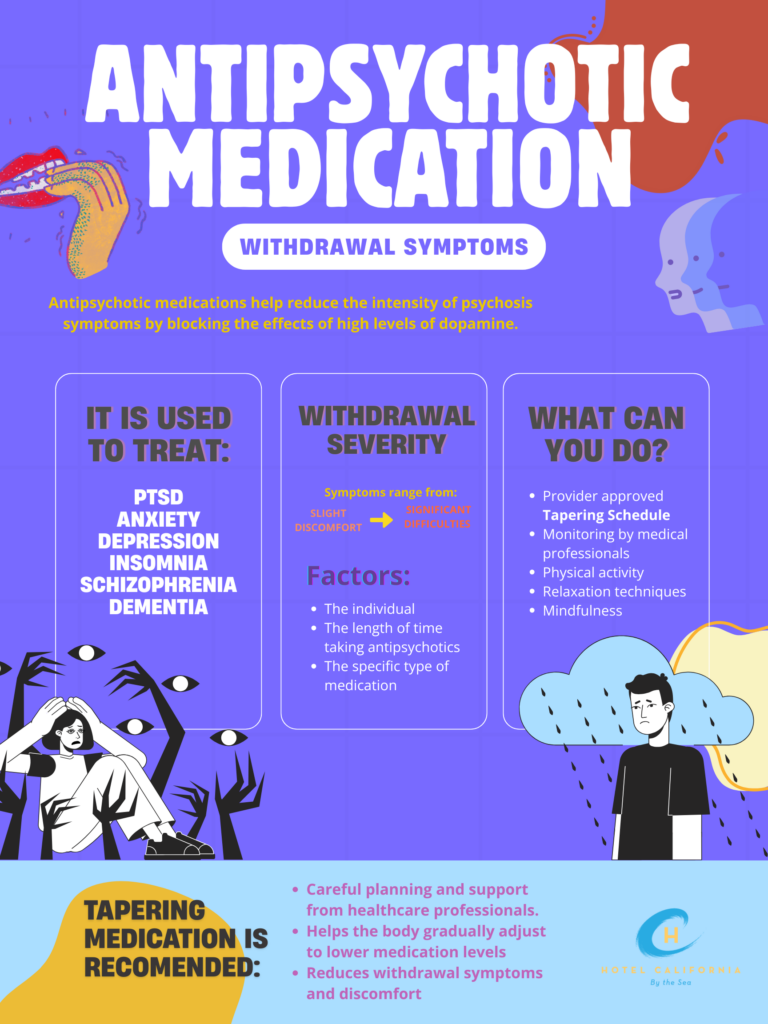
It is thought that people with high levels of dopamine can develop psychosis symptoms such as hearing voices, feeling paranoid and beginning to lose touch with reality. Antipsychotic medications help reduce the intensity of psychosis symptoms by blocking the effects of high levels of dopamine.
First-generation typical antipsychotic medications work by blocking dopamine receptors. Common medications include chlorpromazine and haloperidol.
Second-generation atypical antipsychotics are newer medications that block dopamine receptors as well as impact serotonin levels. Common medications include risperidone, olanzapine and quetiapine.
Antipsychotics have also been prescribed for off-label purposes such as treating anxiety, depression, insomnia, eating disorders, PTSD and dementia related distress in older people. Common side effects of antipsychotic medications include tremors, muscle stiffness, restlessness and muscle spasms. These physical side effects can become very uncomfortable and their impact can be a reason why some people attempt to stop their medication.
The Basics of Antipsychotic Withdrawal
Antipsychotic withdrawal involves physical and psychological changes in the body that occur when a person reduces the medication dose or abruptly stops taking an antipsychotic medication. This type of medication plays an essential role in managing conditions like schizophrenia and psychosis. When you stop taking them, the body will need time to adjust and rebalance, which is what causes withdrawal symptoms.
Withdrawal symptoms can vary depending on the specific medication. Symptoms can range from mild discomfort to severe challenges. It is important to remember that withdrawal is a natural part of the process when you stop using antipsychotics.
Most health care professionals recommend a gradual taper off antipsychotic medications rather than abrupt cessation. Tapering is the process of slowly adjusting your dose until you have a very small dose or until you are completely off the medication. Tapering allows the body to slowly adapt to the change of having less medication in the body. It can also minimize the adverse effects of withdrawal.
Antipsychotic Withdrawal Symptoms
Adrenergic withdrawal symptoms
- Headaches
- Anxiety
- Agitation
- Hypertension – high blood pressure
- Tachycardia – a heart condition in which the heart beats too fast
- Angina – chest pain due to narrowed coronary arteries
- Sweating
- Risk of heart attack
Cholinergic withdrawal symptoms
- Insomnia
- Anxiety and depression
- Dizziness and nausea
- Diarrhea
- Tremors
- Restlessness
- Myalgia paresthesia – causing burning pain and numbness and increased touch sensitivity
- Hallucinations
- Confusion
Dopaminergic withdrawal symptoms (nigrostriatal)
- Withdrawal dyskinesia – involuntary repetitive movements
- Parkinsonism – slowness, stiffness, tremors and balance issues
- Neuroleptic malignant syndrome – fever and severe muscle rigidity
- Akathisia – a movement disorder causing an uncontrollable urge to move, often in the legs
Dopaminergic withdrawal symptoms (mesolimbic)
- Auditory hallucination
- Persecutory delusions
- Other psychotic symptoms
Histaminergic withdrawal symptoms
- Irritability and agitation
- Loss of appetite
- Nausea
- Incoordination
- Lethargy
- Amnesia
Serotonergic withdrawal symptoms
- Flu-like symptoms and dizziness
- Low mood and agitation
- Confusion and lack of concentration
Check Your Insurance Coverage for FREE
Find out if your insurance covers addiction treatment in minutes. We accept most insurance!
How long do withdrawal symptoms last?
The duration of withdrawal symptoms can vary depending on the individual. For some, symptoms can last just a few days. Others might experience them for several weeks.
Gradually tapering off medication can reduce the duration of withdrawal symptoms. Slowly decreasing the dosage gives the body more time to adjust and can potentially shorten the withdrawal period. Tapering under the guidance and support of a healthcare professional will ensure your comfort and safety during this process.
The length of time that a person has been on antipsychotics and the specific type of medication also influence the withdrawal duration.
Research shows that the longer the exposure to antipsychotics, the higher the risk of developing withdrawal symptoms when drug use is discontinued. Long-term users can experience prolonged symptoms due to the body’s adaptation to the drug. On the other hand, those who have taken antipsychotics for a shorter time may find their symptoms resolved more quickly.
How to safely taper off Antipsychotics
The lack of guidance on how to safely come off these medications is what puts people at risk for uncomfortable and sometimes dangerous withdrawal symptoms. Tapering off antipsychotics requires careful planning and support from healthcare professionals. Following a treatment plan can help minimize withdrawal symptoms and ensure the patient’s well-being.
Avoid stopping medications suddenly. Coming off too quickly will most likely cause a relapse in psychotic symptoms and increase the risk of developing tardive psychosis. When you are tapering, there are some things to consider. What else is happening in your life? Are you under a lot of stress or pressure? Is it impacting your ability to cope? All of these impact how effectively come off the medication.
Tapering schedules are created based on individual needs. They take into account factors like medication type, duration of use and personal health. Working closely with a provider helps create a plan that suits each person’s unique situation.
Monitoring progress helps to adjust tapering as needed. This can ensure that any challenges or concerns that arise are addressed efficiently. Regular check-ins with the health care provider can provide guidance and reassurance throughout the process.
Coping Strategies to Manage Antipsychotic Withdrawal Symptoms
Managing withdrawal symptoms can be challenging. But there are ways to ease the tension and severity of some of the uncomfortable side effects.
Relaxation techniques. Deep breathing can help alleviate symptoms of anxiety and stress. By taking a few moments to focus your breathing, you can create a sense of calm to help you manage emotional changes more effectively.
Physical activity. Engaging in physical activities like yoga, walking or regular exercise can offer stress relief and distraction from withdrawal symptoms. Physical exercise can release endorphins, which can improve mood and reduce stress. Find an activity that you enjoy. It can make a significant difference in your withdrawal journey.
Practice mindfulness. Mindfulness can help manage emotional withdrawal symptoms by providing a sense of grounding and stability. Journaling or meditation are great ways to help you process your emotions and keep a positive outlook.
Finally, seeking support from friends or support groups can be beneficial during withdrawal. Connecting with others who understand your experience can provide encouragement and reassurance, helping you feel less isolated.
By incorporating these coping strategies into your daily life, you can manage withdrawal symptoms more effectively and enhance your overall well-being.
Reach out to Hotel California by the Sea
We specialize in treating addiction and other co-occurring disorders, such as PTSD. Our Admissions specialists are available to walk you through the best options for treating your addiction.
Treatment for Substance Use Disorder
Antipsychotic medications are prescribed for treating symptoms of schizophrenia and bipolar disorder. It has also been increasingly prescribed for off-label purposes like anxiety, depression and other conditions. For decades, people have been reporting difficult and challenging withdrawal symptoms when coming off their psychiatric medications. Because of this, it is recommended to seek out professional treatment to help you safely taper off the medication.
Professional behavioral treatment centers like Hotel California by the Sea can provide medical tapers and detox programs for substances like antipsychotic medications. We provide treatment at all levels of care including detox, residential, PHP and IOP. We utilize evidence-based methods like CBT, DBT and MAT. Hotel California by The Sea is dedicated to helping clients reach their goals in sobriety and overcome their addiction.
References:
https://pmc.ncbi.nlm.nih.gov/articles/PMC7552943
https://theconversation.com/antipsychotic-withdrawal-an-unrecognised-and-misdiagnosed-problem-196989
https://psychscenehub.com/psychinsights/antipsychotic-withdrawal-syndrome-tapering