
Understanding Dopamine Withdrawal Syndrome
Dopamine is a naturally occurring neurotransmitter involved in feelings of reward, motivation, learning and pleasure. Our bodies can naturally make dopamine when we do things such as eating and sleeping. Our bodies can also produce dopamine with the help of medications that raise dopamine levels in the brain. But what happens when we stop taking those drugs that artificially raise our dopamine levels? Our system can go into what is known as dopamine withdrawal.
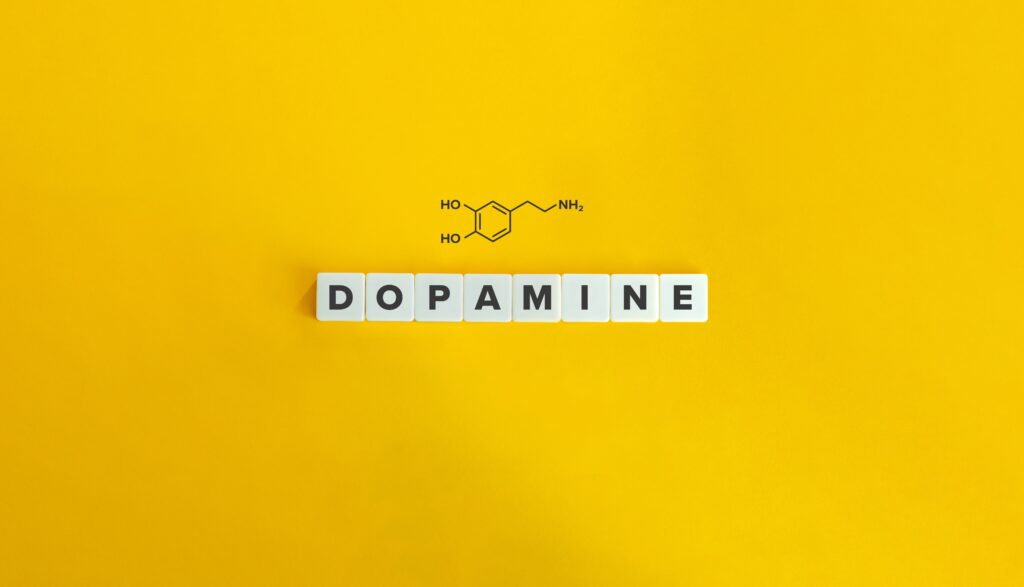
Stopping medication is often a sign that a person is feeling better and no longer needs extra help. But for some people, their bodies have become tolerant and dependent on dopamine and without it, they will experience dopamine withdrawal. This is especially true for dopamine agonist medications for Parkinson’s or Restless Legs Syndrome. Dopamine withdrawal is also referred to as dopamine agonist withdrawal syndrome (DAWS).
How does Dopamine work?
Also known as the feel-good hormone, dopamine is a neurotransmitter that rises in response to rewards. The brain will naturally release dopamine when we experience something fun, rewarding or pleasurable. It works by stimulating the reward pathways in the brain and works to reinforce behaviors by producing a sense of satisfaction.
The reward system is designed to get humans to do more of the things that we need to do in order to survive. These things include eating, drinking, socializing and reproducing. Humans are meant to seek out feelings that these dopamine-triggering activities provide.
Dopamine can also play an important role in other aspects of our lives. This includes movement control, emotions, learning, executive functions like memory and problem solving, kidney functions and sleep. It also plays a major role in the immune system. Ultimately, dopamine is an important component in our lives and when dopamine levels are disrupted, it can cause adverse side effects.
Modern triggers for Dopamine release
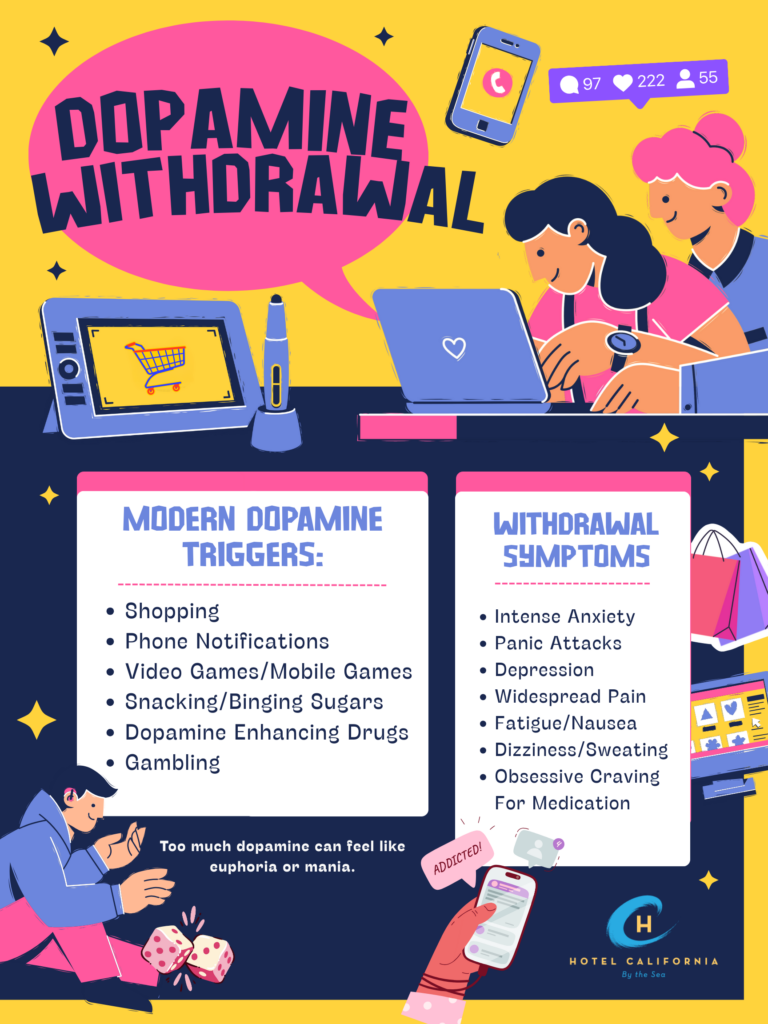
- Smartphone notifications
- Video games and phone games
- Gambling
- Shopping
- Snacking or binge eating sugar foods
- Dopamine-enhancing drugs
Can you become addicted to Dopamine?
Technically, you cannot become addicted to dopamine. But certain dopamine-enhancing behaviors that trigger the neurotransmitter release in high volumes can become addictive when they influence the natural process of the reward system.
Too much dopamine can feel like euphoria or mania. A dopamine high can feel like you have unlimited amounts of energy, anger or aggression and increased impulsivity.
What happens with a Dopamine Crash: Dopamine withdrawal?
The brain is incredibly adaptive. Once it gets used to high levels of dopamine constantly flooding the brain when medication is used, it no longer needs to listen to brain signals. To protect itself from being overwhelmed, the brain gradually turns down the volume on its own dopamine system by making the “locks” on its cells less sensitive and harder to open. This is the brain’s normal, protective response to a constant, high-level signal.
But what happens when the high levels of dopamine are suddenly taken away? What happens when a person stops using medications or drugs that raise dopamine levels in the brain? This leaves the brain in an extremely vulnerable state. The natural signals in the brain are now more difficult to access and can create a severe dopamine crash in levels. It can cause the levels of dopamine to go much lower than even before you started medication or drugs.
A profound dopamine deficit causes the intensity of withdrawal symptoms. It can cause both physical and psychological discomfort. Dopamine withdrawal symptoms can be similar to those of withdrawal from cocaine. Symptoms such as anxiety, panic attacks, depression, sweating, nausea and generalized pain are common.
Drugs that increase dopamine levels in the brain
Dopamine agonists are medications that prolong the effects of dopamine in the brain. It is the primary type of medication used to treat conditions of Parkinson’s disease and Restless Legs Syndrome.
Illicit stimulant drugs like cocaine and amphetamines also work to increase levels of dopamine in the brain. Coming off of these substances can also cause withdrawal symptoms related to a crash in dopamine in the brain.
Check Your Insurance Coverage for FREE
Find out if your insurance covers addiction treatment in minutes. We accept most insurance!
Dopamine Agonist Withdrawal Syndrome
There are three main categories of symptoms that users can experience when they are going through dopamine withdrawal. This includes psychological, physical and behavioral.
The most common symptom clusters include:
- Psychological: Intense anxiety from stopping pramipexole (used to treat Parkinson’s disease) or similar drugs, panic attacks, deep depression, and profound apathy—a complete inability to feel pleasure or motivation.
- Physical: Unexplained and often widespread pain (sometimes mimicking fibromyalgia), dizziness, nausea, sweating, and a feeling of deep, unrelenting fatigue.
- Behavioral: A powerful, obsessive craving for the medication. Some also experience a return or worsening of an impulse control disorder after stopping dopamine agonists, an issue the drugs themselves can sometimes cause.
Why it is not safe to suddenly stop dopamine agonists
Seeing those symptoms listed might create an understandable impulse to stop the medication immediately, but it is crucial to resist it. Abruptly quitting is the most dangerous path and can trigger a severe, acute crisis.
Think of it like pulling a support beam from a structure that has grown to depend on it. The resulting “dopamine crash” isn’t just a dip. It can go so low that it hits below your pre-medication baseline. Your brain is left with almost no ability to regulate mood, motivation, or pain, making withdrawal symptoms unbearable. A medically-supervised tapering schedule is not just a recommendation—it is essential for your safety.
Because of this severe risk, there is one non-negotiable rule: never alter your dose or stop your medication without your doctor’s direct guidance. Attempting to manage this alone can lead to unmanageable psychological and physical distress. Tapering is the safest way to come off medication and avoid severe and dangerous dopamine withdrawal symptoms.
How to safely taper off your Dopamine Agonist Medication
Since stopping suddenly is off the table, the only safe path forward is a slow, gradual process called tapering. Your doctor will create a personalized tapering schedule that reduces your dose by tiny increments. This careful, measured approach is designed to prevent the system shock that triggers severe withdrawal symptoms, giving your brain a fighting chance to adjust.
This process is a marathon, not a sprint. A complete and safe taper often takes many months, and in some cases, more than a year. The timeline can feel daunting, but remember that every small step forward is a victory.
Reach out to Hotel California by the Sea
We specialize in treating addiction and other co-occurring disorders, such as PTSD. Our Admissions specialists are available to walk you through the best options for treating your addiction.
Treatment for Dopamine Withdrawal Symptoms
Dopamine withdrawal can cause physical and psychological symptoms that can be uncomfortable. Medications like dopamine agonists create a buildup of dopamine that, when suddenly taken away can cause withdrawal symptoms as the brain has to readjust itself. In some cases, tapering off dopamine agonist medications is the safest way to come off the drug without causing intense withdrawal symptoms.
Hotel California by the Sea provides medical detox treatments for those experiencing withdrawal symptoms. We also offer treatment at other levels of care including residential, PHP and IOP. We utilize evidence-based methods like CBT, DBT and MAT. Hotel California by the Sea is dedicated to helping clients reach their goals of sobriety and overcome their addiction.
References:
https://www.medicalnewstoday.com/articles/dopamine-detox
https://www.news-medical.net/health/Addiction-and-Dopamine.aspx
https://psychcentral.com/news/2018/01/13/dopamine-withdrawal-is-difficult
https://thriveworks.com/help-with/self-care/dopamine-detox/