
What is a Closet Alcoholic?
A closet alcoholic is a person who conceals their struggles with alcohol addiction by engaging in patterns of alcohol abuse behind closed doors. Some signs of a closet drinker are more obvious than others. But engaging in risky drinking behaviors out in the open or behind the scenes is dangerous either way.

Alcoholism is a mental health disorder characterized by problematic drinking behavior that leads to physical and psychological harm. Despite how common it has become, there are still some people who try to hide their substance use disorder due to stigma, guilt and shame.
Closet alcoholics often lead a double life. They appear to be functional to the outside world, while inside, they quietly battle with their alcohol dependence. A hidden struggle can sometimes make it harder to recognize there is a problem and to get help. If it is left untreated, it can lead to physical, emotional and social consequences.
Closet alcoholics or hidden alcoholics drink as much as they want without anyone knowing or finding out. They will try to hide this from others because if they knew it would require them to admit to their addiction, take responsibility and pursue recovery when they are not ready.
What is Closet Alcoholic?
Closet alcoholics are people who are struggling with an alcohol use disorder but are hiding it from others and sometimes from themselves. They go to great lengths to hide their drinking habits from friends, families and the public. The secrecy can involve physically hiding alcohol, sneaking drinks or even maintaining a façade of control in public. But privately, they may be struggling.
What causes a person to become a Closet Drinker?
Why do some alcoholics become closet drinkers? In many cases, closet drinking develops as a way to avoid shame, judgment and confrontation about their drinking habits. They often feel ashamed of their drinking, are afraid of the stigma behind alcoholism, are afraid they could lose their job, are afraid they could lose their partner or are in denial over their alcohol addiction.
Many closet drinkers use alcohol as a way to cope with their emotions. It is used to cope with emotional stress due to overwhelming circumstances. It can provide a temporary escape, but eventually creates a cycle of dependency that can lead to addiction.
Most of the time, closet drinkers know their drinking is problematic. They are aware that their drinking to self-medicate is not healthy. Instead of seeking help, they will hide it and develop a secretive relationship with alcohol. It turns into a way to escape from their struggles.
Signs of a Closet Drinker
Closet drinkers will find frequent excuses to drink. They drink to unwind after work, they drink to celebrate minor and major achievements, or they make drinking a central part of every social event.
Closet drinkers often engage in heavy drinking. They may consume excessive amounts of alcohol in secret. This means they may drink normally at a party and then, when they come home, will drink again away from others.
Closet drinkers often have unexplained absences. Missing work, canceling plans at the last minute or suddenly disappearing for periods of time without an explanation are signs of closet drinking. In some cases, they may even leave social gatherings early in order to go home and drink alone.
Closet drinkers tend to hide their alcohol. They often go to great lengths to hide their alcohol consumption. They are driven by fear of discovery and the severity of their problem. Sometimes they hide bottles and cans in various places and choose a location where they know that no one else will be looking. Secretive behavior is a strong indication of someone who may be a closet drinker.
Closet drinkers will shift towards unexplained changes in behavior. Others may notice a difference in the way they act and carry themselves. The mood swings, defensiveness and forgetfulness are noticeable but unexplained.
Closet drinkers will begin to neglect their responsibilities. Missing deadlines at work, forgetting important family obligations and letting basic tasks slip are signs of alcoholism and closet drinking.
Closet drinkers are alcoholics. They will also display physical signs of alcohol abuse such as bloodshot eyes, flushed skin, shakiness, unkempt hair and poor hygiene. They may also rarely experience hangovers or appear unaffected by the side effects of alcohol use because of their growing tolerance due to consuming large amounts.
Check Your Insurance Coverage for FREE
Find out if your insurance covers addiction treatment in minutes. We accept most insurance!
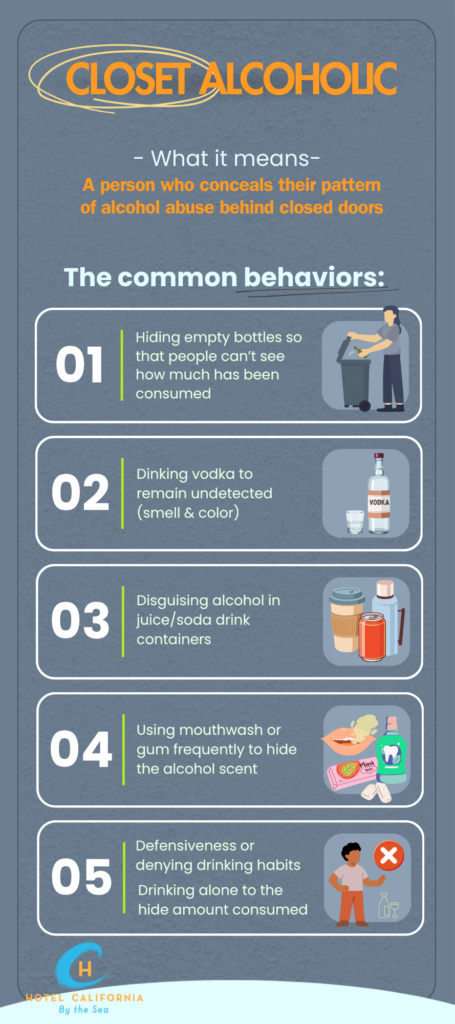
Common Behaviors of a Closet Alcoholic
- Hiding empty bottles or cans under or around things so others cannot see how much alcohol is being consumed.
- Drinking vodka instead of other beverages because it is not as easily detected due to its lack of color and odor. Because it is clear, it can be added to coffee, soda or water bottles and is easily concealed.
- Disguising alcohol in containers like empty juice or sports drink bottles.
- Lying to friends and family about their drinking habits.
- Using mouthwash frequently, chewing gum or consuming things to mask the scent of alcohol on their breath.
- Disappearing for long periods of time when hanging out in social settings to go drink. This can be taking multiple bathroom breaks, getting to work late or leaving work early in order to go drink.
- Drinking alone away from others for fear of being seen with alcohol.
- Defensiveness and denying problems with drinking when confronted about it.
- Not returning calls or texts and becoming more anxious or irritable over the little things.
- Feelings of depression or anxiety and sudden mood swings.
What is the difference between a Closet Drinker and a Functioning Alcoholic
A closet drinker is someone who is completely secretive about their drinking. They can go to extremes to hide their behaviors and the consequences of them. A high-functioning alcoholic does not attempt to hide their alcohol consumption. They will appear in control of themselves and lead productive lives, which causes them to believe their alcohol drinking is not a problem.
The Impact of Closet Drinking
- Cardiovascular issues
- Digestive problems
- Compromised immune system
- Liver disease and liver damage
- Mental health disorders like depression and anxiety
- Cognitive decline: learning and memory issues
- Making emotional struggles worse over time
- Cancer
Reach out to Hotel California by the Sea
We specialize in treating addiction and other co-occurring disorders, such as PTSD. Our Admissions specialists are available to walk you through the best options for treating your addiction.
Treatment for Alcohol Use Disorder
A closet alcoholic typically engages in secretive behaviors and, behind closed doors, will heavily drink and may be struggling with their battle with alcohol addiction. It can lead to untreated co-occurring disorders, which will eventually result in physical, emotional and psychological damage. Professional behavioral treatment programs like Hotel California by the Sea are experts in treating alcohol use disorder.
We offer treatment at all levels including detox, residential, PHP and IOP. We utilize evidence-based methods like CBT, DBT and group therapy. Hotel California by the Sea is dedicated to helping clients reach their goals of sobriety and overcome their addiction.
References:
https://www.choosingtherapy.com/closet-alcoholic
https://www.avenuesrecovery.com/understanding-addiction/alcohol-addiction/closet-alcoholic
https://www.addictionresource.net/alcohol/alcoholic/closet-alcoholic