
How long does Dabs last in your system?
Dabs are concentrated forms of cannabis that contain between 60-90% THC. These potent formulations of cannabis have become more and more popular among marijuana users. Because of its high potency, many are left wondering how long do dabs last in your system? The duration of the drug can depend on various factors including how often you consume dabs and your personal biological makeup.

While smoking and vaping are the most common ways of consuming marijuana and THC extracts, dabbing is a new method of consumption gaining popularity. It has become quite prominent in cannabis culture among both recreational and medicinal users.
Users who prefer dabbing claim this method of consumption is a safer and more effective way to consume cannabis. It cuts out the carcinogens and toxins carried by smoking and vaping.
However, the dabbing method does expose users to very high concentrations of cannabis. Regularly consuming high concentrations of cannabis like dabs can carry a risk of tolerance, dependence and addiction.
What are Dabs?
Dabs are high concentrations of cannabis that resemble a thick wax or sticky honey texture. They are typically dark brown or a yellow colored wax that can feel sticky or gummy.
Common street names for dabs include butane hash oil, honey oil, budder and crumble and shatter.
During the Vietnam War, American soldiers created strong cannabis extracts by pouring solvents over raw cannabis leaves and straining them. This method created pieces of solid cannabis concentrations. It is not a new concept. But it has only recently gained more popularity.
In general, marijuana abuse can lead to impaired memory, impaired motor skills, altered judgment, paranoia and psychosis. With long-term use of THC products, it can lead to stunted brain development in young people, depression, cognitive impairment, chronic cough and addiction.
The method of consuming this highly concentrated cannabis is called dabbing. Dabbing is when you inhale very potent vapors of cannabis concentrate.
How does Dabbing work?
The process of dabbing involves a dab rig, water pipe, nail, dome and torch. A single piece of dab (cannabis concentrate) is placed on a small heated surface called a nail. It is then heated with a torch to extremely high temperatures, at which point it will release vapors. Users inhale the vapors through a water pipe.
A single dab concentrate can contain anywhere from 25-80% levels of THC.
Users can also inhale dab vapors through a wax pen, which is a device similar to a vape that is meant to heat up dabs and high concentrations of cannabis. This process of dabbing delivers a powerful dose of THC, which is the main psychoactive component in cannabis.
How long does Dabs last in your System?
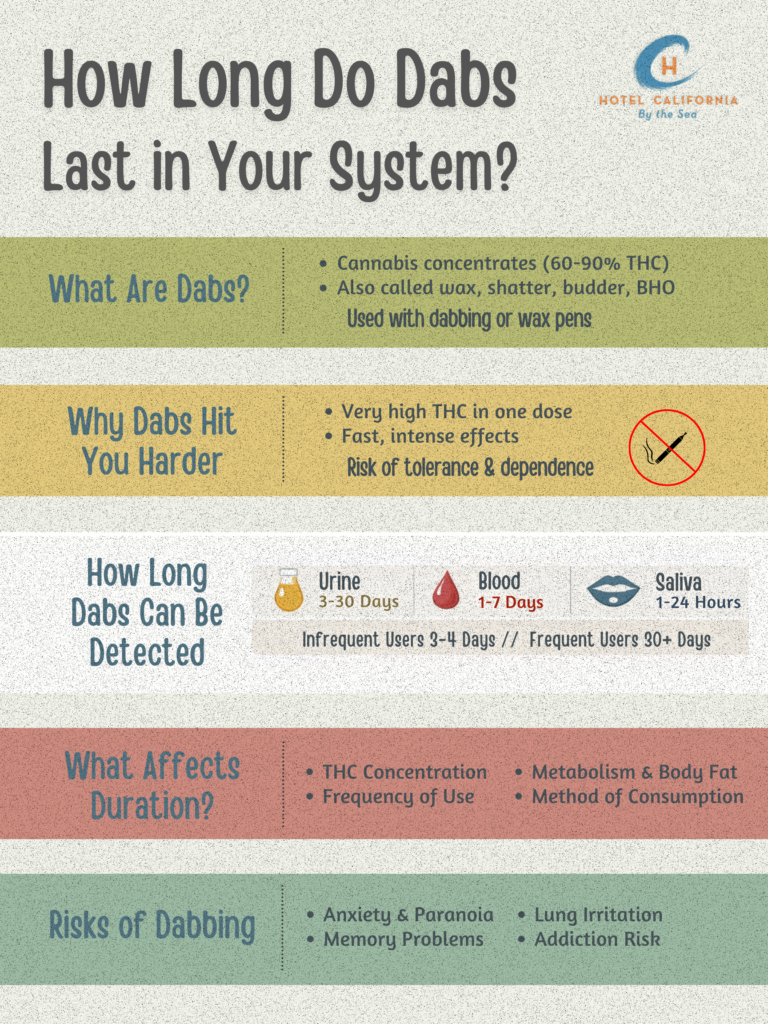
So how long can dabs remain in your system? The duration of how long the substance stays in your system is dependent on how often you consume it and your individual biology and metabolism.
Factors such as THC concentration of the dabs, how it is consumed, personal metabolic rate, how often you consume and the overall length of time in which you are consuming dabs, can all impact how long it remains in your system.
Cannabis potency is the strength of the THC content in your dabs concentrate or wax pen. The consumption method of dabbing can result in quick effects and intense highs. Frequency of use can determine how long the drug lasts. Regular users can experience shorter highs compared to infrequent users. The risk of mixing substances like alcohol and THC can alter the duration of dabs in the system and the intensity of the high.
For infrequent dab users, THC can remain detectable for around 3-4 days after initial consumption. More frequent users can have detectable levels for a month or longer. With drug urine testing, dabs can remain detectable between 3-30 days. In blood tests, dabs can remain detectable for 1-7 days. And in saliva tests, dabs can remain detectable from 1-24 hours.
Check Your Insurance Coverage for FREE
Find out if your insurance covers addiction treatment in minutes. We accept most insurance!
Adverse Effects from Dabbing
- Psychological effects – Anxiety, paranoia and panic attacks.
- Respiratory effects – Heating up a substance can produce harmful byproducts from its vapors and irritate the lungs when inhaled.
- Impurities and contaminants – Poorly produced cannabis concentrates can lead to residual solvents that can be dangerous. Homemade dab can contain other toxins like butane, pesticides and carcinogenic contaminants.
- Memory impairment – Can contribute to impaired thinking skills, short-term memory impairment and overall thinking problems.
- Dependency – Increased tolerance to cannabis due to chronic use, which can then lead to addiction.
- Risk of burns and explosions – The use of liquid butane, which is highly flammable and a toxic solvent.
- Dabbing can expose a person to very high levels of THC.
- The process of making dabs – For many, the dab rig is still a homemade apparatus and can pose danger and safety risks.
- Sometimes if you heat up the product too much, it can release toxins and known carcinogens.
- Microbial pathogens and bacteria can be present in cannabis preparation due to improper storage of the materials.
- Dabbing is associated with the development of important structural brain changes, increased risk of psychosis and cognitive dysfunction.
Smoking, Vaping and Dabbing: What is the difference?
Smoking, vaping, orally ingesting (eating and edible) and dabbing are all forms of cannabis/THC consumption. Dabbing has become more popular due to its ability to deliver a high concentration of THC, which produces a very quick and intense high, compared to traditional methods of cannabis consumption.
Dabbing is different from smoking and vaping. Smoking requires burning of the cannabis leaves, which can lead to inhaling carcinogens and other toxins alongside the THC. With vaping, you are inhaling a lower concentration of THC, which can also include other contaminants like artificial flavoring. When it comes to dabbing, you are vaporizing mostly pure concentrates of THC.
Those who dab consider it a more efficient means of consuming because it is so potent that it only requires small amounts of the substance to achieve a desired high. Cannabis concentrates can offer a diverse taste and smell profile that can be appealing to users who prefer the dabbing method. Dabbing also allows the user to pick the concentration of marijuana, preferred type of cannabis, preferred texture and quality.
Smoking cannabis creates carcinogens that can be irritating to the lungs. Vaping cannabis exposes users to other types of toxins and contaminants. Dabbing is inhaling a more pure method of delivery, which can result in a cleaner high. It is the reason why this method has become so popular among cannabis users.
However, inhaling cannabis in any form can expose the lungs and other parts of the body to potential toxins.
Reach out to Hotel California by the Sea
We specialize in treating addiction and other co-occurring disorders, such as PTSD. Our Admissions specialists are available to walk you through the best options for treating your addiction.
Treatment for Substance Use Disorder
THC is an addictive substance and is the main psychoactive component in cannabis, marijuana and weed. Smoking, vaping and dabbing are all common methods of THC consumption. Dabbing, in particular, has gained surprising popularity among the cannabis community. However, with frequent use of THC, it can cause tolerance, dependence and addiction.
Professional behavioral treatment programs like Hotel California by the Sea provide help for those suffering from an addiction to cannabis. We offer treatment at all levels of care including detox, residential, PHP and IOP. We utilize evidence-based methods like CBT, DBT and group therapy. Hotel California by the Sea is dedicated to helping our clients achieve their goals in sobriety and overcome their addiction.
References:
https://pmc.ncbi.nlm.nih.gov/articles/PMC8078006
https://drugfree.org/article/what-is-dabbing/
https://www.addictions.com/marijuana/dabs-what-is-dabbing-and-is-it-dangerous
https://engagewellnessnow.com/blog/the-meaning-of-dabs-and-dabbing
https://www.headshop.com/blogs/dabbing/how-long-does-a-dab-stay-in-your-system