
Does Eating make you less Drunk?
We have all heard the saying that having a full stomach of food can help with alcohol absorption. But is it really true? Does eating make you less drunk? Will eating a slice of pizza or a burger help negate the intense effects of alcohol as it makes its way through your stomach and into the system?
The truth is, no matter what type of food you eat or how much you eat, your liver can only process a small amount of alcohol at a time. Having food in your stomach when you consume alcohol can help temporarily soak up the alcohol to slow down the process by which it reaches your bloodstream. But this does not completely stop alcohol from eventually reaching the bloodstream to speed up the elimination process.
The dangers of Alcohol
Alcohol use disorder is the 7th leading risk factor for both death and disability globally. According to the National Institute on Alcohol Abuse and Alcoholism, alcohol impacts sensitive neurotransmitters in the brain that are in charge of controlling speech, balance, coordination and judgment. These are all very important brain functions essential to daily life.
Isn’t alcohol full of calories, similar to food? Yes, alcohol contains calories. But alcohol provides NO nutritional value whatsoever. It is not the same as food and cannot replace food. Food provides calories and energy needed to fuel the body because the calories come from protein, carbs and fat. Whereas in alcohol, it contains empty calories that provide no sustenance to the body.
In fact, alcohol is a toxin. When it enters the body, the body will prioritize breaking down the toxins over food. This delays and decreases the availability of nutrients from food naturally occurring in the system. Alcohol abuse often leads to nutritional deficiencies, among other things.
Why drinking on an empty stomach can lead to getting drunk faster
Do you ever notice how one drink can make you feel super tipsy when you skipped eating beforehand? There is a biological reason for that. Without food in your stomach literally blocking the way, alcohol can easily pass from the stomach into the small intestine immediately.
When drinking alcohol, about 20% of it is absorbed by the stomach, while about 80% of alcohol is absorbed through the small intestine. When alcohol passes through the stomach or intestine, it goes directly into the bloodstream, which carries the alcohol straight to your brain, creating the feeling of being drunk more quickly.
This is how you get drunk fast. The sudden and intense rush of alcohol effects is caused by the amount of alcohol in your system. When your stomach is empty, there is nothing to slow down the absorption and causes your blood alcohol concentration to spike.
The results? A fast and high peak of intoxication that can feel overwhelming and difficult to manage. It is the fastest way to get drunk. Drinking on an empty stomach intensifies the effects of alcohol and can inhibit your ability to think clearly and coordinate your body movements.
Does eating make you less drunk?
If an empty stomach is an express lane for alcohol, then a full stomach creates a roadblock. Eating a meal with fat, proteins and fiber can physically get in the way of the alcohol moving through your system. The alcohol gets mixed in with all the food you ate to slow down the alcohol processing.
Your stomach holds on to its contents for much longer when it is full of food. It moves more slowly into the small intestine instead of all at once. And because the alcohol is mixed in with the food, the alcohol will also move more slowly into the intestine and eventually into the bloodstream and brain. This process is called gastric emptying, making food the number one way to slow down the alcohol process.
Does a slow alcohol process mean a person becomes less drunk? Not necessarily. Having a full stomach with alcohol only makes sure that a person doesn’t become too drunk too fast. A person will still feel the effects of alcohol. But it will be less intense and it can last longer due to the slowing of alcohol moving through the system.
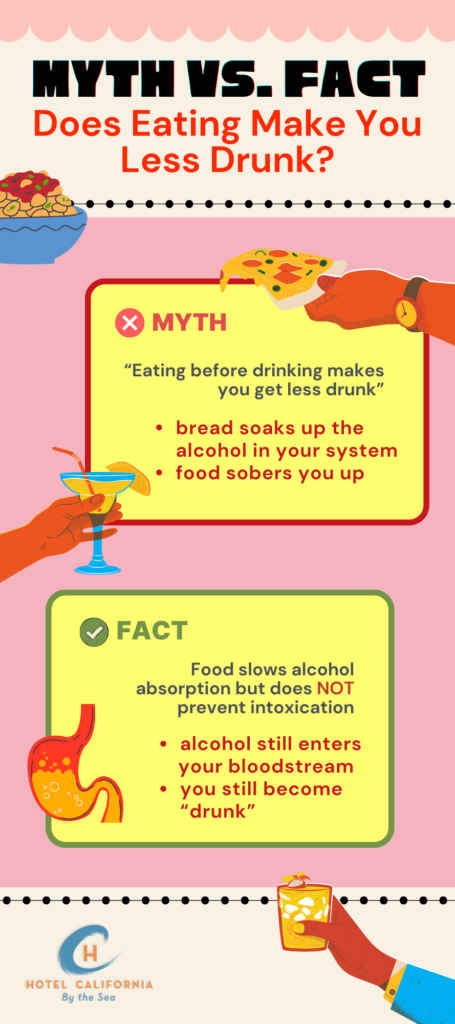
Eating food before you drink can slow down how quickly your body absorbs alcohol and how quickly you get drunk. But it doesn’t change the overall impact of alcohol on your body.
Check Your Insurance Coverage for FREE
Find out if your insurance covers addiction treatment in minutes. We accept most insurance!
How your body absorbs Alcohol when you drink
- Mouth – When you start drinking, there is a very small percentage of alcohol that will move into the small blood vessels in the mouth and tongue.
- Stomach – When the alcohol reaches the stomach, about 20% of the alcohol consumed will be absorbed into the bloodstream through the stomach lining.
- Small intestine – When alcohol finally makes its way into the small intestine, this is where the majority of it gets absorbed into the bloodstream.
Each person absorbs alcohol at a different rate depending on many factors. Women, young people and people who are smaller in size tend to absorb alcohol more quickly compared to men, people who are older and people who are larger in body size.
Feeling less drunk vs Being less drunk
The slow processing of alcohol in your system is the reason why you may feel less drunk from eating beforehand. This is compared to a sudden wave of intoxication that hits you all at once when you drink on an empty stomach. It can help you feel more in control and make the effects of alcohol more predictable.
But feeling less drunk is not the same as being less drunk. The food in your stomach is just controlling the alcohol processing in your stomach, but it is not getting rid of the alcohol. Food doesn’t make alcohol vanish; it only delays absorption. Eventually, all the alcohol you have taken in will make its way to the bloodstream.
So your level of alcohol impairment, measured by the blood alcohol concentration, can still reach the same high peak. It will just take a lot longer to get to that point. It can lead to misjudging your sobriety because you don’t feel as drunk and trick you into thinking you need more alcohol in order to feel the full effects of the alcohol.
Once the alcohol has reached your bloodstream, it can only be processed by the liver. The liver can only work at processing about one drink per hour. No amount of food can speed up this process. Having food in your stomach also cannot reduce the effects of alcohol once your blood alcohol concentration is already very high.
Benefits of eating before drinking Alcohol
Eating food before alcohol consumption can help slow down alcohol absorption and make it much easier for your body to manage the toxins. The alcohol effects are less intense and you can feel less drunk.
- Replenishing lost fluid. Eating and drinking beforehand or while drinking can help alleviate dehydration and electrolyte imbalance that occurs when you consume alcohol.
- Blood sugar stabilization. Alcohol consumption often leads to a fluctuation in blood sugar levels that can contribute to dizziness and lightheadedness. Having food in your stomach can help sustain energy without the worry of crashing out from the alcohol.
- Providing essential nutrients. Alcohol provides zero nutritional value. Having food in your stomach can help maintain and replenish essential nutrients in your body to help with alcohol recovery.
Reach out to Hotel California by the Sea
We specialize in treating addiction and other co-occurring disorders, such as PTSD. Our Admissions specialists are available to walk you through the best options for treating your addiction.
Treatment for Alcohol Use Disorder
Having a full stomach will make you less drunk, but it will also extend the time during which you are impaired and intoxicated. On a full stomach, your blood alcohol concentration level rises very slowly but will continue to rise over a longer period of time due to the blockage from the food being passed in your stomach and small intestine.
Eating before drinking can make you less drunk, but you will still get drunk and remain that way for longer. Professional behavioral treatment programs like Hotel California by the Sea provide help for those with alcohol use disorder.
We offer treatment at all levels of care including detox, residential, PHP and IOP. We utilize evidence-based methods like CBT, DBT and MAT. Hotel California by the Sea is dedicated to helping our clients reach their goals in sobriety and overcome their alcohol addiction.
References:
https://wellbeing.jhu.edu/blog/2022/05/11/food-and-alcohol-what-you-need-to-know
https://zinniahealth.com/substance-use/alcohol/food-for-hangovers
https://www.youridattorney.com/does-eating-before-drinking-lower-my-bac
https://www.medicalnewstoday.com/articles/321103
https://pmc.ncbi.nlm.nih.gov/articles/PMC9233813
https://www.healthline.com/health/drinking-on-an-empty-stomach