Is Addiction a Disease or Choice?
It’s an age-old question: is addiction a disease or a choice? This debate still splits people to this day. It forces a decision between compassion for a medical condition and accountability for bad behavior. Old school beliefs say addiction and rehab are choices due to a moral failing or character flaw. Unfortunately, this debate harms many and prevents us from finding effective mental health support.
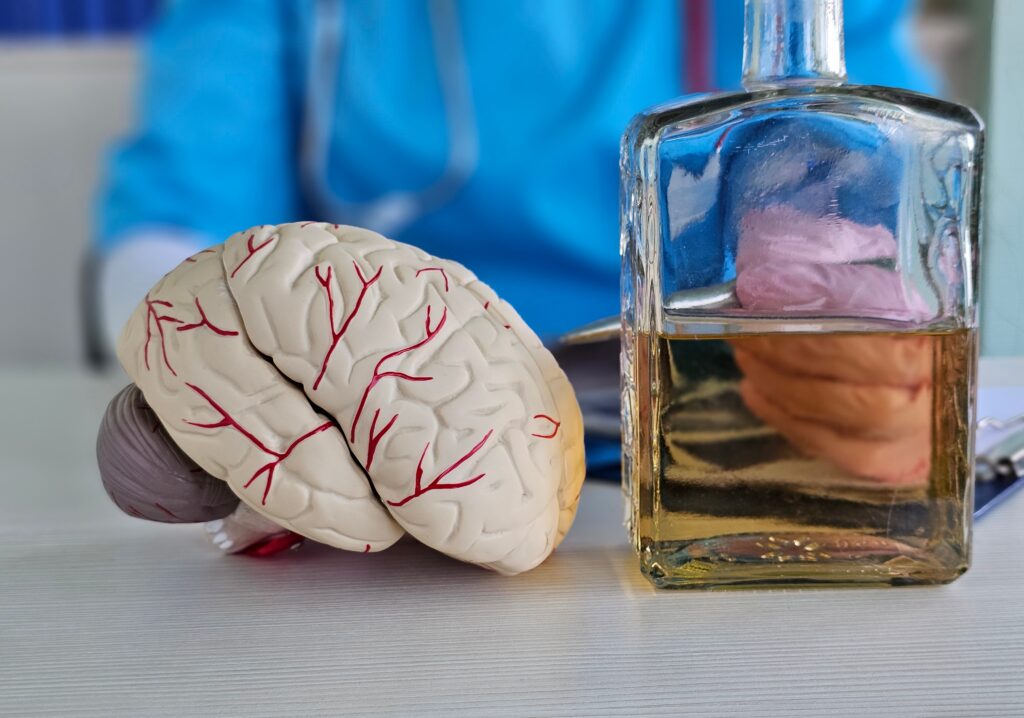
The brain is like a car with a steering wheel and a brake pedal. For the majority of drivers, the brakes function perfectly fine when danger arises. With addiction, it is as if the brake lines have been cut and now the car is going out of control. The driver may have chosen to drive the route, but mechanical failures occurring can make it impossible to stop without outside help.
No one sets out to be an addict. While the initial choice may be made, environmental factors and learned behaviors can also impact actions in those who struggle with addiction. Addiction is a disease that interferes with the part of the brain that is responsible for reward, motivation, learning, memory and judgment. Denying that addiction is a brain disease is harmful and only contributes to reducing access to healthcare and treatment.
What is an Addiction?
The American Medical Association classified alcoholism as a disease in 1956. And in 1987 declared that addiction is a disease. In 2011, the American Society of Addiction Medicine (ASAM) joined with the American Medical Association to define addiction as a chronic brain disorder.
Addiction is classified as a chronic relapsing disorder, which means it tends to develop over time. It can be managed but not necessarily cured. It typically requires long-term care and support. In fact, a person can become addicted to almost any substance or activity. Addition is a disease that does not discriminate. Addiction occurs from a combination of various factors such as behavioral, psychological, environmental and biological.
The criteria for someone who may have a substance addiction:
- Loss of control over how often or how much substances are being used
- A growing tolerance to the substance’s effects
- Withdrawal symptoms occur when substance use is stopped or reduced
- Development of strong urges and cravings to continue substance use
- Continued substance use despite serious consequences
Why Addiction Fits the Medical Definition of a Chronic Disease
The brain is like any other organ in the body, susceptible to mechanical failure. If a person has heart disease, we understand that the organ’s tissues have physically changed and need treatment in order to heal and function. In addiction, the affected tissue is the brain itself and its functions with reward, memory and motivation.
The chronic brain disease model suggests that addiction requires ongoing management rather than a one-time cure. This is because the underlying biology of the brain has been fundamentally altered. Skeptics of addiction as a disease often ask why when it involves choices. But the parallels between Type 2 diabetes, a common disease, and addiction are noticeable.
- Both conditions have a genetic component with genes accounting for about half of a person’s susceptibility.
- Both are influenced by behavioral triggers and lifestyle choices that can inevitably cause involuntary biological damage.
- Both require management through daily behavioral changes to maintain remission rather than a one-time surgical fix.
Being able to recognize these parallels may begin to shift focus from blame to effective treatment. Understanding addiction as a medical condition helps to develop stronger and more effective treatments that save lives.
How Addiction Hijacks Your Brain
A healthy brain works by rewarding healthy behaviors like exercising, eating or bonding with loved ones. Drugs, alcohol and other toxic substances work by hijacking the pleasure and reward system in the brain by hooking you into wanting and needing more. Once a substance chemically alters the brain, willpower also begins to change.
Dopamine is a chemical in your brain that is often impacted by drug use and can fuel addiction. Not only is dopamine the “feel-good” chemical, but it also acts as a learning signal for survival. When you eat a healthy and nourishing meal, your brain releases controlled bursts of dopamine that tell you to remember this, as it is vital for staying alive. The chemical messenger then builds a mental priority list to teach the brain to repeat behaviors that sustain life.
When addictive substances are used, they disrupt the brain’s system by triggering a dopamine flood up to ten times more powerful than natural rewards. This intense artificial surge tricks the brain into aggressively rethinking its priority list and falsely categorizing substance use as more critical than basic necessities. This is referred to as hijacking the brain.
Now the brain is no longer seeking the high for enjoyment, it is pursuing what it believes is necessary for survival. The disease simply cuts the brakes on the brain’s logic center.
The “Choice Window”
The initial decision to use a substance usually begins with a choice. At this early stage, the individual is able to make a decision with a clear mind. But focusing solely on this point of choice ignores the shift that occurs after repeated exposure to the substance. While first use may be a choice, once the brain has been chemically altered by addiction, it is no longer a choice and is beyond their behavioral control.
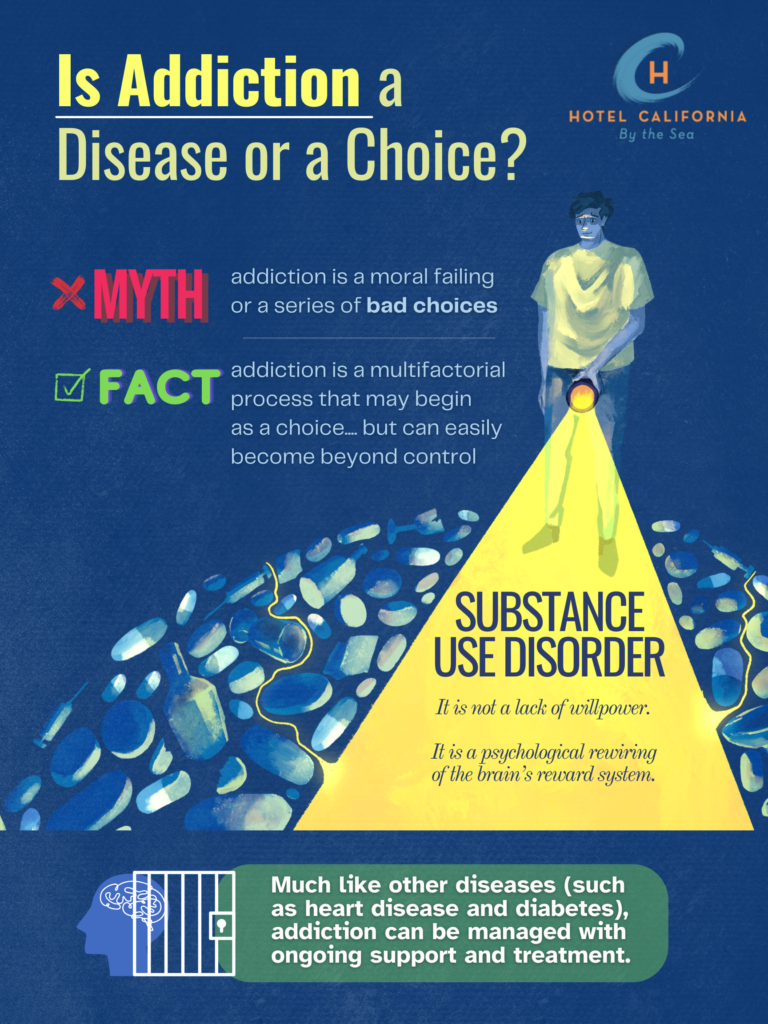
When the brain’s chemistry adapts to the substance, that window transforms into what was once a voluntary drug-seeking behavior into an involuntary drive. It is not a lack of willpower. It is now a psychological rewiring of the brain’s reward system.
Choice is not a determining factor in whether something is a disease. For example, heart disease and other forms of cancer also involve personal choices like diet, exercise and sun exposure. Disease happens to the body as a result of choices being made. Just as the disease of addiction is a result of the initial choice to use substances.
Check Your Insurance Coverage for FREE
Find out if your insurance covers addiction treatment in minutes. We accept most insurance!
Personal Risk Factors for Developing Addiction
Just like some people are born with a higher susceptibility to heart disease or diabetes, some people inherit a brain chemistry that reacts more intensely to substances. A person does not choose how their brain and body react to drugs. This is why some people are able to control it and others are not able to.
Variables that impact addiction:
- Family history – inherited genes that impact how the brain processes dopamine
- Early use – consuming substances before the brain is fully mature can alter development
- Trauma – abuse, neglect or chronic stress that impacts the nervous system
- Social environment – poverty, peer pressure, lack of resources
- Mental health condition
Replacing stigma with empowering change
Understanding that the brain’s priority system can be hijacked changes everything. There is no longer a need to choose between compassion and accountability because science explains that they both coexist.
For those who believe addiction is a choice, it can lead to harsh judgment for a person who may be struggling with substance use disorder. Many people still carry the belief that addiction is a moral failing or a series of bad choices. However, it has been proven clinically that addiction is a multifactorial process that may begin as a choice but can easily turn into out-of-control use.
Reach out to Hotel California by the Sea
We specialize in treating addiction and other co-occurring disorders, such as PTSD. Our Admissions specialists are available to walk you through the best options for treating your addiction.
Treatment for Substance Use Disorder
Suffering from an addiction is not a sign of weakness. It is a sign of being unwell. With ongoing support and treatment, much like other diseases such as heart disease and diabetes, addiction can be managed.
Professional behavioral health programs like Hotel California by the Sea provide treatment for substance use disorder. We offer treatment at all levels of care including detox, residential, PHP and IOP. We utilize evidence-based methods such as CBT, DBT and group therapy. Hotel California by the Sea is dedicated to helping clients reach their goals in sobriety and overcome their addiction.
References:
https://www.addictioncenter.com/community/addiction-is-it-a-disease-or-a-choice/
https://www.ukat.co.uk/blog/substance-abuse/addiction-isnt-a-choice-its-a-medical-condition/
https://drugfree.org/article/is-addiction-a-disease/
https://iuhealth.org/thrive/is-addiction-really-a-disease
https://www.nature.com/articles/s41386-020-00950-y
https://mentalhealthfirstaid.org/news/is-addiction-a-choice
https://newsinhealth.nih.gov/2015/10/biology-addiction#:~:text=They’ve%20shown%20that%20addiction,returning%2C%20which%20is%20called%20relapse