
How long does Suboxone last?
Oftentimes, one of the biggest concerns when starting treatment for opioid use disorder is, will your treatment dose hold you over until the next day or will you wake up feeling sick? Suboxone is a long-acting medication that can break the exhausting cycle of constant dosing and help increase lasting sobriety. So how long does Suboxone last?
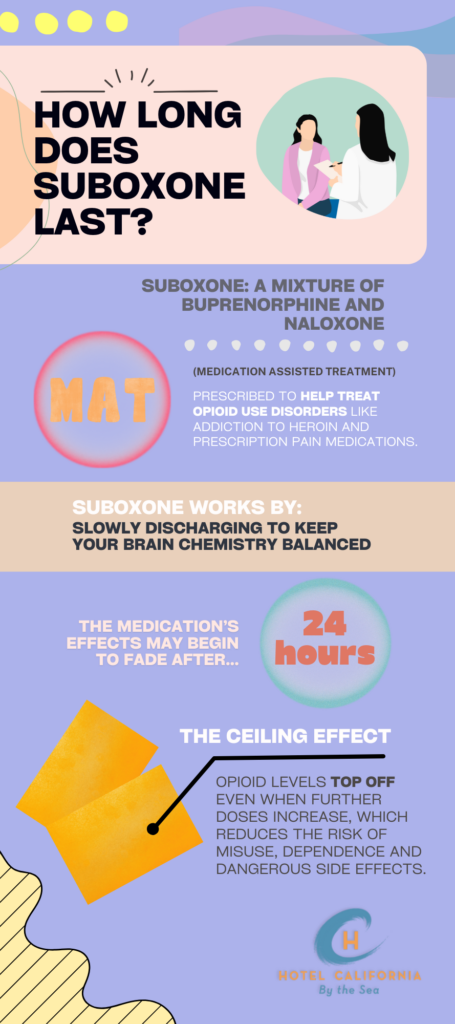
Instead of providing a quick burst of relief followed by sudden darkness, Suboxone works by slowly discharging to keep your brain chemistry balanced. The slow-release mechanism of the medication ensures patients feel stable, functioning and present during treatment. It helps to avoid an opioid high and its accompanying withdrawal crashes.
Suboxone is often used in medication-assisted treatment to help with treating and managing opioid addiction. It can be used during different stages of treatment and offers a long-term solution for managing opioid use disorder. Distinguishing how long the effects of Suboxone last vs how long it stays in your system can help patients effectively manage their daily routines without fear of the unexpected.
What is Suboxone?
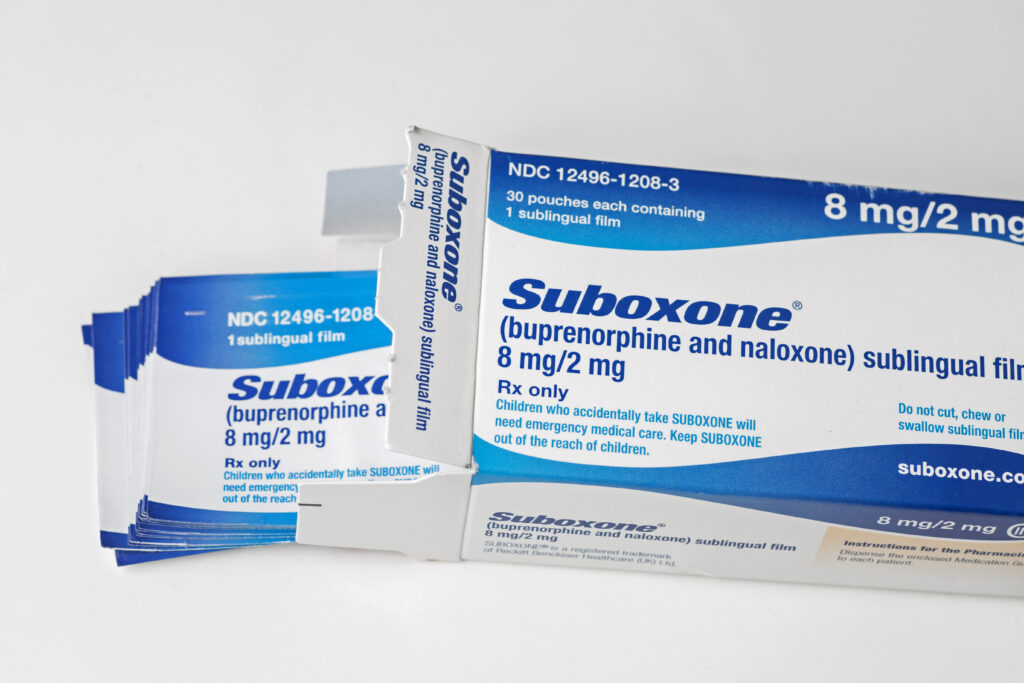
Suboxone is the brand name for a medication that consists of a mixture of buprenorphine and naloxone. It is prescribed to help treat opioid use disorders like addiction to heroin and prescription pain medications.
Buprenorphine works by acting on the same brain receptors as opioids but without producing a strong high. It lowers the effects of opioid withdrawal symptoms and craving without having the full potency or effects of a typical opioid.
Naloxone is a part of the medication known as the blocker. It helps to prevent misuse by blocking the effects of opioids.
Suboxone comes in a dissolvable film or tablet placed under the tongue or inside of the cheek. It is taken once a day. It is one of the only MAT medications, or addition treatment specific medications, that can be prescribed by a primary care provider when deemed acceptable. As of 2023, healthcare providers who aren’t associated specifically with addiction medication and are DEA licensed with Schedule III authority can now write and prescribe Suboxone.
Who is prescribed Suboxone?
Suboxone can be prescribed for those who are addicted to opioids and are experiencing withdrawal symptoms when initially trying to quit. It can also be prescribed to those who have not responded well to other types of treatments or to those who need help to reduce cravings to maintain recovery.
Suboxone is prescribed as part of a larger treatment plan under medication-assisted management. It is used in tandem with behavioral counseling, mental health treatments, medical monitoring and participation in addiction treatment support groups.
How long does Suboxone last?
The duration of how long Suboxone stays in your body can be a bit more confusing than simply knowing how long the therapeutic effects last. The term half-life is the time it takes for your body to eliminate 50% of the medication. In Suboxone, buprenorphine’s half-life is about 24 to 42 hours. This long-acting duration allows for a steady level of medication in your system, which can be helpful for long-term recovery.
Even when the buprenorphine breaks down in the body, it leaves behind an active metabolite that continues to interact with the brain receptors. This next layer of medication activity contributes to the overall long-lasting effects of Suboxone. This means the medication can linger on for days after the initial dose and is effective in helping to manage long-term treatment.
Check Your Insurance Coverage for FREE
Find out if your insurance covers addiction treatment in minutes. We accept most insurance!
How does Suboxone work?
Unlike traditional pain killers, you swallow orally, Suboxone is absorbed through the veins in your mouth, entering the bloodstream directly. The sublingual film and tablet are meant to be placed and absorbed in the mouth, specifically under the tongue.
Once absorbed, the effects of the drug build up gradually, with the peak concentration of buprenorphine reaching within 60 to 180 minutes. Suboxone films tend to dissolve faster and may absorb more efficiently than tablets.
It is recommended to moisten your mouth with a sip of water to help with dissolution. You then place the film deep under the tongue. Do not talk or swallow saliva for 5 to 10 minutes while the medication dissolves. You should also avoid eating or drinking for at least 5 to 15 minutes after the medication has disappeared. This will turn into a daily routine because the medication will need to be taken daily.
Understanding the Ceiling Effect
Unlike most opioids that can continue to perform at higher intensities when dosage has increased, buprenorphine behaves differently. Once the medication reaches its cap or hits the ceiling, where there is nowhere else to go or higher to reach, it limits the effects of the drug. Taking more medication would be like trying to fit more cars into a packed garage where there are no more empty spots open.
This phenomenon makes it so there is a limitation on how much the drug can depress your breathing and make it less likely you can overdose on Suboxone. This is known as the ceiling effect. It is so that opioid levels top off even when further doses increase, which reduces the risk of misuse, dependence and dangerous side effects.
Even though the ceiling effect prevents euphoria, it doesn’t mean the medication has been removed from your body. You can still experience some drowsiness and nausea. Suboxone is a long-lasting medication that is effective for recovery because it helps clients maintain a sense of stability as they manage their cravings and symptoms from opioid use.
How long will Suboxone stay in your system?
The medication’s effects might begin to fade after 24 hours, but that doesn’t mean the medication has left your system. Testing usually looks for metabolites, the byproducts your liver creates as it processes the drug.
With a urine test, buprenorphine can remain detected for up to 7 to 14 days. With a saliva test, buprenorphine can remain detected for up to 3 days. With a blood test, buprenorphine can remain detected between 24 to 48 hours. ‘
If you are wondering about the second ingredient, naloxone, the role in the formulation for Suboxone is strictly to prevent misuse by injection. Simply put, if you inject opioids directly into your bloodstream, it causes immediate withdrawal symptoms. It tends to leave the body much faster than buprenorphine and is rarely a focus of testing.
Reach out to Hotel California by the Sea
We specialize in treating addiction and other co-occurring disorders, such as PTSD. Our Admissions specialists are available to walk you through the best options for treating your addiction.
Treatment for Opioid Use Disorder
Suboxone is often used during two main phases of opioid treatment. During the induction phase, the medication is used to help reduce the severity of withdrawal symptoms from the initial detox of opioids. It is also used during the maintenance phase, in which the medication can be used to hold a stable dosage for extended periods of time as the user gradually tapers off.
Professional treatment programs like Hotel California by the Sea provide support for those suffering from opioid addiction. We offer Suboxone treatment as a part of a comprehensive treatment plan that includes MAT and behavioral therapies. We offer treatment at all levels of care including detox, residential, PHP and IOP. We utilize evidence-based methods such as CBT, DBT and EMDR therapy.
Hotel California by the Sea is dedicated to helping our clients reach their goals of sobriety and overcome their addiction.
References:
https://www.medicalnewstoday.com/articles/drugs-suboxone
https://www.nami.org/treatments-and-approaches/mental-health-medications/types-of-medication/buprenorphine-naloxone-suboxone/
https://www.addictioncenter.com/treatment/medications/suboxone
https://ufhealth.org/conditions-and-treatments/suboxone-use