
Dating an Addict: Navigating the Challenges
What is it like dating an addict? Is dating an addict in early recovery a good idea? What is it like dating while in recovery? These are all common questions posed when recovering from a substance use disorder.

The emotional highs of a romantic relationship can mimic how your brain feels on drugs and what leads many newly sober people to seek out new relationships. On one hand, relationships can be a healthy and rewarding part of your life. It is natural to want to be around others and build a community and romantic connection. On the other hand, relationships require work and mindfulness. In early recovery, the ultimate priority is still your recovery. You may not have the time and energy to commit to another.
Early sobriety is a time of unpredictability and relationships take work and energy that should probably be spent on continued recovery. You are still vulnerable and learning how to manage triggers and cravings. This is why addiction professionals do not recommend dating in early recovery.
And when it comes to dating an addict, it is important to understand the impact mental health plays on their partners. Both parties will need to learn to navigate unique dating challenges that require establishing boundaries and protecting everyone’s well-being without demanding that you stop caring.
Dating an Addict in early recovery
Early recovery is generally a time when a person focuses on self-care, reflection and works on establishing a healthy new structure and routine. During this critical phase of recovery, it is important to get to know yourself, your morals and your values. Focusing on recovery and getting healthy should be the ultimate priority.
But some people find that having a partner can help enrich their lives and help their recovery journey. Recovering addicts who date other recovering addicts find they have a deeper connection with that person because their recovery becomes a foundation on which they can build and grow together. It is a shared sense of value.
Because recovery is a top priority in your life, some people find it helpful to be with another who also values this part of their journey. And in the worst-case scenario, if it doesn’t end up working out, you can still be a part of each other’s community in recovery and support.
In some cases, dating a sober person who drinks socially can be uncomfortable. That person may not understand your issues and potential triggers. As opposed to another recovering addict, they understand your meetings and the steps you take to maintain your mental health.
Signs it is not the right time to date in Recovery
- You’re dating to try and fill a void. Some people who struggle with substance use disorder often try to fill the void of drug use with alcohol and drugs. When they become sober, they use other means such as a relationship, to try to fill that void.
- You are not mentally and emotionally ready to commit to another person. It is important to be in a healthy mental state before you start a relationship with another person.
- You haven’t achieved at least a year of sobriety. Focusing on yourself and your well-being during the first year of sobriety gives you the tools and resources to effectively manage triggers and stressors.
- You have not separated yourself from your old social circles. You have yet to form a new support system and community of people aside from your old crew, which can often lead to triggers for drug use because they were associated with your addiction.
- You don’t feel comfortable being honest about your past addiction with another person. In a committed relationship, it is important that your partner knows your past history and is supportive of you in your recovery.
The risks of Dating an Addict in recovery
- Increased stress and anxiety. Involving another person in your life can increase stress and anxiety levels that may already be high in early sobriety. Both parties are learning about each other and it can be distracting in early recovery when the focus should be on oneself.
- Risk of relapse. Romantic relationships are one of the common causes for relapse in early recovery. Taking time away from your recovery efforts to focus on another person can increase your risk of relapse. You may not yet have perfected coping skills or have the emotional capacity to work through your lows, leading you to spiral out of control.
- Risk of entering an unhealthy relationship. Addiction can begin to show up in other ways, such as in behavior. When in a new relationship, it can easily lead to an unhealthy codependent relationship.
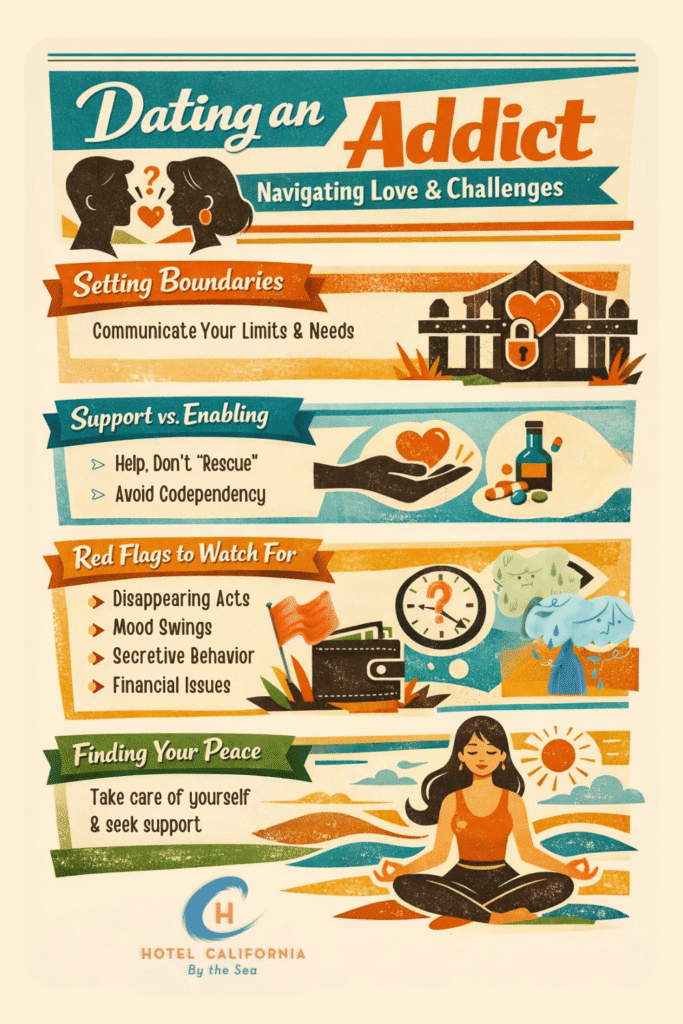
Recognizing the Red Flags and Challenges
When you are dating an addict, trusting your instinct can seem impossible. You might notice something is off, but when you ask about it, you are met with confusion or anger. This dynamic refers to the manipulation part of addiction, in which your partner may gaslight you and deny your reality, making you question what is real.
There are five common indicators that can raise red flags for those who are in a relationship with a recovering addict.
Unexplained gaps in time. The missing hours in which they went to clear their head or just go for a drive.
The sudden defensiveness. They may overreact to simple and non-accusatory questions.
Physical changes. You may start to notice pinpoint pupils, glassy eyes or drastic changes in weight and personal hygiene.
Financial stress. You may notice small amounts of money beginning to disappear from joint accounts or frequent loss of their wallet.
Changes in energy and sleep. You may notice they develop manic behavior at 2 am and have difficulty getting up at their normal hours in the morning.
These are often warning signs of the beginning of relapse. It manifests in small changes at a time. Recognizing these signs is painful, but it can help your partner get the help and support they need.
Check Your Insurance Coverage for FREE
Find out if your insurance covers addiction treatment in minutes. We accept most insurance!
On the other hand, if you are a recovery addict dating a sober person, it can have challenges of its own. Some red flags to look out for when dating someone who is not in recovery:
- Someone who doesn’t support your recovery. Dating someone who drinks and uses drugs. They are actively drinking in your presence without regard to how it impacts your sobriety.
- Someone who is emotionally unavailable or unstable. Dating someone who isn’t open to communication or is not mentally stable can hinder your own sobriety.
- Someone who is controlling. Dating a person who is controlling is not healthy for your recovery.
- Someone who is codependent.
Why you should wait
Experts and professionals suggest waiting at least a year after initial sobriety to date. This gives the recovery addict enough time to learn, build and practice new healthy coping strategies when it comes to drug cravings as well as getting their mental health in check.
At this point, they typically are in a healthier mindset. They have learned healthy behaviors and habits to help them best manage their emotions. This is a critical tool for avoiding drug and alcohol and is helpful when maintaining a healthy romantic relationship.
With this more positive mindset, they are more likely to choose better partners. When dating too early in recovery, people are more likely to choose a person similar to those they have dated in the past, who is associated with their addiction. More time in recovery gives a person more time to build up self-esteem and a new sense of self-respect. This helps a person to choose a partner who will support them and understand their journey.
Waiting to date also gives a person more time to address their underlying issues. It gives more time to take a closer look at the challenges, emotions and triggers that need to be addressed through therapy and counseling.
Reach out to Hotel California by the Sea
We specialize in treating addiction and other co-occurring disorders, such as PTSD. Our Admissions specialists are available to walk you through the best options for treating your addiction.
Treatment for Substance Use Disorder
Professional behavioral health programs like Hotel California by the Sea provide treatment for substance use disorders. We offer treatment at all levels of care including detox, residential, PHP and IOP. We utilize evidence-based methods such as CBT, DBT and group therapy. Hotel California by the Sea is dedicated to helping clients reach their goals in sobriety and overcome their addiction.
References:
https://www.addictioncenter.com/addiction/dating-recovery
https://www.gatewayfoundation.org/blog/new-relationship-after-recovery/
https://www.promises.com/addiction-blog/should-addicts-date-addicts/
https://detox.net/dating-an-addict