
Safe Hospital Alcohol Detox
Deciding to finally stop drinking is a big step towards freedom. When it comes to detoxing from alcohol, it can be hard to do alone. Withdrawal symptoms alone can deter many and keep them feeling trapped and isolated. Hospital alcohol detox programs are one of many options that provide safe and effective treatment for those with alcohol use disorder.

Suddenly removing alcohol from your system after a long period of time can cause your nervous system to violently overreact. This is why the first 72 hours during alcohol detox are the most critical for physical survival. According to research, the severe medical risks of at-home detox vs hospital care make professional intervention essential to preventing life-threatening side effects.
Medically supervised hospital alcohol detox is just one of many safe options when it comes to treating alcohol use disorder. Hospital alcohol detox provides a medical safety net and removes danger and much of the pain from the physiological rebound. Hospital staff will be entirely focused on your safety and comfort during one of the most difficult phases of alcohol use disorder treatment.
Alcohol Detox
Alcohol detox is the process of removing alcohol from the body while managing withdrawal symptoms. Alcohol withdrawal symptoms can be some of the most painful, uncomfortable and life-threatening conditions to endure. It can be especially dangerous for those who have long-term alcohol use disorder.
On average, alcohol detox can take anywhere from a few days to over a week. The length of time it takes to detox from alcohol varies for each individual. It is based on factors such as severity of addiction, how long a person has been drinking, overall health, gender, age and whether or not they have gone through detox previously.
Alcohol withdrawal is the most dangerous part of detox. It can begin as early as 4 to 8 hours after consuming the last drink. The most common symptoms of withdrawal include sweating, rapid pulse, agitation, headaches, insomnia, nausea and vomiting. Severe symptoms typically peak around the second day after alcohol consumption has stopped and can include hallucinations, cardiovascular issues and seizures.
The dangers of going Cold Turkey and why Medical Detox is important
Quitting heavy drinking without medical support isn’t about willpower. Alcohol has completely taken over your central nervous system and when you suddenly cut it out, your brain will scramble to process and manage without it. The sudden change is called hyperexcitability and can cause a racing heartbeat, extreme anxiety and even intense physical shaking that cannot be controlled on your own.
If left untreated, the chemical rebound can escalate into a life-threatening situation. Medical professionals specifically look out for and focus on managing delirium tremens (DT). DT is an extreme form of mental and physical confusion. Early warning signs of this condition include uncontrollable tremors, seeing or hearing things that aren’t there and extreme disorientation or sudden seizures.
Detoxing from alcohol in a clinical environment, like a hospital setting, can help with the unpredictable outcomes of alcohol withdrawal. Clinical staff also provide a safety net to help clients manage symptoms while their brain slowly starts to heal.
Hospital Alcohol Detox
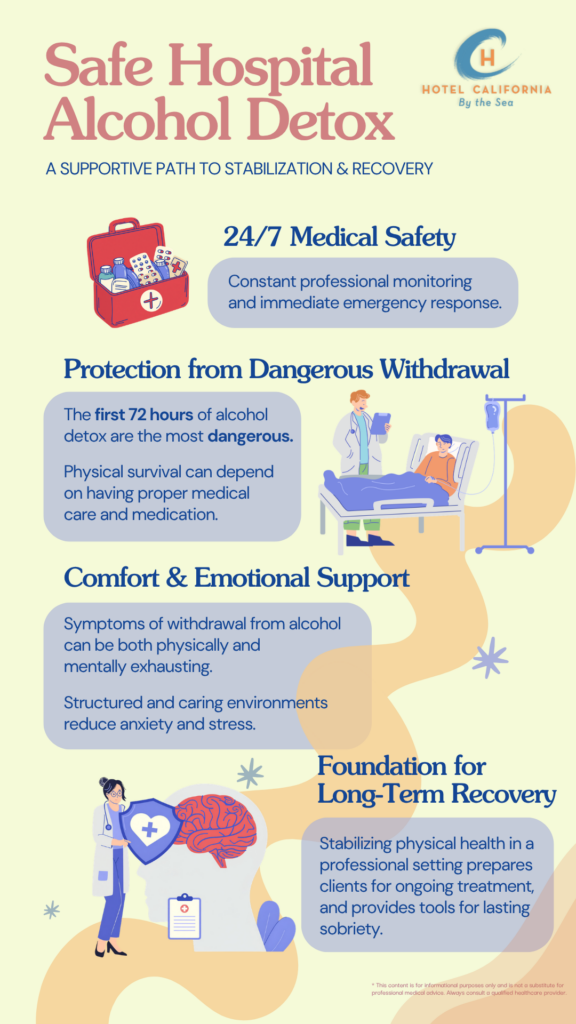
Hospital-based alcohol detox works to eliminate the substance from your body in a hospital setting with the benefits of having clinical support 24/7. The primary goal of hospital alcohol detox is to help manage acute withdrawal symptoms, which can be a life-threatening condition. A hospital detox program helps to stabilize client health, provide the necessary tools to deal with cravings and prepare the client for ongoing treatment after detox hospitalization.
In heavy withdrawal cases of alcohol detox, hospitals often responded with heavy sedation and may have even used a breathing tube for patients. Sedating patients would help prevent them from causing further harm to themselves. However, intubating them with a breathing tube and ventilator introduced its own set of risks and potential for other complications like damaged vocal cords and risk of pneumonia.
Sedation requires a lot of drugs. Sedation also makes it more difficult to assess that patients physical and mental status. Some patients would be put on a continuous infusion of medications that sometimes were not needed. Today, hospitals are finding that treatment without sedation and intubation results in better symptom management and better outcomes.
Benefits of Hospital Alcohol Detox
- Medical Supervision – There is medical staff available 24/7 to provide medications with ease and prevent complications. Being in a hospital allows for health issues to be addressed right away.
- Emotional support – Detoxing from alcohol can trigger strong emotional and psychological distress. Mental health professionals are available to offer support and counseling when needed. Hospital staff is also available to help you navigate the challenges of detoxing and withdrawal.
- Safe and monitored environment – Being in a hospital setting reduces the risk of relapse because you are in a controlled environment that helps patients focus solely on recovery without any external pressures or triggers. Patients will have easy access to medications and other support care to help reduce withdrawal symptoms and prevent further complications.
- Education – Clinical staff can also be available to provide valuable education about addiction and recovery.
Check Your Insurance Coverage for FREE
Find out if your insurance covers addiction treatment in minutes. We accept most insurance!
What you can expect during Clinical Alcohol Stabilization
Your first two hours of hospital alcohol detox are focused on assessment and comfort. A clinical professional will guide you to your room and ask questions about your drinking history. This is typically referred to as the admission stage. Medical professionals will assess the patient’s overall health, substance use history and history of any co-occurring conditions. They will work with patients to create an individualized detox treatment plan that minimizes withdrawal symptoms and may include prescription medications as needed.
The clinical staff will determine the safest medication dosage and may even draw a blood sample to check your baseline liver function and current hydration levels. Stabilizing your body typically requires a 3 to 5 day stay. A basic hospital packing checklist should include comfortable and loose-fitting clothing, your ID, medical insurance card and a list of prescription medications you are taking, and any books or reading materials to help you pass the time.
Managing Acute Withdrawal Symptoms
During this stage of the alcohol detox process, acute withdrawal symptoms, including physical and psychological, can occur. This happens as the body is trying to readjust in the absence of alcohol. At this time, clients are at the highest risk of developing severe complications of DTs or sudden convulsions.
Patients will be continuously monitored and medical professionals will be able to identify any neurological dangers that can occur before it becomes a physical crisis. Common symptoms can include anxiety, irritability, insomnia, intense alcohol cravings, tremors, nausea, sweating, hallucinations and seizures.
Moving into Post Acute Withdrawal Treatment
At the final stage of detox, medical professionals in the clinical setting are focused on helping patients manage lingering withdrawal symptoms as well as preparing them to transition into ongoing treatment. Patients may still experience lingering psychological symptoms such as mood swings, alcohol cravings, fatigue and difficulty concentrating.
Reach out to Hotel California by the Sea
We specialize in treating addiction and other co-occurring disorders, such as PTSD. Our Admissions specialists are available to walk you through the best options for treating your addiction.
Treatment for Alcohol Use Disorder
Alcohol detox and withdrawal can be challenging. Choosing a secure, stabilized and monitored environment like a hospital alcohol detox program can help lower the risk of severe symptoms and complications. However, this is just one of many options for medical detox. At Hotel California by the Sea, we offer a comprehensive alcohol detox program that is also followed by further levels of care.
We utilize evidence-based treatment methods such as CBT, DBT and family therapy to help with alcohol use disorder treatment. Hotel California by the Sea is dedicated to helping clients reach their goals in sobriety and overcome their addiction.
References:
https://www.columbusrecoverycenter.com/alcohol-addiction/alcohol-detox-hospital/
https://www.uchealth.org/today/alcohol-withdrawal-in-hospitals-care-tool/
https://sierravistahospital.com/blog/what-to-expect-from-alcohol-detox/
https://seacrestrecoverycenteroh.com/how-long-does-alcohol-detox-take-in-a-hospital/