Group Therapy for Drug Addiction
Addiction is a disease that can thrive on isolation, making individuals feel like they are completely alone in their struggle. One of the most effective treatments in behavioral health is group therapy for drug addiction. The truth is recovery rarely happens alone. The power of community is one of the most effective and transformative tools.

Engaging in group therapy for drug addiction can provide a unique and safe space for individuals to heal, grow and learn from others who face similar life circumstances. Group therapy is a community-based approach to treatment. It is implemented across various levels of care including residential inpatient, partial hospitalization treatment, intensive outpatient programming and continuing aftercare treatment.
What is Group Therapy for Drug Addiction?
Group therapy is a form of psychotherapy that is typical of residential and outpatient programming. It consists of a group of like-minded peers coming together under the supervision of a trained clinical professional. Group therapy provides a variety of benefits, including learning about substance use disorder, learning and practicing effective recovery strategies, developing interpersonal skills and building a social support network.
Group therapy is a fundamental pillar of comprehensive substance addiction therapy. The success of these group sessions leans on the role and guidance of licensed substance abuse therapists and counselors. They actively facilitate the conversation, ensure a safe environment, mediate possible conflicts and help guide the group towards constructive and positive outcomes.
This type of drug and alcohol addiction treatment is intended to provide support, structure, encouragement and accountability to those who are in treatment recovery. It is a safe space for members to share their feelings, experiences and perspectives with others who may be able to relate. This helps significantly diminish the feeling of isolation because addiction is not a personal and singular disease. It impacts the family and the entire community.
The Core Benefits of Group Therapy for Drug Addiction
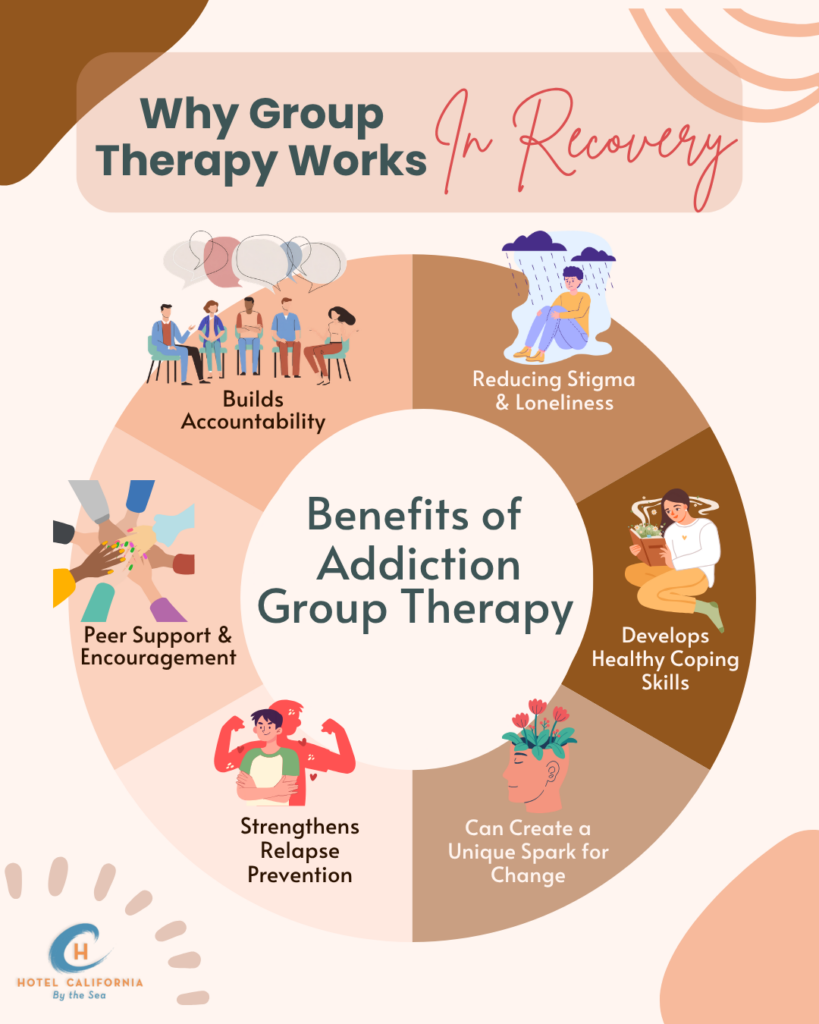
Group therapy extends beyond having a place to vent your struggles with substance addiction. The dynamic can create a unique spark for psychological change.
- Sense of community and connection. Hearing about someone else’s experience can help you articulate your own thoughts, fears and temptations you struggle with. It can be validating. It promotes social support and helps reduce feelings of isolation. When group members share their experiences, it normalizes the struggles and obstacles of early recovery and can replace them with empathy and understanding.
- Accountability and motivation. Building accountability through peer “been there” can easily and quickly spot when someone else is making excuses for their substance abuse. They can effectively challenge self-destructive behaviors, keeping you honest with yourself and your recovery.
- Improved self-esteem and confidence
- Reinforcing health and effective coping methods
- Increasing positive peer interactions and learning how to navigate recovery with others. Group settings act as a safe, controlled environment for developing interpersonal skills. Members learn how to actively listen, express healthy boundaries, practice empathy and manage disagreements without resorting to stress and substances.
- Receiving encouragement and support from other group members
- Reducing and stigma. Despite this disease affecting many, it is often seen as a failure of character instead of a brain disease. This stigma can hurt treatment and how patients recover.
Types of Group Therapy Models
- Psychoeducational Groups. This group therapy model is designed to educate members about substance abuse, related behaviors and consequences. All of this information is to help members better understand the root causes of their mental health issues.
- Skill Development Groups. This model helps members learn and develop healthy coping skills, relapse prevention skills and other techniques to promote long-term sobriety. These skills will help patients make better decisions when faced with stressful triggers.
- Cognitive Behavioral Groups. This model is a form of CBT, in which members change their learned behaviors into a more positive form of thinking. They work to change beliefs and perceptions as well as develop a social network and support system.
- Support Groups. Support groups such as Alcoholics Anonymous provide a peer-led meeting where members can share their experiences in a safe and caring environment. It is much less formal than other types of group therapy models.
- Interpersonal Process Groups. This type of group model recognizes that conflicting forces in the mind can determine a person’s behavior, whether healthy or unhealthy. This model uses knowledge of the way people function psychologically to promote change and healing.
How do Group Sessions help with Relapse Prevention?
When a group member faces an overwhelming trigger, the group can help brainstorm actionable solutions. Group facilitators can also help introduce evidence-based practices into discussions. Group therapy allows all members to contribute ideas and support.
Group therapy helps a person visualize the entire sequence of events that can happen if they take a substance, rather than romanticizing the high they may feel. Group therapy helps a person identify triggers through people, places and things that can spark cravings for drug use. Group therapy creates a peer-to-peer reminder to check if you are hungry, angry, lonely or tired when you may feel the urge to use drugs.
Check Your Insurance Coverage for FREE
Find out if your insurance covers addiction treatment in minutes. We accept most insurance!
Inpatient VS Outpatient Group Therapy
The main difference between inpatient and outpatient group therapy sessions is the intensity and structure. Inpatient group therapy takes place within the residential facility, which occurs multiple times per day. They are highly immersive, structured and shielded from outside triggers. Outpatient group therapy offers much more flexibility. Participants typically live at home and come to the center for treatment a few times per week. Outpatient group therapy is great for processing immediate day-to-day challenges to maintaining sobriety outside of rehab.
Support Groups VS Therapy Groups
Peer support groups for substance addiction, like 12-step programs, are peer-led fellowships. They are typically spiritually led, free of charge and focused on working through twelve specific steps with a sponsor. Group therapy models are clinically based interventions led by a licensed mental health professional. They typically utilize evidence-based strategies that are designed to get to the root cause of trauma and addiction.
How does Group Therapy work?
The size, frequency of meetings and duration of meetings will vary and are dependent on the program, patient needs and facilitator. Most groups average around five to ten people per group. Topics often covered in group therapy discussions include:
- Education about addiction
- Coping skills and stress management
- Building a support network
- Overcoming stigma and feelings of shame
- Developing healthy routines
- Relapse prevention
- Communication improvement
- Setting health boundaries
- Self awareness
- Building interpersonal relationship
Reach out to Hotel California by the Sea
We specialize in treating addiction and other co-occurring disorders, such as PTSD. Our Admissions specialists are available to walk you through the best options for treating your addiction.
Treatment for Substance Use Disorder
Research on treatments for drug and alcohol addiction has found that group therapy is a powerful and effective tool. It can result in similar outcomes when compared to individual cognitive behavioral therapy because it helps clients stay engaged, stay in treatment, reduce the chances of further substance abuse and improve mental health. Professional behavioral health programs like Hotel California by the Sea provide group therapy options at all levels of care.
We provide detox, residential, PHP and IOP services. We utilize other types of treatment methods including CBT, DBT and family therapy. Hotel California by the Sea is dedicated to helping clients reach their goals in sobriety and overcome their addiction.
References:
https://www.addictioncenter.com/treatment/group-therapy
https://www.ncbi.nlm.nih.gov/books/NBK64214
https://rehabs.com/treatment/therapy/group