
Can Alcohol Cause a Stroke?
Unwinding with a glass of wine at the end of a long day or sharing beers with friends on the weekend is culturally and deeply ingrained in our society. But behind casual drinking lie some serious health consequences that can go overlooked. When it comes to brain health, alcohol use can be the riskiest. This leaves many considering, “Can alcohol cause a stroke?”
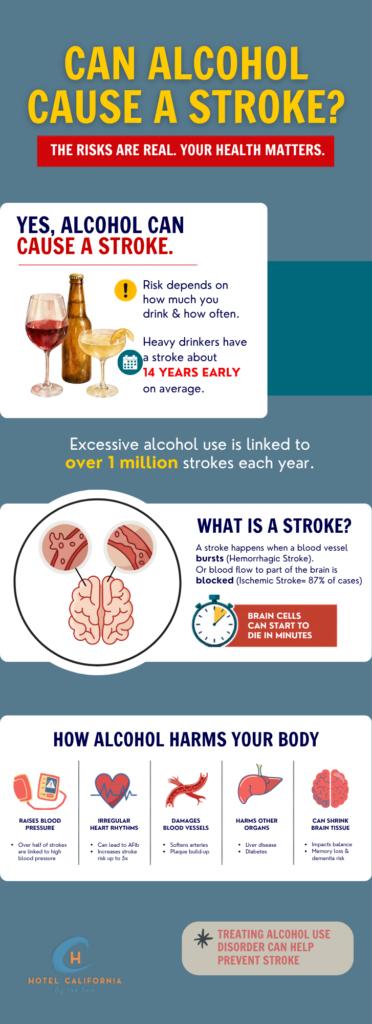
The relationship between alcohol and stroke is complex and dangerous. Society often normalizes drinking, but the cardiovascular system thinks differently. Too much alcohol can increase the risk of having a stroke. In fact, excessive alcohol consumption is linked to over 1 million strokes each year.
Researchers have found that regular heavy drinkers suffered from a stroke at the average age of 60 years old. This is about 14 years earlier compared to those who did not heavily drink. Heavy drinkers have a higher risk of experiencing a stroke earlier in life compared to those who do not drink. The reality is, alcohol and stroke have a dangerous relationship that is deeply consequential.
Can drinking Alcohol Cause a Stroke?
Yes. Alcohol can cause a stroke. But the level of risk is dependent on the volume of alcohol, frequency of alcohol consumption and the pattern of alcohol consumption.
Excessive alcohol consumption is a powerful catalyst for many physiological changes that can compromise the health of blood vessels in your brain.
What is a stroke? A stroke occurs when the blood supply to a part of your brain is interrupted or reduced. This deprives the brain tissue of oxygen and other vital nutrients it needs to function properly. Within minutes, the brain cells can start to die. Consistently consuming large amounts of alcohol actively creates an environment where interruptions to the blood vessels are more likely to happen.
Ischemic vs Hemorrhagic Stroke
There are two main categories of strokes: ischemic and hemorrhagic. The medical distinction between the causes of the two strokes is fundamental. But heavy drinking amplifies the risk factors for both types.
Ischemic Strokes
Ischemic strokes are the most common type of stroke. They account for about 87% of all stroke cases. They occur when a blood vessel supplying blood to the brain is obstructed by a clot, which prevents oxygen from reaching the brain. While light drinking can temporarily have a blood-thinning effect, heavy and binge drinking can do the opposite.
Chronic alcohol consumption can increase blood thickness, raise platelet counts and promote abnormal blood clotting. When one of these clots lodges in a brain artery, it causes an ischemic stroke.
Hemorrhagic Strokes
A hemorrhagic stroke is when there is a weakened blood vessel that ruptures and spills blood directly into surrounding brain tissues. It’s also referred to as a brain bleed. Alcohol is a known toxin to the vascular system. When it comes to heavy drinking, it can drastically weaken blood vessel walls and make them brittle and susceptible to bursting under pressure.
Binge Drinking can put you at risk of Brain Bleeds
A misconception is that if you do not drink every day, you are safe from alcohol related stroke risks. Binge drinking on a Saturday night when you are out with friends can actually put you at more risk for a hemorrhagic stroke.
Binge drinking is consuming four or more drinks within the span of 2 hours for women and five or more for men. This high volume of alcohol in a short period of time can shock the cardiovascular system. The connection between alcohol and brain bleed stroke risks is very well known and documented.
The huge surge in blood pressure can send even a healthy blood vessel to rupture without warning. Binge drinking basically turns the vascular system into a pressure cooker, which increases the odds of a sudden brain bleed.
Check Your Insurance Coverage for FREE
Find out if your insurance covers addiction treatment in minutes. We accept most insurance!
Alcohol Damages Your Body
Alcohol doesn’t just pass through the stomach and liver. It also enters your bloodstream and can travel through your entire circulatory system.
One of the most immediate and dangerous consequences of excessive alcohol consumption is alcohol-induced high blood pressure. Hypertension is often recognized as the single most significant risk factor for a stroke. In fact, over half of all strokes are associated with alcohol induced hypertension.
When drinking, alcohol constricts your blood vessels and triggers the release of stress hormones like cortisol and adrenaline. This forces the heart to pump harder, which drives up your blood pressure to stroke-inducing levels.
Alcohol can also have acute effects on your heart rate. Repeated exposure can lead to chronic electrical issues in the heart. The most noticeable condition is called atrial fibrillation (AFib) due to heavy alcohol use.
It is a condition characterized by an irregular, rapid heart rate. This is because the heart is not pumping efficiently and blood can pool in the heart chambers and form clots. When a clot is pumped out of the heart, it has a direct line to the brain. People with AFib are almost 5 times more likely to experience a stroke.
Routine heavy drinking wears down your circulatory system from the inside out. When examining patients with a history of alcohol use disorder, they are able to easily spot signs of vascular damage from long-term drinking.
Signs of these include stiffened arteries, chronic vascular inflammation and plaque buildup. These are prime alcohol related risk factors for cardiovascular disease.
Other risks of Alcohol Damage to the body
- Alcohol changes how your body responds to insulin, which can lead to Type 2 diabetes.
- Alcohol can lead to liver damage.
- Alcohol can raise your cholesterol and increase inflammation. These are all contributors to a stroke.
- Excessive alcohol consumption can shrink a specific part of your brain, causing balance issues. The impacting cognition can lead to alcohol related dementia.
How to reduce your risk of Alcohol Related Strokes
There is no safe amount of alcohol to prevent a stroke. But beyond abstaining from alcohol use, there are some lifestyle changes that can help prevent the risk of stroke.
- Change your diet. Focus on a well-balanced meal that includes whole foods, leafy green vegetables, lean protein and healthy fats. This will help lower cholesterol and reduce vascular inflammation.
- Physical activity. Regular exercise or physical activity such as walking, cycling or swimming will all help strengthen heart muscles and improve circulation. This naturally lowers blood pressure.
- Stress management. Chronic stress releases harmful hormones similar to when binge drinking. Incorporating mindfulness and meditation can help keep stress-induced blood pressure at bay.
- Keep an eye on your health. Work with your healthcare provider to keep an eye on your blood pressure, blood sugar and cholesterol levels. Safely managing these numbers can help with cardiovascular health.
- Quit smoking. The combination of smoking and drinking is very destructive to the arteries and increases your risk of stroke.
Reach out to Hotel California by the Sea
We specialize in treating addiction and other co-occurring disorders, such as PTSD. Our Admissions specialists are available to walk you through the best options for treating your addiction.
Treatment for Alcohol Use Disorder
About 1 in 4 people are at risk of having a stroke in their lifetime. That risk exponentially increases in those who also abuse alcohol. Alcohol and stroke are linked. Professional behavioral health programs like Hotel California by the Sea have treatments for alcohol use disorder. Treating an alcohol addiction can help lessen the risk of alcohol related strokes.
We offer treatment at all levels of care including detox, residential, PHP and IOP. We utilize evidence-based methods such as CBT, DBT and family therapy. Hotel California by the Sea is dedicated to helping client reach their goals of sobriety and overcome their addiction.
References:
https://www.world-stroke.org/world-stroke-day-campaign/prevent-stroke/stroke-and-alcohol
https://www.medicalnewstoday.com/articles/250059
https://www.henryford.com/blog/2026/05/heavy-drinking-and-stroke-risk#
https://www.buzzrx.com/blog/can-alcoholism-cause-a-stroke
https://news.harvard.edu/gazette/story/2025/11/heavy-drinking-linked-to-worse-strokes/