
What is the relationship between Alcohol and Nightmares?
Many people believe that having a nightcap before bed will help them get a better night’s sleep. Alcohol may initially help get you drowsy, but it is, in fact, more detrimental to your sleep cycle than you may believe. You may even find yourself tossing and turning more than usual due to intense visual dreams. Alcohol and nightmares have a very complex relationship.
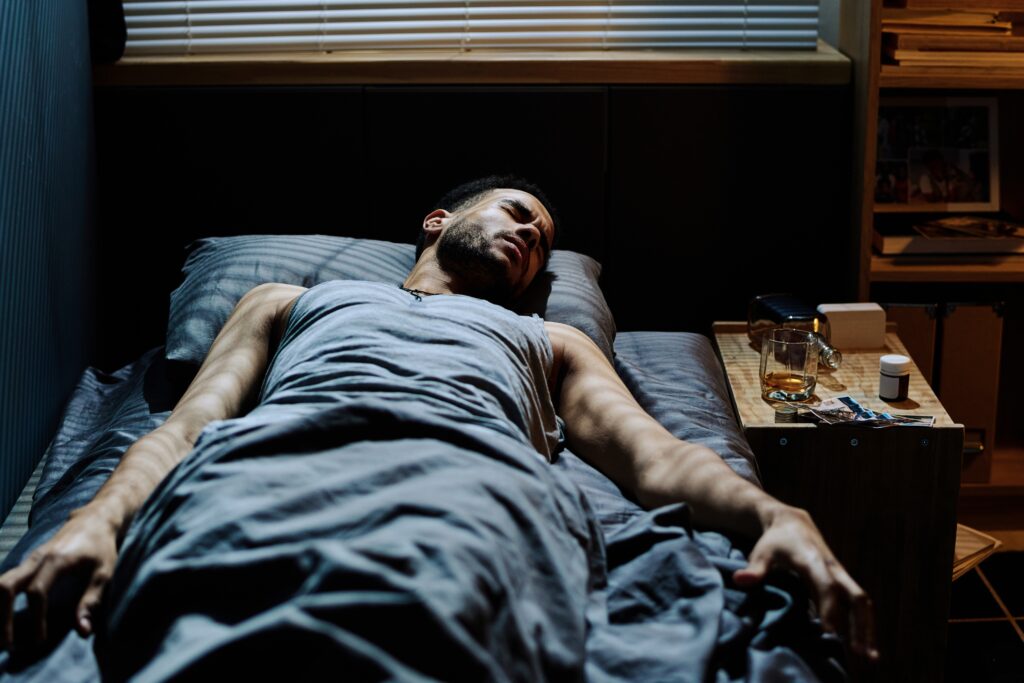
The connection between alcohol and nightmares is a well-documented phenomenon. Alcohol is a central nervous system depressant and can slow down brain activity, making you feel fatigued and lethargic. But its interaction with our sleep cycles is very disruptive. And over time, when consuming more alcohol regularly, it will change the natural patterns of sleep and cause more frequent waking, poor and fragmented sleep, as well as vivid nightmares.
How Alcohol Alters the Brain
First, we need to take a look at what happens in the brain when alcohol is consumed. Normal sleep is divided into two stages that cycle through light sleep, deep sleep and rapid eye movement (REM) sleep. The presence of alcohol can easily throw off the balance of this schedule.
When alcohol is consumed, it interacts with the GABA receptors in your brain. This inhibitory neurotransmitter slows down brain activity, which is why alcohol can make you feel relaxed and sleepy. But this initial fatigue is an artificial sedation that can alter your natural sleep cycle.
During the first part of the night after drinking, your body is working to metabolize the alcohol. This can lead to an unnaturally deep and dreamless sleep. This is because REM sleep is suppressed. REM sleep is the stage during which memory consolidation and dreaming occur. When it comes to heavy alcohol consumption, alcohol can almost wipe out REM sleep entirely during the first few hours of the night.
Nightmares
Nightmares are a common type of sleep disorder that involves experiencing disturbing dreams that cause a person to wake up in a state of distress. A nightmare disorder is a phenomenon that is characterized by frequent occurrences of nightmares that cause significant distress or impairment in social and occupational functioning in daily life.
There are many things that can lead to experiencing nightmares.
- Stress and anxiety
- Trauma
- Substance abuse, especially with alcohol addiction
There are also different types of nightmares.
- Recurrent nightmare. This type of vivid stream is often a repeated dream with similar themes or scenarios.
- Post-traumatic nightmare. This type of nightmare is often linked to post-traumatic stress and often replays traumatic events in a person’s life.
Alcohol induced nightmares are vivid and intense dreams that occur after heavy drinking or can occur during alcohol withdrawal. These nightmares can follow you into your day. It can cause heightened anxiety and depression, making it more difficult to have peace while you are awake.
Alcohol and Nightmares: Why drinking leads to Bad Dreams
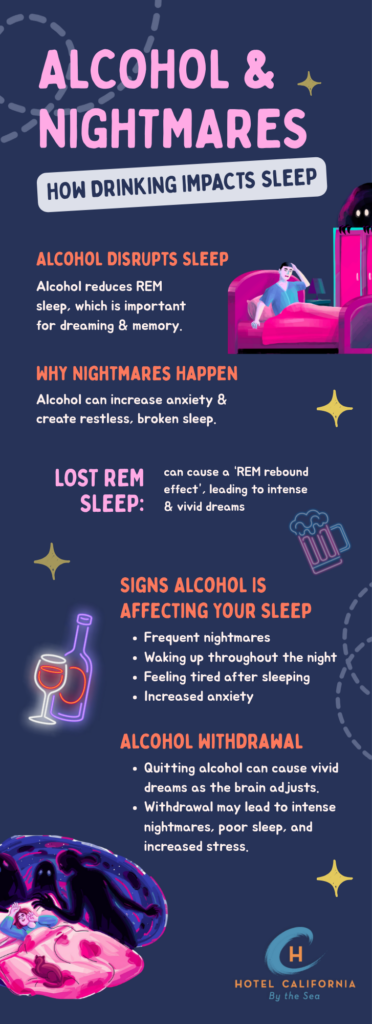
Alcohol basically reduces the time you spend in your REM sleep cycle. REM sleep is critical for brain functioning and dreaming. When your brain misses out on its essential dreaming phase in the first part of your sleep cycle, it can overcompensate later. This is called the REM rebound effect. In this phase, your body will spend an unusually long time in the REM sleep cycle and the brain’s activity will spike dramatically.
This intense overcompensation is the main reason why people tend to experience incredibly vivid dreams after drinking. The brain is rushing to catch up on the missed REM cycles. These dreams are often highly emotional, bizarre and terrifying. This then triggers nightmares. For those who are heavily drinking or those who are experiencing alcohol withdrawal, the REM rebound can persist for several days or even weeks.
When GABA neurotransmitters slow down your brain, the body then tries to maintain homeostasis by producing excitatory chemicals to try to keep you awake. The most prominent chemical is glutamate.
When the alcohol finally leaves your system, it’s left with the extra glutamate. This chemical imbalance explains the sudden spike in excitatory signals that can put your brain in a high state of alert, which can also lead to post-drinking nightmares.
Glutamate triggers a “fight or flight” response while you are still semi-conscious. The response can turn into anxiety, a racing heartbeat and a sense of panic that pulls you out of your dreams.
Alcohol can also cause restless, disruptive and fragmented sleep. Instead of sleeping soundly and deeply, you wake up repeatedly, which makes it more likely you remember the details of your nightmare. You also experience these nightmares because you are dreaming more shallowly during light sleep stages due to frequent waking during the night. As a result, dreams seem more lifelike, making it easier to remember when waking up.
Check Your Insurance Coverage for FREE
Find out if your insurance covers addiction treatment in minutes. We accept most insurance!
Alcohol Withdrawal and Nightmares
Some people experience vivid dreams after quitting alcohol. This is because the relationship between alcohol withdrawal and nightmares is even more severe. When someone who drinks heavily on a regular basis decides to cut back or quit, it can leave the brain in a state of hyperexcitability.
The person will experience an alcohol withdrawal dream cycle. Because the brain has been constantly deprived of REM sleep for so long, it will unleash a huge backlog of REM activity once alcohol is removed from the system. This can trap sleepers in a much longer loop of intense REM brain activity, causing intense nightmares that can make it hard to distinguish from reality.
Some people may also experience sleep paralysis during withdrawal and recovery. Sleep paralysis occurs when the brain wakes from REM sleep, but the body remains paralyzed. REM cycles can become so chaotic and disconnected between brain awakening and muscle awakening that this leads to the body being temporarily paralyzed. However, this is just a temporary neurological glitch.
How to manage your Alcohol induced nightmare and reclaim your rest
The good news is that your brain and body are resilient. By making a few changes to your lifestyle, you can help with your sleep disturbances and train your brain to sleep soundly again.
The biggest thing you can do for your sleep is to reduce alcohol intake and eventually stop alcohol use altogether. Alcohol can negatively disrupt many systems in the body, including the sleep cycle. Removing alcohol from the picture can be the best course of action.
If quitting alcohol altogether is not a current option, know your timing. Pace yourself and stop drinking about 2 to 3 hours before you plan on going to bed. Plan ahead and set a cutoff time for when to stop drinking. This way, the liver has time to metabolize the toxins and the GABA/glutamate shifts will occur while you are still awake rather than disrupting your sleep.
Stay hydrated. Alcohol is a diuretic and will leave you dehydrated. Dehydration can exacerbate nighttime waking and morning anxiety.
Have a good sleep routine. A consistent schedule in an environment that is conducive to sleeping will help keep nightmares at bay. Practice relaxation techniques before bed and get off your phone.
Another option for treating alcoholic induced nightmare is to seek out professional help. You may have an alcohol addiction and need professional and clinical support to help you stop drinking. Once you stop drinking, your sleep will slowly begin to improve and return to its natural sleep cycle.
Reach out to Hotel California by the Sea
We specialize in treating addiction and other co-occurring disorders, such as PTSD. Our Admissions specialists are available to walk you through the best options for treating your addiction.
Treatment for Alcohol Use Disorder
The link between alcohol and nightmares is undeniable. While a little nightcap before bed might initially seem like a good idea, in the long run it can disrupt restful sleep, leaving you feeling tired and anxious the next morning. Those who continue to have nightmares related to alcohol consumption may have an alcohol addiction and need professional help.
Hotel California by the Sea provides treatment at all levels of care including detox, residential, PHP and IOP. We utilize evidence-based methods such as CBT, DBT and EMDR therapy. Hotel California by the Sea is dedicated to helping clients reach their goals in sobriety and overcome their addiction.
References:
https://www.cirquelodge.com/blog/does-alcohol-withdrawal-cause-nightmares
https://www.adaptprograms.com/nightmares-and-alcohol/
https://www.promises.com/addiction-blog/nightmares-and-alcohol/
https://advancedaddictioncenter.com/alcohol-addiction/nightmares-after-drinking/