What are the Signs of Percocet Dependence?
Millions of people are prescribed powerful painkillers every year for legitimate and necessary reasons. Percocet is a highly effective prescription painkiller often used to alleviate moderate to severe pain caused by severe injuries, medical surgery or even chronic conditions. While it can provide immense and immediate relief for those who are suffering, Percocet dependence can happen faster than many patients realize.

Prescription opioids like Percocet gained popularity in practice due to their ability to drastically improve the quality of life in patients who experience chronic pain. It also had fewer overall side effects compared to morphine.
Percocet is one of the most popular prescription opioids that has also led to it becoming one of the most popularly abused substances. The increase in prescriptions for Percocet has also contributed to its popularity of chemical dependency as well as its impact on the opioid epidemic.
What is Percocet?
Percocet is a prescription painkiller that consists of two main active ingredients: acetaminophen and oxycodone. Acetaminophen is an over-the-counter pain reliever and fever reducer. Oxycodone is a synthetic opioid. It is often prescribed to treat acute traumatic injuries, postoperative pain, chronic neuropathic pain and pain related to cancer.
It is clinically similar to morphine and was first synthesized in 1916, being classified as a semi-synthetic opioid. The effects of Percocet can last anywhere from 3 to 5 hours. Percocet works by activating parts of the brain that can change how the body feels and responds to pain.
It crosses the blood-brain barrier and binds to opioid receptors in the central nervous system to block pain signals and trigger a huge release of dopamine. This dopamine release produces feelings of reward, profound relaxation and euphoria. The brain can adapt very quickly to this artificial flood of dopamine. This can easily lead to Percocet dependence and then Percocet addiction.
What is Oxycodone?
Oxycodone is a synthetic opioid that is one of the main active ingredients in Percocet. Opioids like oxycodone eventually reduce the production of endorphins while stimulating the production of opioid receptors in the brain.
This allows users to build up a tolerance to the drug and eventually develop drug dependence. This type of chemical imbalance occurs in the brain during opioid use. Once the body becomes dependent on a substance, it can no longer function normally without it.
Oxycodone became one of the most frequently encountered pharmaceutical drugs by law enforcement in 2009. Today, it is still among the most identifiable pharmaceutical drugs by federal, state and local forensic labs across the nation.
The risk of Percocet Dependence and Addiction
According to the Drug Enforcement Administration (DEA), an estimated 5 million Americans abuse prescription opioids, like Percocet, every year. The National Institute on Drug Abuse (NIDA) states that an estimated 2 million Americans are currently addicted to prescription painkillers that contain oxycodone. According to reports from the Centers for Disease Control and Prevention (CDC), an estimated 150,000 Americans lose their lives every year due to abuse of prescription painkillers like Percocet.
In fact, synthetic opioids like oxycodone, which is found in Percocet, are the third leading opioid contributing to overdose deaths in America. Studies have found that by June 2021, synthetic opioids were found to be involved in an estimated 87% of opioid deaths and in an estimated 65% of overall drug overdose deaths in the US.
When opioids enter the system, the opioid receptors in the central nervous system cannot tell the difference between opioids that are made naturally from endorphins and opioids that are produced by substances like Percocet. This can make it easy for the body to become dependent on the flood of dopamine provided by opioid prescription pills.
What is the difference between Percocet dependence and Percocet addiction?
Tolerance and dependence are naturally physiological responses that happen when the body becomes accustomed to the medication. They will then require a higher dose to achieve the same level of pain relief. Addiction involves a psychological compulsion that creates an uncontrollable urge to continue using the drug despite severe and negative consequences to your health and daily life.
Oxycodone is a powerful opioid and causes a strong euphoric sensation, which makes Percocet a high-risk substance when it comes to addiction.
How to Identify the Signs of Percocet Addiction
Recognizing the early signs of Percocet dependence and addiction can be life-saving. Though trusted professionals prescribe these medications legally, it can easily turn into misuse and abuse.
Indicators of Percocet abuse include:
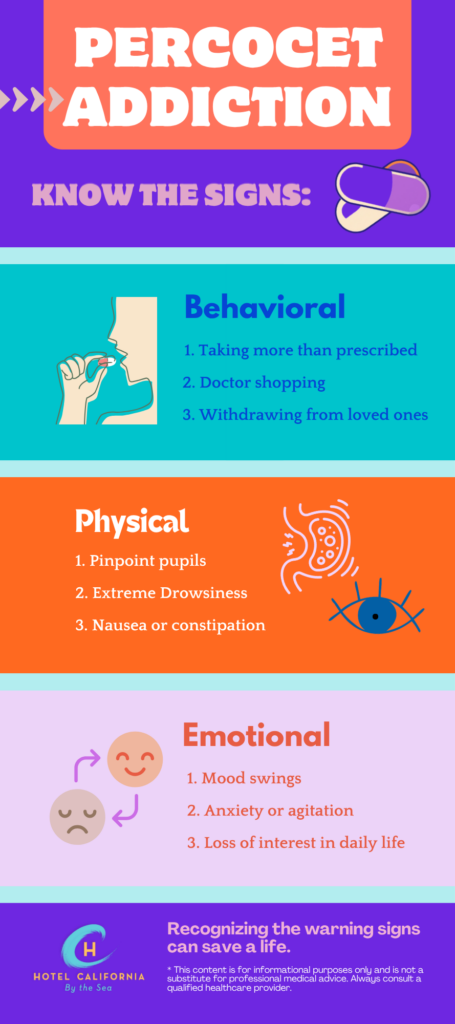
- Behavioral Changes. Taking the medication in a higher dose or more frequently than prescribed. Visiting multiple physicians to obtain more prescriptions for more drugs. Withdrawing from family and friends and activities you once enjoyed.
- Psychological changes such as mood swings, agitation, anger or aggression are apparent in those who abuse Percocet.
- Method of use. Crushing, snorting or dissolving and injecting Percocet pills to accelerate or enhance the drug’s effects are considered drug abuse.
- Physical Symptoms. When misuse and abuse turn into chronic use and addiction, the physical side effects can become more apparent. This can include constipation, chronic drowsiness, pinpoint pupils, persistent nausea and noticeable weight loss. Other symptoms can include slurred speech, difficulty with coordination, shallow breathing, and fatigue.
Check Your Insurance Coverage for FREE
Find out if your insurance covers addiction treatment in minutes. We accept most insurance!
The Risk of Long-Term Damage
The long-term effects of narcotic misuse can be devastating. Percocet doesn’t just alter the brain’s reward and pleasure pathways. Because it also contains a significant amount of acetaminophen, long-term abuse of the drug can also cause irreversible liver toxicity. Other long-term side effects include the development or worsening of mental health issues, damage to other organs like the heart and lungs, financial and legal issues, social withdrawal, chronic unemployment and thoughts of suicide.
Knowing the warning signs can be life-saving.
- Extremely slow or shallow irregular breathing
- Cold and clammy skin, especially in the lips and fingertips
- Extreme lethargy and the inability to “wake up”
- Gurgling or choking
Risk Factors for Percocet Dependence
- Family history of drug abuse
- Biological factors like gender and age
- Family history of mental illness
- Personal history of mental illness
- Early exposure to opioids
- Experiencing trauma
- Living in poverty
Effective Treatments and Lasting Solutions
Overcoming a serious Percocet addiction is challenging. It requires a comprehensive and multifaceted clinical approach that treats every aspect of the addiction. One of the most effective evidence-based solutions is medication-assisted treatment (MAT). MAT utilizes a combination of personalized behavioral therapies alongside FDA-approved medications to help stabilize brain chemistry.
Suboxone is a common medication used in opioid withdrawal management and recovery treatment. Suboxone consists of buprenorphine, a partial opioid agonist, and naloxone, an antagonist that deters opioid misuse. By alleviating the physical withdrawal symptoms during detox, MAT allows patients the mental clarity they need to focus on psychological aspects of addiction recovery.
Reach out to Hotel California by the Sea
We specialize in treating addiction and other co-occurring disorders, such as PTSD. Our Admissions specialists are available to walk you through the best options for treating your addiction.
Treatment for Substance Use Disorder
The professional behavioral treatment program Hotel California by the Sea provides opioid use disorder treatment. We offer treatment at all levels of care including detox, residential, PHP and IOP. We utilize evidence-based methods such as CBT, DBT and MAT. Hotel California by the Sea is dedicated to helping client reach their goals in sobriety and overcome their addiction.
References:
https://www.wilmingtontreatment.com/prescription-drugs/oxycodone/signs-symptoms
https://pmc.ncbi.nlm.nih.gov/articles/PMC8155122
https://www.psychiatry.org/patients-families/opioid-use-disorder
https://anrclinic.com/oxycodone-addiction
https://www.alinalodge.org/addiction-treatment/percocet-addiction-symptoms-signs-and-effects/