
Stages of a Shroom High
Embarking on a psychedelic journey is a deeply personal experience. Magic mushrooms or in slang terms shrooms, have been used for centuries, with over 180 known species. It is a fungus that grows naturally in many parts of the world and can produce psychedelic effects from a specific compound that changes how the brain processes thoughts and feelings. Knowing the stages of a shroom high is essential for understanding how it impacts the brain and its risks for leading to substance addiction.
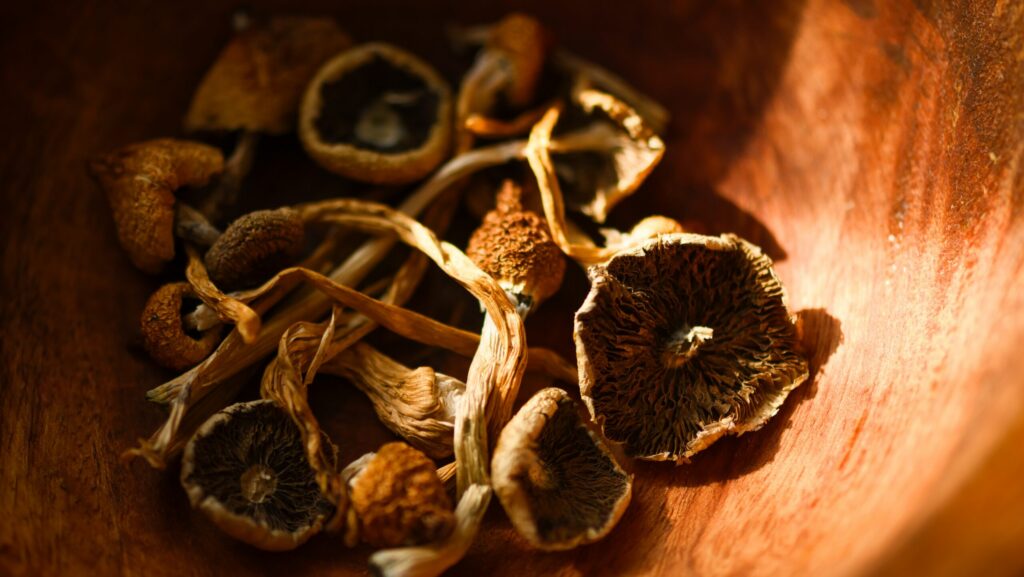
Psilocybin is the main psychoactive compound found in magic mushrooms. Traditionally, it has been used in religious and spiritual ceremonies by indigenous cultures. Today, it is often used recreationally by those looking to experience a psychedelic breakthrough.
It is not a physically addictive substance. But many users have turned to the drug as an escape from emotional pain. This can lead to unhealthy patterns of use. With frequent use comes tolerance. Users will then need higher doses in order to achieve the same desired effects. It can lead to a psychological addiction to the drug.
The Shroom High Timeline
One common question among new users is “how long does a magic mushroom trip last?” In general, a shroom trip experience typically lasts anywhere between 4 and 6 hours. Higher doses can stretch out the high up to 8 hours. Most people tend to return to baseline functioning around the 6-hour mark.
A shroom high is often described as an “earthy” and emotionally grounded experience. A magic mushroom trip consists of mental changes, perception changes and mood alterations.
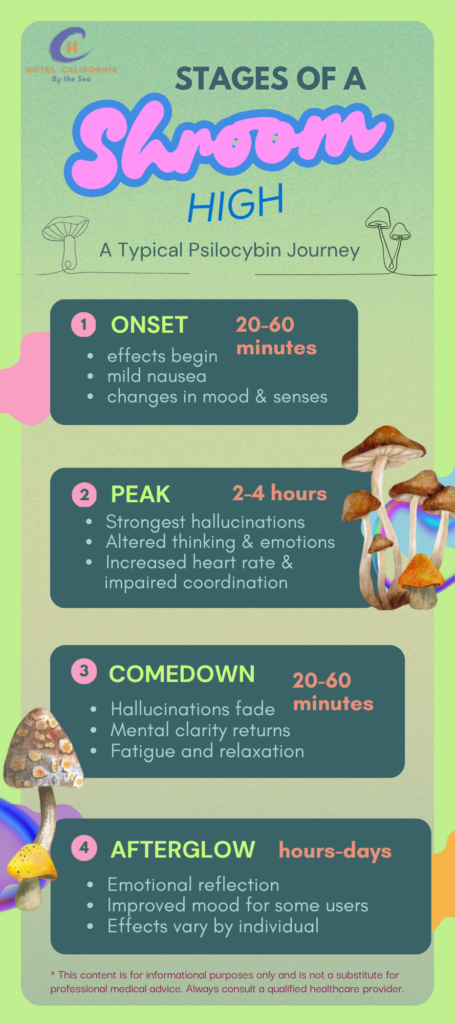
Users will typically move through a few distinct stages: The onset, the peak, the comedown and the afterglow. Each of these states of shroom high carries its own psychological and physiological experiences.
Factors that influence the Duration of your Shroom Trip
- Body weight and metabolic weight can impact how long shrooms stay active in your system. Your personal metabolic weight determines how quickly the drug passes through the system.
- Dose. An absolute dose produces mystical experiences. A fixed dose is a more cost-effective amount that can still produce therapeutic outcomes. The higher the dose, the longer you may experience a mushroom trip.
Stages of Shroom Trip
The Onset
Depending on your chosen method of ingestion, the onset phase typically lasts between 20 and 60 minutes. When ingested, the psilocybin is metabolized into psilocin in your liver, which is the actual chemical that binds to serotonin receptors in your brain to produce psychedelic effects.
Eating dried raw mushrooms can lead to an onset of 30 to 45 minutes, whereas the typical onset for edibles infused in chocolate or gummies can vary greatly. Because the body also has to break down the chocolate or gummy base, it can take longer for the edible high to kick in. And if you drink mushroom tea, the effects can be seen in as little as 15 minutes.
This phase is when you begin to notice the effects of the drug. You may encounter physical sensations such as mild nausea, temperature changes, limb heaviness or lightness. There may be subtle changes in mood and early visual effects. These first hallucinations are when colors start to become more bold, intense and exaggerated. Eventually, it will shift towards more intensified hallucinations.
Check Your Insurance Coverage for FREE
Find out if your insurance covers addiction treatment in minutes. We accept most insurance!
The Peak
Between the second to fourth hour, this is when you will reach the peak of effects. It is the most intense, immersive phase of the trip. Physical, emotional, and visual changes will be at their maximum potency.
During peak phase, you can experience profound changes in perception, self-awareness, dissolution of boundaries as well as spiritual experiences. Users will also experience visual distortions, color warping and pattern shifting.
Physically, elevated heart rate, dilated pupils and impaired coordination are common during peak phase.
When it comes to cognitive changes, users can experience emotional surges, anxiety, altered time perception and deep introspection. Some even describe this feeling as intense rolling waves of euphoria.
This phase can also occasionally open up repressed emotions or difficult memories. This is when the peak effect can start to become scary or disturbing. However, it is all dependent on each person.
The Comedown
The comedown phase is when peak effects begin to slowly subside. The visual hallucinations begin to fade and your standard waking consciousness returns. Unlike the harsh and depleting crashes often associated with a stimulant or alcohol withdrawal, a psilocybin comedown is very gentle. The effects taper gradually while mental clarity slowly begins to return.
In some cases, you can experience physical exhaustion, mild muscle fatigue or lightheadedness. The duration of this phase is typically around 2 to 3 hours.
Emotionally, you might feel slightly drained due to the intensity of the sensory input. But many people report feeling peaceful, relieved and relaxed.
The Afterglow
In the final phase of a magic mushroom trip, the effect can extend beyond the 6-hour mark. This is called the afterglow. Extended emotions can go on for days, weeks and sometimes even months following the trip.
It is typically 12 hours after the effects of the substance have worn off. Effects can include emotional relief, mental clarity and residual euphoria. Some users report increased emotional empathy, reduction in baseline anxiety and renewed appreciation for everyday life. This occurs because psilocybin promotes neuroplasticity, a process that helps the brain form new connections.
The afterglow period is important for making sense of the entire experience. This is when some people go through the emotional processing of unresolved trauma and suppressed fears. They then move into reflection and making sense of the experience while trying to incorporate the insights they learned during their mushroom trip.
Magic Mushrooms for Therapeutic Treatment
In recent years, scientists and researchers have begun studying the effects of a magic mushroom trip and how it can impact mental health conditions such as depression, anxiety and post-traumatic stress disorder. Some clinical trials have shown that when powerful psychedelic experiences are processed and integrated correctly in a therapeutic setting, it can lead to long-term reduction in conditions such as treatment-resistant depression and PTSD symptoms.
Reach out to Hotel California by the Sea
We specialize in treating addiction and other co-occurring disorders, such as PTSD. Our Admissions specialists are available to walk you through the best options for treating your addiction.
Treatment for Substance Use Disorder
Exploring the therapeutic awakening of magic mushrooms has become more and more common in the recreational drug space. Though not physically addictive, there is a risk of psychological addiction when it comes to these types of psychedelic substances.
Hotel California by the Sea provides treatment at all levels of care including detox, residential, PHP and IOP. We utilize evidence-based methods including CBT, DBT and group therapy. Hotel California by the Sea is dedicated to helping clients reach their goals in sobriety and overcome their addiction.
References:
https://www.changainstitute.com/blog/understanding-the-psychological-phases-of-psychedelic-experiences-a-deep-dive
https://vivetreatmentcenters.com/mushroom-trip-timeline/
https://www.renaissancerecovery.com/drug/psilocybin/how-long-does-it-take-for-shrooms-to-kick-in/
https://psychedeliccoaching.institute/the-four-phases-of-psilocybin-journeys-a-guide-to-supporting-transformative-experiences/
https://www.trippingly.net/phases-of-a-psilocybin-trip