Where to get Ibogaine Treatment?
Drug and alcohol addiction has become such a public health crisis that many are now searching for new alternatives to treating substance use disorders. The latest search term online is where to get ibogaine treatment for drug addiction. Many are in search of treatment for compulsive substance use and to reduce withdrawal intensity and have turned to ibogaine treatment therapy.

Ibogaine therapy is still a very new concept with ongoing clinical studies. Most recently, the Trump Presidential Administration has signed an executive order allocating at least $50 million in support of programs designed to advance the use of psychedelic substances for serious mental health conditions and substance use disorders. In Texas, some of the funds are being used to start the state’s own ibogaine research program.
Ibogaine has historically been used in medicine and healing ceremonies. Today there is a new shift in studies of psychedelic medicine for substance abuse and mental health disorders like depression, anxiety and PTSD. There are some findings that ibogaine can be beneficial for substance use disorders because it causes an altered state of mind that can help alleviate symptoms of withdrawal and help curb drug cravings.
What is Ibogaine?
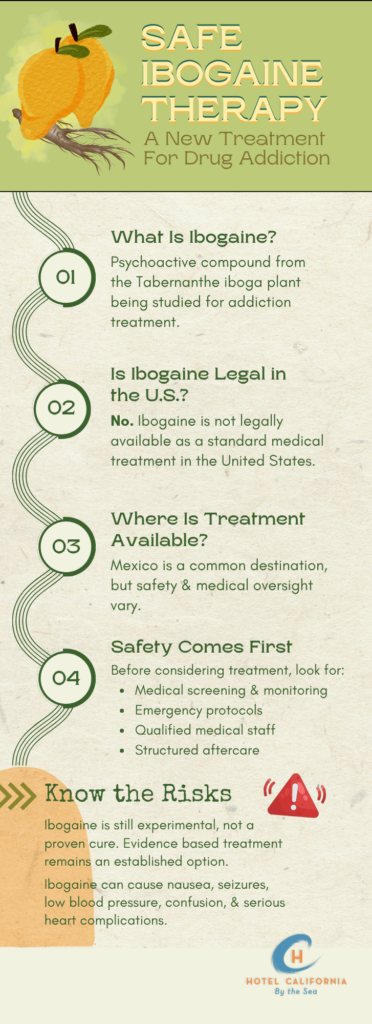
Ibogaine is a psychoactive compound naturally occurring from the Tabernanthe iboga plant. It is found in the root bark of the shrub, which is native to countries in West Africa. It is known for producing hallucinogenic and psychedelic effects.
Ibogaine is classified as a Schedule I controlled substance. Ibogaine treatment therapy is not legal in the U.S. Some countries such as Mexico and New Zealand, have almost no regulations on the substance. Because it cannot be legally administered within the U.S., many people have traveled outside of the country where they can receive treatment.
It is believed to impact many different receptors in the brain: serotonin transporters and receptors, dopaminergic receptors, nicotinic receptors and GABA receptors. Hallucinogenic effects are thought to promote the release of dopamine and serotonin, which are involved in nerve cell communication. It can increase serotonin and dopamine levels to a point where it reduces cravings and prevents intense withdrawal symptoms.
Because of its impact on many different receptors in the brain, this supports the idea that it can be beneficial for the treatment of mental health conditions and substance addiction.
New research into ibogaine treatment therapy has shown promising results in treating addiction, triggering the production of new nerve cells, promoting neuroplasticity, which is the brain’s ability to change structure or function. It is a controversial new treatment method that is not yet a legal standard of practice.
How does Ibogaine work for treating Substance Addiction?
In a clinical setting, ibogaine is typically administered in a single dose with a monitoring and recovery period. In substance use disorder treatment, it can help:
- Reduce withdrawal symptoms
- Decrease cravings for drugs in the short term
- Produce an intense introspective experience that helps people to reframe their unhealthy patterns, trauma and motivation
Early studies on how it impacts substance use disorder have shown some promising results. A 2014 study in Brazil found there was an average of 5 months of abstinence from drug use after one ibogaine treatment therapy. A 2017 study in New Zealand found that after one treatment, it could help reduce opioid withdrawal symptoms over the course of 12 months. In another 2017 study in Mexico, researchers found reduced drug use and improved opioid withdrawal symptoms in those who didn’t have success in other traditional treatment methods for substance addiction.
Where to get Ibogaine Treatment
Ibogaine is not legally available in the United States as a standard medical treatment. This heavily limits legitimate operating options. Despite its illegal status, there has been more of a push in the scientific community to study its impact on substance use disorder. It has gained popularity due to its anti addictive properties because it doesn’t cause cravings or withdrawal symptoms.
Mexico is widely known for its established programs that cater to international clients, including many from the U.S. For many people, Mexico is where to get ibogaine treatment. There is an established cross-border treatment market. When taking this route, it is important to check for the following before booking treatment.
- A written outline of screening and monitoring protocols
- Ask about who is onsite during dosing
- Verify how they manage adverse effects and what hospital they use
- Confirm they provide structured ibogaine aftercare support
Because legal access to ibogaine is highly restricted in the U.S., there is more likely to be underground providers. This increases the risk of emergency readiness, lack of transparent screening and lower accountability.
In some cases, there may be regulated research studies on ibogaine related compounds. If you can find any of these studies, it may offer the strongest safety oversight of this treatment.
Check Your Insurance Coverage for FREE
Find out if your insurance covers addiction treatment in minutes. We accept most insurance!
What to expect in the Ibogaine treatment process
- Prescreening and preparation: There is a medical intake, labs, medication adjustments, and opioid stabilization planning. This consultation period also uncovers personal recovery goals.
- Dosing: This typically lasts from 8 to 24 hours of the intense psychoactive phase. Most people are mostly in bed and experience nausea. There will be continuous monitoring as the brain works to reset.
- Post-acute recovery: This phase lasts for a few days, where users experience fatigue, emotional sensitivity and reduced cravings.
- Aftercare: In the weeks and months following, therapy, support groups and relapse prevention are important factors in building a new life.
Effects of Ibogaine treatment
- Gastrointestinal issues
- Nausea and vomiting
- Anxiety and agitation
- Confusion
- Low blood pressure
- Difficulty coordinating movements
- Extreme dehydration
- Risk of seizures
- Risk of heart failure
- Paralysis
- Respiratory failure
- Insomnia and difficulty sleeping
- Muscle spasms
- Hallucinations and delusions
- Suicidal thoughts and behaviors
- Rapid disorganized speech
The Three main phases of Ibogaine
The psychedelic effects of ibogaine can start within a few hours of use. It can last for up to 24 hours. The effects occur in three main phases: visionary phase, introspective phase and residual phase.
The first phase is a dream-like phase in which people will experience altered versions of their surroundings and be able to recall old memories. This can last between 4 and 8 hours. The second phase is an emotionally neutral state of reflection that lasts between 8 and 12 hours. The last phase involves exploring a greater awareness and mild stimulation that can last up to 3 days.
The future of Ibogaine treatment for Substance Addiction
In general, there is not enough clinical research or scientific evidence to prove that ibogaine is completely safe and effective when it comes to addiction treatment. In some cases, it may pose more health risks than other controversial treatment methods. The results of clinical trials have been mixed.
But psychedelic treatment therapy for substance addiction is gaining more recognition and popularity. Some studies are looking at how it can be used to treat dependence on opioids, alcohol, stimulants and other mind-altering substances.
Scientists still don’t completely understand how it works on the various parts of the brain. But we do know that it impacts brain chemicals like dopamine and serotonin, which are linked to feelings of happiness and well-being.
Reach out to Hotel California by the Sea
We specialize in treating addiction and other co-occurring disorders, such as PTSD. Our Admissions specialists are available to walk you through the best options for treating your addiction.
Treatment for Substance Use Disorder
More studies are needed to determine the true results and long-term benefits of ibogaine therapy. Until then, Hotel California by the Sea provides effective substance use disorder treatment. We offer treatment at all levels of care including detox, residential, PHP and IOP. We utilize evidence-based methods such as CBT, DBT and EMDR therapy. Hotel California by the Sea is dedicated to helping clients reach their goals in sobriety and overcome their addiction.
References:
https://www.addictioncenter.com/drugs/ibogaine
https://drugfree.org/drugs/ibogaine/
https://rehabnet.com/treatment/ibogaine-rehab-centers/
https://www.experienceibogaine.com/state/california/