
Alcohol and Aggression: Why some people get Angry Drunk
You may wonder why do some people get angry when drunk. A stereotypical angry drunk is actually more than just a myth. There is a genuine link between alcohol and aggression backed by scientific and clinical research. According to the World Health Organization, the use of alcohol is most closely associated with aggressive behaviors compared to any other type of psychotropic substance.
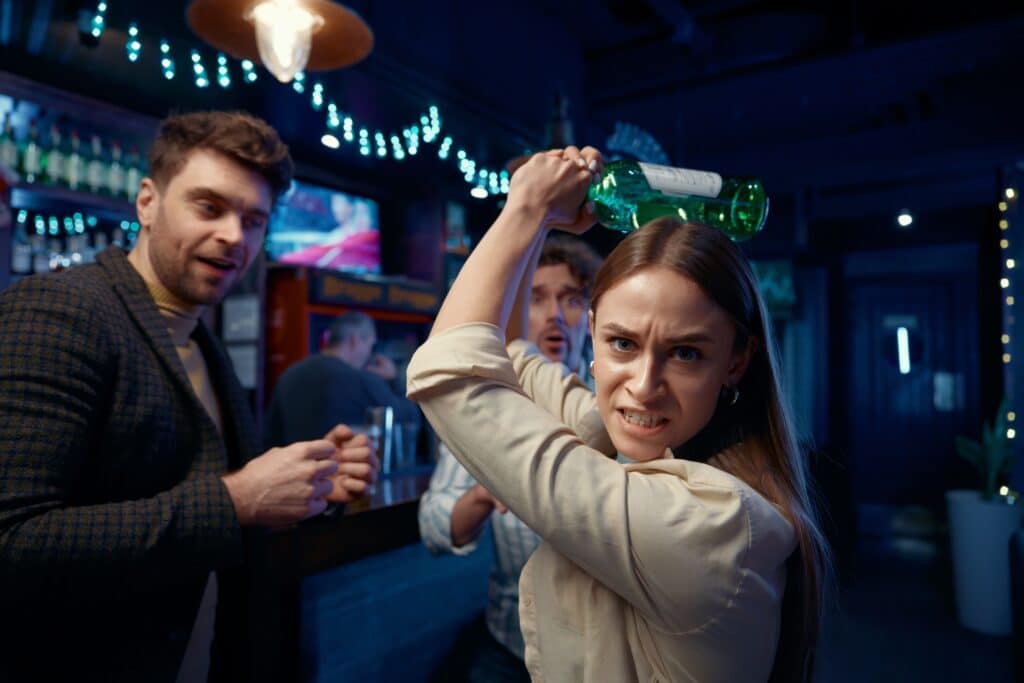
The relationship between alcohol and aggression isn’t as simple as “drinking makes people violent.” Alcohol changes the way people think, react and regulate emotions. Alcohol can increase the risk of anger, stress, conflict, poor decision-making, and, in the wrong personality or setting, it can lead to a negative outcome.
Anger is a strong emotion you experience when something goes wrong or when you feel like you have been wronged. Anger turns into aggression, which can include behaviors that are physical or psychological. When a person becomes aggressive, they can cause harm to themselves, others, or objects around them.
Why do some people get Angry when Drunk?
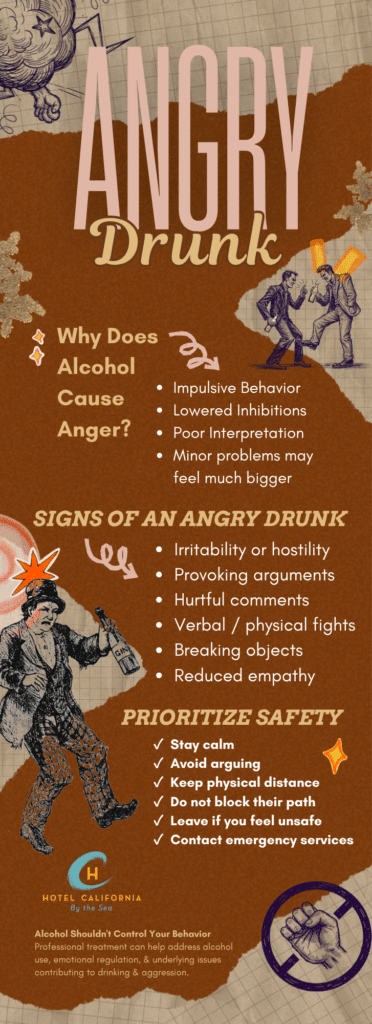
Some people get angry when they are drunk because alcohol is a substance that weakens the mental brakes that typically help them to stop and interpret situations accurately and choose a calm response. Alcohol can narrow attention, lower inhibitions, increase impulsive reactions and make even the smallest annoyances feel bigger than they are.
However, this doesn’t mean alcohol can create anger and aggression out of thin air. Alcohol can amplify what is already present. Feelings such as resentment, jealousy, insecurity, stress, trauma and a short temper can all be exacerbated when alcohol is added into the mixture.
Alcohol can elicit different behaviors in different people. This is why two people can drink the same amount and behave differently. One person may become sleepy or sentimental, while another person becomes loud and provocative. Another person may turn into the classic “angry drunk” who will pick a fight or lash out over minor issues.
Signs of an Angry Drunk
- Appearing more irritable and hostile
- Trying to provoke others
- Making hurtful comments
- Getting into verbal or physical fights
- A lack of empathy for others
- Breaking objects and other things around them
The impact of Alcohol on the body that can contribute to someone becoming an Angry Drunk
Alcohol affects the body in many ways. Not only that, there are many different ways that it can contribute to anger and aggression, leading to someone becoming an angry drunk.
Alcohol affects cognitive functioning and parts of the brain involved with inhibition and control. When under the influence, alcohol can impact the ability of a person to regulate their emotions and make rational decisions, which can lead to violent or aggressive behavior. When inhibitions are lowered, some people may express anger or frustrations more freely, which can also result in impulsive behaviors.
Alcohol also disrupts communication. Excessive alcohol use can make it difficult for people to express their emotions more clearly, making it easy for misunderstandings to occur. It can make you miss social and environmental cues that help a person interpret situations rationally without jumping to negative conclusions. Your information processing is interrupted, and it can cause you to misinterpret other people’s actions or behaviors that may lead to arguments or drunken fights.
It is almost as if the alcohol is interacting with multiple neurotransmitters and making it harder for brain areas involved in judgment, memory, balance and speech to do their jobs. It can mess with the balance of serotonin, which helps regulate mood and emotional responses. This makes it more difficult to feel cool and collected.
Risk Factors for Alcohol-related Aggression
- Binge drinking
- A person with high levels of trait anger
- A person with a sensation-seeking personality
- Having underlying irritability and a history of aggressive behavior
- Having friends or relatives who exhibit aggression while under the influence of alcohol
- A person who lacks empathy
- Disinhibition, which makes you unable to suppress an act of aggression that may not be appropriate for the situation you are in
- Chronic alcohol use, which decreases the function in the prefrontal cortex and impacts impulse control
- A person with a short temper and anger management issues
- A person who suffers from insomnia or is sleep deprived
- Having financial difficulties
- Having high stress and mental health struggles like anxiety, depression and trauma
- Relationships problems
The impact of Alcohol Related Aggression
An angry drunk isn’t just a phase that occurs once in a while when drinking. It can lead to alcohol related violence.
There are many studies that show a clear link between alcohol use and intimate partner violence. An estimated one quarter of domestic violence victims believed the offender was under the influence of alcohol.
Children are also greatly impacted by alcohol related violence and aggression. According to The Children’s Society, about 39% of children living with a parent with problematic alcohol use were living in a house where there had been domestic violence in the last five years. In fact, children are almost three times more likely to be in a home affected by domestic violence than those who are not exposed to parents with alcohol issues.
Check Your Insurance Coverage for FREE
Find out if your insurance covers addiction treatment in minutes. We accept most insurance!
What to do when you are confronted by an Angry Drunk
When someone is intoxicated and angry, the first priority is de-escalation and safety.
- Avoid reacting emotionally
- Maintain a physical distance between you and the intoxicated person
- Don’t try to reason with them or debate details if they are misreading the situation
- Use a calm tone and language
- Remove alcohol access
- Leave if you need to and talk to them again when they are sober
- Avoid blocking their path, which can increase panic or aggression
- Call a friend or emergency services if needed
Alcohol and Aggression can be shaped by the situation
Alcohol and aggression are strongly influenced by what is happening in the environment around the person. A crowded bar, loud music, teasing, competition and embarrassment can all act as triggers. Alcohol isn’t always the only cause. It can simply act as a catalyst or trigger to anger and aggression. There are certain cues and triggers that can affect whether drunkenness turns into aggression.
Every day triggers that can impact alcohol aggression:
- Feeling disrespected
- Jealousy or insecurity
- Competition
- Crowds and noises
- Group pressure
- Unresolved conflict
When it is time to get support
It may be time to seek out professional support when alcohol related anger is repeated, escalating, frightening, connected to blackouts, damaging relationships or causing physical harm. Support can include a primary care clinician, therapist or substance use counselor depending on the situation.
For a person who becomes aggressive when drinking, the most practical first step is to simply stop consuming alcohol for a period of time. Communicate openly and honestly with a professional about what happens when alcohol is involved.
Reach out to Hotel California by the Sea
We specialize in treating addiction and other co-occurring disorders, such as PTSD. Our Admissions specialists are available to walk you through the best options for treating your addiction.
Treatment for Alcohol Use Disorder
Consuming alcohol can cause all kinds of issues, including increased aggression. An angry drunk can lead to relationship conflict, physical injury, emotional distress and legal troubles. The relationship between alcohol and aggression is about more than one drink or one bad night. Alcohol effects can reduce practical judgment, narrow attention, and weaken impulse control. All of this can make anger easier to express and more difficult to contain.
Professional behavioral health programs like Hotel California by the Sea provide alcohol use disorder treatments. We offer treatments at all levels of care, including detox, residential, PHP and IOP. We utilize evidence-based methods such as CBT, DBT and family therapy. Hotel California by the Sea is dedicated to helping clients reach their goals in sobriety and overcome their addiction.
References:
https://www.goodrx.com/health-topic/alcohol/why-does-drinking-alcohol-make-me-angry-sad-depressed?srsltid=AfmBOop8cjuH1U_U80qtidVo4K4bsBTxEC-BPeOJeMOniREhtQgQ1rxo
https://alcoholrehabhelp.org/treatment/angry-drunk/
https://www.choosingtherapy.com/angry-drunk/
https://www.verywellmind.com/alcohol-facilitates-aggression-62647
https://www.drinkaware.co.uk/facts/health-effects-of-alcohol/mental-health/alcohol-and-aggression