
Nicotine Addiction Symptoms: Recognize the Signs
An estimated 45 million Americans smoke tobacco. When smoked, it produces a chemical called nicotine, which can literally change the structure and chemistry of your brain and can lead to nicotine addiction symptoms. Tobacco use, including smoking nicotine, is associated with some of the major causes of death in America: cancer, cardiovascular disease and pulmonary disease. On average, about 435,000 Americans die prematurely from smoking-related diseases every year.

A highly addictive stimulant, nicotine dependence impacts, on average, 23.6 million Americans. Developing an addiction to nicotine is also referred to as tobacco use disorder. This can occur almost right away, even after one or two uses of products that contain nicotine.
Nicotine addiction can be easy to miss at first. It typically blends into everyday routines. A cigarette with coffee, a vape during break time or smoking tobacco during a long drive. The most obvious sign will show up when you try to cut back, delay use or go without nicotine; your body will notice and begin pushing back. There will be physical and psychological signs that can be uncomfortable, leading you back into the cycle of nicotine addiction.
Stats of Nicotine and Smoking Tobacco
Cigarette smoking remains the leading cause of preventable disease and premature death in the US and many other countries. Tobacco is a legal substance that is highly addictive. This makes it easily accessible and widely acceptable. The combination of the two creates a dangerous cocktail for dependence and addiction.
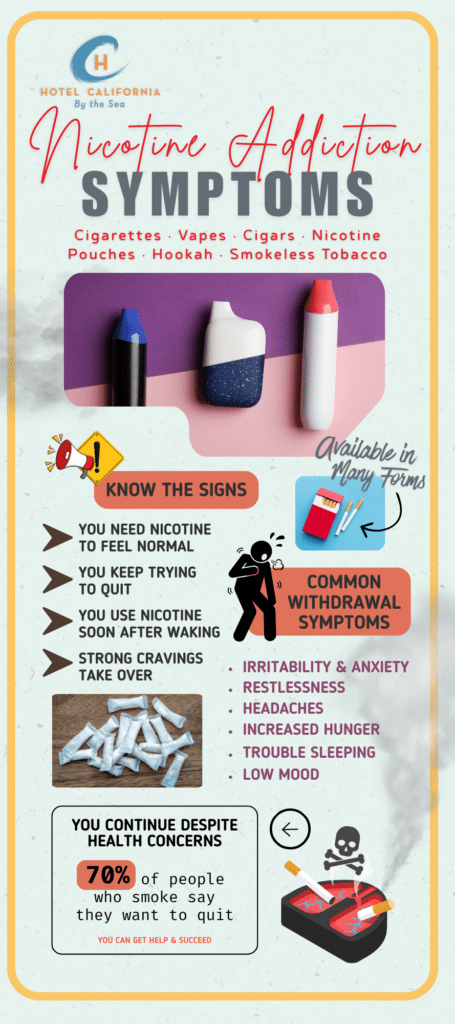
It is very difficult to quit nicotine. It can be just as addictive as heroin or cocaine. This is due to its impact on the release of dopamine in the brain. About 70% of nicotine smokers say they would quit, with about 40% being able to for at least a day. However, about 80% of those who attempt to quit nicotine on their own end up returning within a month. Research has found that each year only 3% of nicotine smokers who quit are actually successful.
What is Nicotine Addiction?
Many people often describe nicotine addiction as just a habit. However, it can be more than just part of a daily routine. The hand-to-mouth motion, the break from work, the social setting or the feeling of stepping outside can become powerful associations and cues. Nicotine also impacts the brain’s reward system, which is why it can become addictive.
When you use nicotine, the reward center in your brain releases neurotransmitters like dopamine. Dopamine produces feelings of pleasure and improved mood. The more you ingest nicotine or smoke it, the more you will need in order to “feel good.”
When ingested, nicotine acts on the nicotinic cholinergic receptors in the brain. This triggers the release of dopamine that produces the psychoactive effects of reward. With repeated exposure, tolerance and dependence can develop.
You can develop a physical dependence as well as a psychological dependence on nicotine. Physical dependence occurs when your body needs nicotine to avoid uncomfortable withdrawal symptoms. Psychological dependence can occur when you feel the need to use nicotine in order to get through the day because it has now become part of your daily routine. The basis of nicotine addiction is the combination of positive reinforcements like enhanced mood and the avoidance of withdrawal symptoms.
Over time, the body will become used to having nicotine. When the levels drop, the brain will notice and discomfort will set in. This is when users begin experiencing withdrawal symptoms. Nicotine can induce pleasure, reduce stress and anxiety and may even temporarily improve concentration. It provides a rapid reinforcement that allows for precise dosing, which makes it possible to achieve desired effects without toxicity. But this is what creates an addiction.
Common Nicotine Addiction Symptoms
The signs and symptoms of nicotine addiction can be physical, emotional, behavioral, and social. Not everyone experiences every symptom, and they can vary depending on the type of nicotine product used. Other factors that influence nicotine addiction symptoms include how often it is used and how long the product has been used for.
- You can’t stop smoking even when you’ve made serious attempts to stop
- You smoke within 30 minutes of waking up
- You have nicotine withdrawal symptoms when you try to stop and you need to continue using it to feel “normal”
- You keep smoking nicotine and using it despite declining health conditions
- You give up social activities and things you once enjoyed in order to smoke nicotine
- You have cravings to use nicotine that are difficult to ignore and it is especially present during stress, boredom, after meals, while driving or around other people who use it
Check Your Insurance Coverage for FREE
Find out if your insurance covers addiction treatment in minutes. We accept most insurance!
Withdrawal Symptoms
Smoking withdrawal symptoms can feel like a mix of physical discomfort and emotional unease. A practical way to recognize withdrawal symptoms is to look out for timing. If symptoms regularly appear when you have gone for a while without using nicotine and only improve once you start using it, that pattern could be a clue. This means your body has learned to expect nicotine. Common withdrawal symptoms can include:
- Chest tightness
- Difficulty sleeping
- Dizziness
- Headaches
- Increased hunger and weight gain
- Nausea
- Feeling uneasy
- Jitteriness and restlessness
- Difficulty focusing and concentrating
- Sadness or depression
- Anxiety and irritability
- Insomnia
These withdrawal symptoms are all powerful incentives to keep using. It is what traps many people in the cycle of addiction.
Nicotine Products may look different but create the same outcome
Cigarettes are often the first product people think of when they think of nicotine addiction. But the reality is, nicotine addiction can involve vaping, cigars, nicotine pouches, hookah, pipe tobacco and smokeless tobacco. The delivery method may vary and change, but the dependence pattern is similar: cravings, repeated use, withdrawal discomfort and difficulty stopping.
Vaping can be particularly easy to underestimate. This is because it may not smell like traditional smoking and can be used in short, frequent bursts. Someone who vapes typically doesn’t pay attention to how often they are using nicotine throughout the day. Smokeless tobacco pouches and nicotine pouches are becoming associated with specific routines like driving, talking on the phone, working or reading. Just because you aren’t smoking a cigarette doesn’t mean you aren’t being exposed to enough nicotine that can lead to tobacco use disorder.
Health risks associated with Nicotine Addiction
- Lung cancer and lung disease
- Cardiovascular disease like coronary artery disease, stroke and aortic aneurysm
- Cancer
- Higher risk of type 2 diabetes
- Cataracts and loss of eyesight from macular degeneration
- Difficult with fertility
- Tooth and gum disease
- Kidney disease
- Cervical disease
- Reproductive conditions like fertility issues, sperm abnormalities and infant mortality
Reach out to Hotel California by the Sea
We specialize in treating addiction and other co-occurring disorders, such as PTSD. Our Admissions specialists are available to walk you through the best options for treating your addiction.
Treatment for Tobacco Use Disorder
Nicotine addiction will often show up through cravings, withdrawal and repeated failed attempts to cut back. Routines begin building and revolving around nicotine use. Nicotine addiction symptoms can be subtle at first but will become clearer when you start paying attention to the patterns when using and not using.
Hotel California by the Sea provides treatment for substance addiction including an addiction to nicotine. We offer treatment at all levels of care including detox, residential, PHP and IOP. We utilize evidence-based methods such as CBT, DBT and group therapy. Hotel California by the Sea is dedicated to helping our clients reach their goals in sobriety and overcome their addiction.
References:
https://med.stanford.edu/news/insights/2025/08/young-people-and-nicotine–five-things-to-know.html
https://www.mayoclinic.org/diseases-conditions/nicotine-dependence/symptoms-causes/syc-20351584
https://my.clevelandclinic.org/health/diseases/24482-nicotine-dependence
https://www.cdc.gov/tobacco/campaign/tips/quit-smoking/7-common-withdrawal-symptoms/index.html
https://www.ucsfhealth.org/care/conditions/nicotine-dependence
https://pmc.ncbi.nlm.nih.gov/articles/PMC2928221