Buzzed vs Tipsy vs Drunk: Key Differences
Alcohol affects many different people on a spectrum. But everyday words like buzzed, tipsy and drunk can help describe common levels of intoxication and when drinking can become risky or dangerous. Is there a difference between buzzed vs tipsy vs drunk? Yes.

Alcohol is a central nervous system depressant that amplifies the effects of GABA neurotransmitters in the brain and body. At lower levels, it can feel stimulating because inhibitors drop and it can lift your mood. At higher levels, the depressant effects become more obvious. Each person has different tolerances to levels of alcohol. And as you keep drinking you move through different stages of alcohol intoxication as the blood alcohol concentration levels increase.
Blood Alcohol Concentration
Blood alcohol concentration (BAC) is the most commonly referenced system for measuring alcohol intoxication levels in the U.S. There is actually no universal system worldwide. We typically use BAC levels to define how intoxicated a person becomes when they drink alcohol.
The BAC is a measurement of the amount of alcohol present in a person’s bloodstream. It is expressed as a percentage of alcohol per volume of blood: grams of alcohol per 100 milliliters of blood. The legal driving limit is 0.08%, which is widely considered the limit for drunkenness in most situations involving alcohol intoxication.
What is the difference between Buzzed vs Tipsy vs Drunk?
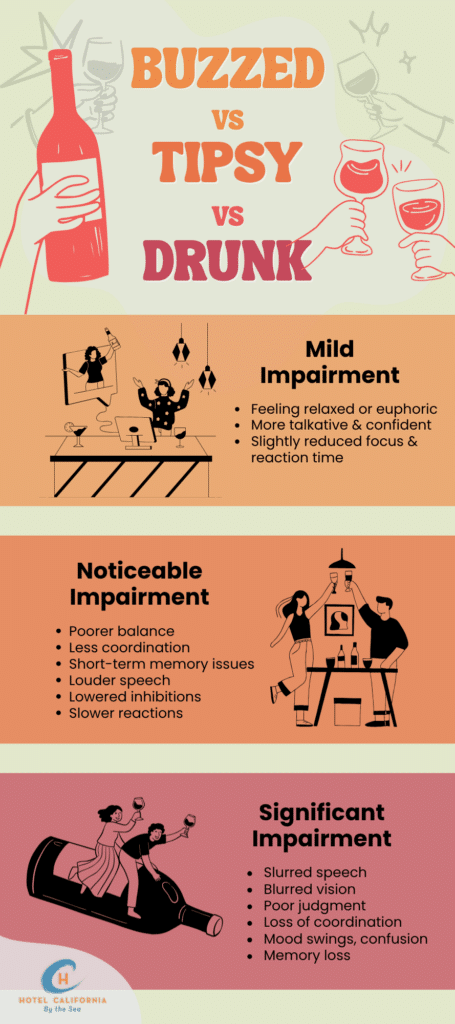
The main difference between these common references of intoxication is the degree of impairment. Being buzzed typically describes the very earliest stages of alcohol intoxication. Being tipsy can suggest clearer physical and social changes in a person when they are intoxicated. Being drunk often means alcohol has significantly impaired judgment, coordination, speech, balance and behavior.
These are common colloquial terms. They are not official medical categories based on a person’s blood alcohol concentration. Someone’s BAC takes into consideration many different factors including alcohol tolerance, food intake, body size, medications, and drinking pace.
One way to think about the three phases is that when you are buzzed it can feel like a slight shift and change of your mental state, whereas tipsy can be more noticeable to others around you due to added physical changes. Being drunk is much more difficult to hide, with physical and psychological and behavioral changes.
You’re feeling Buzzed
Being buzzed means a person has started to feel the effects of alcohol but may seem mostly in control. This euphoric stage of intoxication can make a person feel warm, more relaxed, more talkative and slightly less inhibited. The changes are mild and pleasant.
Common signs for being buzzed
- Relaxed feeling
- More confident and social
- Slightly flushing
- Mildly reduced focus
- Euphoria
- Small changes to reaction time
During the buzzed stage, a person’s BAC level can be around 0.03% to 0.05%. This means about two to three beers for men in an hour and one to 2 beers for women in the span of an hour. Just because it is a mild impairment, buzzed does not mean sober. Even very mild effects of alcohol make a difference if someone needs to drive, work or make important decisions.
Feeling a little Tipsy
Being tipsy typically describes a more obvious level of intoxication than being buzzed. But it is not the severe impairment that people associate with being drunk. The person may still be conversational, but their change in behavior is much easier to stop. Tipsy people tend to be more talkative, a little louder and a little more clumsy.
Tipsiness is when alcohol enters the bloodstream and begins affecting the function of the brain and body more noticeably. A person is more likely to take more risks, have impaired motor skills and response, a shorter attention span, slightly slurred speech and poor short-term memory. Being tipsy is a mild form of intoxication where risk of harm is generally low.
Someone who is tipsy will usually have a BAC level anywhere between 0.05% to 0.08%. A tipsy person may still be able to correct themselves, slow down and drink water or stop drinking, compared to a drunk person who is likely to have no control and will need help from others.
Common indicators of someone who is tipsy:
- Louder and more animated speech
- Reduced social filter
- Coordination and balance challenges
- Slower reaction time
- Less precise movements
- More emotional expressions
- Lowered inhibitions and higher confidence levels
You are Drunk
When you are drunk, alcohol has caused significant impairment to your system. The person might be slurring their words, have difficulty with balance, have delayed reactions, have memory gaps or have difficulty following a conversation. Being drunk is often referred to as severe alcohol impairment. Your cognitive functions are severely impacted. Poor judgement, unsteady movements, reduced inhibitions with a higher risk of harm are common in those who are drunk.
Clear signs of being drunk include:
- Slurred or slow speech
- Blurred vision
- Slowed reaction time
- Poor concentration
- Flushed face and bloodshot eyes
- Impulsive decision-making
- Reduced ability to cooperate with others
- Blackouts and memory loss
- Risky behavior
- Aggression, crying, confusion and sudden mood shifts
- Nausea and vomiting
- Drowsiness and difficulty staying alert
A drunk person’s behavior is very unpredictable. They may insist on being fine, but their body language, speech and decisions say otherwise. The legal BAC to drive is 0.08%. A person whose BAC is between 0.06% to 0.15% is considered drunk. When you are drunk, you are consuming excessive amounts of alcohol, which severely impairs your cognitive abilities and physical coordination, leading to behaviors that would not happen if you were sober.
Check Your Insurance Coverage for FREE
Find out if your insurance covers addiction treatment in minutes. We accept most insurance!
Why labels can be misleading
The terms buzzed, tipsy and drunk sound simple enough. But real-life intoxication is impacted by many moving factors. Drinking can quickly make someone seem fine one moment and much more impaired the next because alcohol quickly absorbs into the bloodstream. Drinking on an empty stomach, mixing different alcohols and individual tolerance and body weight are all factors that impact how quickly a person can become buzzed, tipsy or drunk.
Someone with a high tolerance may not look drunk, but that does not mean their reaction time or attention is normal. On the other hand, someone with low tolerance can show visible signs of intoxication even after only a few drinks. Alcohol consumption causes unpredictable behaviors and impacts everyone differently.
When alcohol becomes an emergency
Some of the typical alcohol effects can be more than just signs of being drunk. They might be signaling alcohol overdose or alcohol poisoning. When a person reaches a BAC of 0.15% to 0.30%, they have reached dangerous alcohol levels. They may experience loss of motor control, blurred vision, confusion and a severely impaired state of drunkenness.
It may come to a point where a person experiences unconsciousness, vomiting, seizures or even difficulty breathing. This is now an emergency and they should seek medical attention immediately. At this point, do not assume sleeping it off will do the trick. It is important to get medical help to keep it from turning into a life-threatening situation.
Reach out to Hotel California by the Sea
We specialize in treating addiction and other co-occurring disorders, such as PTSD. Our Admissions specialists are available to walk you through the best options for treating your addiction.
Treatment for Alcohol Use Disorder
The difference between buzzed vs tipsy vs drunk is mostly a matter of a few degrees of intoxication. Buzzed is early impairment, tipsy is noticeable impairment and drunk is significant impairment with higher risk. All of these levels of intoxication can lead to the development of unhealthy alcohol behaviors and alcohol addiction.
Hotel California by the Sea provides treatment for alcohol use disorder. We offer treatment at all levels of care including detox, residential, PHP and IOP. We utilize evidence-based methods such as CBT, DBT and group therapy. Hotel California by the Sea is dedicated to helping our clients reach their goals in sobriety and overcome their addiction.
References:
https://www.healthline.com/health/what-does-it-feel-like-to-be-drunk
https://fherehab.com/news/the-4-levels-of-being-drunk
https://betteraddictioncare.com/alcohol/addiction/drunk-vs-tipsy
https://recovered.org/blog/what-stages-of-drunk-are-there
https://genesishouse.net/blog/tipsy-vs-drunk/