
Are you looking for Codependency Treatment?
Codependency is a term used to describe partners of chemical dependency and a person living with or in a relationship with a drug and alcohol addict. It is described as a dysfunctional relationship in which one person’s sense of self becomes tied to caring or controlling another person.

There are three main types of codependent relationships: relationships with a person who has an addiction, relationships with a person who is abusive and relationships with a person based on peer pressure. In the case of substance addiction, a spouse, parent, sibling or friend focuses all of their energy on managing or fixing the person with an addiction.
Codependency is a very unhealthy relationship. A codependent relationship with a person who is addicted to a substance can be even more challenging. Codependency treatment consists of reevaluating the relationship between the addict and codependent and finding an alternative or healthier way for both parties to cope and effectively manage. This may involve treatment for both the codependent person and the addict simultaneously.
Codependency and Addiction
This type of relationship occurs when a person believes they are being caring and helpful by supporting an addict. However, it is actually perpetuating or enabling an addict’s irresponsible or destructive behavior. In an attempt to show how much they love them, a codependent is enabling their actions, which can discourage the addict from seeking out professional treatment to get sober.
Codependency is a learned behavior. A person with codependent dependencies often finds themselves in intimate relationships with a person who has an addiction issue. The person will focus all their energy on trying to “fix” the person with a substance use disorder.
What does a codependent relationship look like?
A codependent partner goes out of their way to prevent their addict partner from experiencing the consequences of their actions. Addiction impairs judgment and critical thinking skills, making it difficult for a person to understand that they need help.
When a codependent person further enables them by shielding away the consequences of their actions, it makes it less likely that the addict will acknowledge that they have a problem with substance use. When the addict is prevented from fully experiencing the impact of their behavior, they are no longer motivated to change.
- A codependent person will justify their partner’s unhealthy drinking habits by making up an excuse such as saying he/she just had a stressful day and needs to relax.
- A codependent person will make excuses for their partner can’t come to social functions because they are under the influence of drugs or other substances.
- A codependent person will knowingly let their partner borrow prescription drugs from them.
- A codependent partner will quietly take on any extra responsibilities or tasks because their addict partner is always under the influence.
- A codependent is constantly rescuing the addicted person from consequences such as paying fines, covering up for them when they miss work or bailing them out of legal troubles. It may feel like helping, but it is removing accountability and prolonging addiction.
- A codependent person will neglect his or her own needs, health and happiness to care for the addicted loved one.
- A codependent can begin to feel responsible for the addicted person’s choices and emotions.
- A codependent person will have difficulty saying no or setting healthy boundaries.
- A codependent person may begin feeling a sense of resentment or exhaustion but is still unable to stop caretaking or enabling.
- A codependent person is often in denial about the severity of their loved one’s addiction or its severe impact on their life.
Typical Characteristics of an Addict in a Codependent Relationship
- They manipulate others into taking care of them
- They become upset when people try to set boundaries
- They are in denial about their substance use problems
- They rationalize their poor behavior
Check Your Insurance Coverage for FREE
Find out if your insurance covers addiction treatment in minutes. We accept most insurance!
Typical Characteristics of Codependent People
- They exaggerate responsibility for the actions of others
- They tend to confuse love with pity
- They tend to do more than their fair share in the relationship
- They tend to feel hurt when others do not recognize their efforts because they have an extreme need for approval and recognition
- They have a fear of abandonment or being alone
- They have a compelling need to control others
- They often lack trust in themselves and even others around them
- They often have difficulty identifying their true feelings
- They have low self-esteem and often feel anxious or depressed
How to Break the Cycle: Codependency Treatment
The first step in breaking the cycle of codependency is recognizing how enabling behaviors reinforce the addiction problem rather than help solve it. What can codependents and those who are addicted to substances do to help break the cycle of codependency?
Professional cognitive behavioral treatments that include individual therapy and family therapy can be effective in helping to treat codependency patterns with those who have a substance use disorder. They are evidenced by proven methods to help substance abusers understand how their addiction is impacting the relationship with the codependent person. It can also help the codependent loved one understand how to support and not enable the person when they are in need of professional substance use disorder treatment.
Learn effective techniques on how to break the cycle:
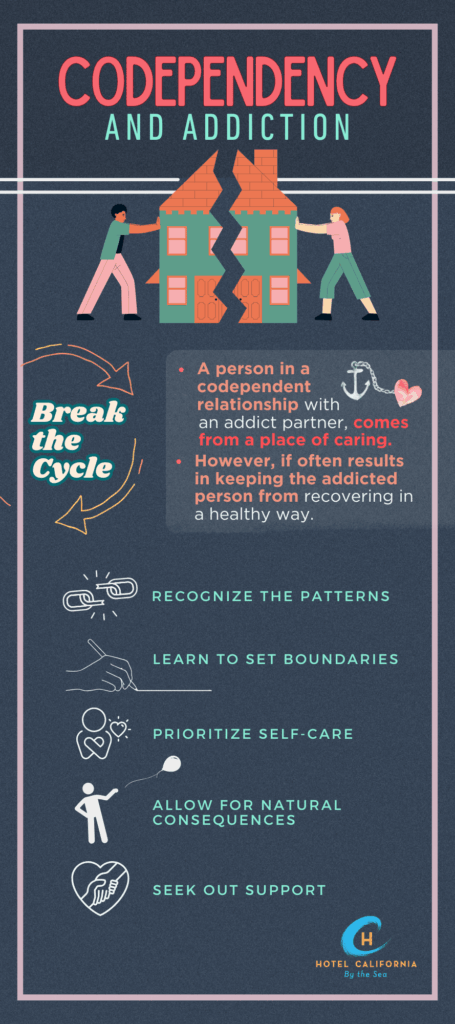
Recognize the patterns. Become more aware of the actions being taken and reflect on whether or not the person is sacrificing their own well-being in the name of helping another person.
Learn to set boundaries. It is very important to protect your own well-being by setting boundaries as to what you are capable of doing without compromising your own physical, emotional and mental health. Creating healthy boundaries also creates accountability for your addicted loved one. They will understand what you can do and what they need to do in order to help themselves.
Prioritize self-care. There may be a time in the addiction process where it becomes too overwhelming. Focus on your health, take up new hobbies or surround yourself with friends and family who are not trying to hurt you or take advantage of you.
Allow for natural consequences. Oftentimes, shielding our addicted loved ones from the consequences of their actions may seem like you are protecting them. However, you are in fact enabling them and they will no longer be motivated to get the help they need. It may be painful to watch, but allowing them to experience the consequences of their actions can create a catalyst for change.
Seek out support. Join a support group for families of addicts. These groups help bring together a community of those who may be going through similar struggles, where you can share and discuss how to help your addicted loved one. It can make you feel less alone knowing there are others who are also struggling in a codependent relationship.
Reach out to Hotel California by the Sea
We specialize in treating addiction and other co-occurring disorders, such as PTSD. Our Admissions specialists are available to walk you through the best options for treating your addiction.
Treatment for Substance Use Disorder
Addiction and codependency often feed off of each other. A person in a codependent relationship with an addict comes from a place of caring and good intentions, but it often results in keeping the addicted person from recovering in a healthy way. Professional behavioral health programs like Hotel California by The Sea provide treatments for substance use disorders as well as addressing codependent relationships that can occur.
We offer treatment at all levels of care including detox, residential, PHP and IOP. We utilize evidence-based treatment methods that include CBT, DBT and family therapy. All of which are especially important in addressing codependency treatments. Hotel California by the Sea is dedicated to helping clients reach their goals in recovery and overcome their addiction.
References:
https://www.psychologytoday.com/us/basics/codependency
https://willingway.com/codependency-and-addiction/
https://renewhealth.com/codependency-and-addiction-breaking-the-cycle/
https://mhanational.org/resources/co-dependency/
https://www.addictioncenter.com/addiction/codependency