
What is the Hardest Drug to Quit?
Substances like alcohol, heroin and cocaine are some of the most difficult drugs to quit. Most of these drugs are categorized under the Controlled Substances Act. They interfere with your brain chemistry, disrupt normal brain functions and can cause damage to your organs. But out of all mind-altering substances, what is the hardest drug to quit?

Quitting drugs can be one of the most difficult journeys a person takes in their lifetime. Drugs and alcohol can lead to physical dependence and psychological addiction, which makes quitting any type of drug challenging. Addiction is a complex disease that affects people from every walk of life. Substance use disorder usually begins with a choice. But over time, the person loses control and their desire for drug use can take over their lives.
Having a drug addiction impacts all aspects of a person’s life. It leads to changes in the brain, loss of control of behaviors and can lead to the misuse of legal or illegal drugs. Overall, it impacts your physical, mental and emotional health in a negative way.
What are the signs that you may have an addiction to drugs?
- You feel the need to use substances regularly
- You have intense urges and cravings to use the drug
- You take larger amounts of drugs over time
- You need more drugs in order to experience the same effects
- You are constantly afraid of running out of your drug
- You spend large amounts of money on buying drugs
- You continue to use drugs despite the negative consequences
- You want to quit but fail to do so
- You experience withdrawal symptoms when you attempt to quit
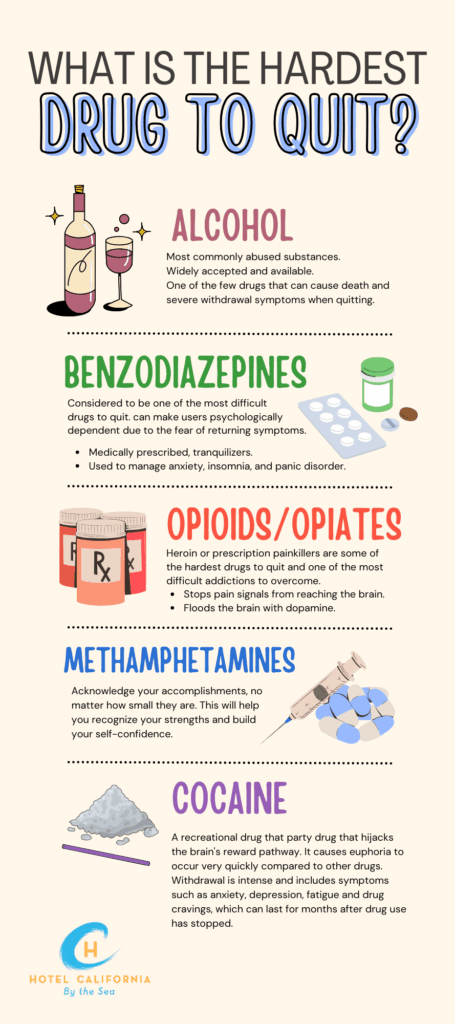
What is the hardest Drug to quit?
The most difficult drugs to quit cause severe physical withdrawal symptoms, intense cravings and altered brain chemistry. However, there is no one exact answer to ‘what is the hardest drug to quit?’ All substances can become addictive and depending on various factors and each individual person, some drugs are more difficult than others to quit.
Addictive drugs create massive amounts of dopamine in the brain, which can cause an intense high. During this surge of dopamine, the brain is unable to manage the amount and so it will cut down on making its own dopamine naturally. This makes it so the body will continue to need dopamine from an outside source: the drug.
Alcohol
Alcohol is one of the most commonly abused substances due to many factors. It is widely available. It is widely accessible. And it is widely accepted culturally and socially. These factors make it very easy for someone to develop an alcohol addiction.
Alcohol is considered a difficult drug to quit because it is often used as a psychological tool and coping mechanism to temporarily manage stress, anxiety and difficult emotions. Alcohol is also one of few drugs in which a person can die from intense and severe withdrawal symptoms when attempting to quit.
Benzodiazepines
Many people consider benzodiazepine prescription medications to be the most difficult drugs to quit. They are medically prescribed tranquilizers that are used to treat and manage conditions such as anxiety, insomnia, and panic disorder. They are sedative medications that can become highly addictive with long-term use. Unfortunately, most benzos are often prescribed for treating chronic conditions, which can result in long-term use.
Benzos are highly effective in managing symptoms of anxiety, including inducing relaxation. This effect of the drug is what can make users psychologically dependent due to the fear of returning symptoms.
Benzos withdrawal is one of the most uncomfortable and dangerous processes to manage and can lead to death if not treated properly. Withdrawal symptoms can include tremors, muscle pain, anxiety, panic attacks, rebound insomnia, seizures and psychosis.
Check Your Insurance Coverage for FREE
Find out if your insurance covers addiction treatment in minutes. We accept most insurance!
Opioids: Heroin
Opioids are legal and illegal substances such as heroin or prescription painkillers. It is one of the hardest drugs to quit and one of the most difficult addictions to overcome. Opioids like heroin create an artificial sense of well-being and can trigger an intense longing to relieve pain with drug use. They work by stopping pain signals from reaching the brain as well as flooding the brain with dopamine.
Heroin can enter the bloodstream very quickly, causing sedation and calm. With long-term use, the brain will remember this sense of ease and happiness and can easily become addicted. When trying to quit, withdrawal symptoms can be very intense and difficult to overcome. Trained professional treatment will be needed when it comes to quitting opioids due to their severe withdrawal that can lead to lifelong complications and even death.
Stimulants: Cocaine and Meth
Cocaine and meth are both stimulant drugs that are highly potent, highly addictive and can be one of the most difficult drugs to quit. Cocaine is a recreational drug that produces a flood of dopamine into the brain, which throws off brain signals and causes euphoria to occur very quickly compared to other drugs. It is considered a party drug that hijacks the brain’s reward pathway and can leave the user feeling deflated and depressed after the rush of high goes away.
Withdrawal from cocaine is intense and includes symptoms such as anxiety, depression, fatigue and drug cravings, which can last for months after drug use has stopped. These feelings, if left untreated, can make it very difficult to fully quit because many people go back to using just to avoid these withdrawal symptoms.
Methamphetamine is a stimulant drug. Legal forms of meth are used to treat conditions such as ADHD. However, under meth abuse, it can lead to alarming conditions such as psychotic symptoms, violent behavior, paranoia, aggressive behavior, mood swings, weight loss, tooth decay and skin infections. Meth also impacts the brain’s reward system, flooding it with dopamine, which leads to dependence and the development of severe withdrawal symptoms.
Nicotine
Many believe nicotine to be the hardest drug to quit. Like other substances, nicotine also impacts the brain’s reward system and associates pleasure with nicotine use. The frequency of use can impact how difficult it is to quit. Nicotine can be consumed multiple times per day, throughout the day, which only works to reinforce the addiction.
Smoking is part of some people’s daily routines and social interactions with others. Many people have developed a ritual around smoking. Nicotine is also used to help cope with stress, anxiety and emotional triggers. This causes a psychological dependence on the drug.
Nicotine is legal and easy to obtain. It is socially acceptable and it is often marketed in a way that misinforms consumers about the dangers of the drug. Tobacco companies have historically engaged in extensive marketing campaigns to glamorize smoking. It is even glamorized in the media and pop culture.
And when a person finally attempts to stop smoking nicotine, they can experience terrible withdrawal symptoms so severe that users will turn back to using just to avoid the discomfort and uneasiness of withdrawal.
Reach out to Hotel California by the Sea
We specialize in treating addiction and other co-occurring disorders, such as PTSD. Our Admissions specialists are available to walk you through the best options for treating your addiction.
Are you ready to quit drugs?
A drug addiction can start with experimental use of a recreational drug in social situations. A drug addiction can start with using prescribed medications for an injury or chronic pain. A drug addiction can start out accidentally and turn into a full-blown medical issue. Any drug can be addictive. Drugs like cocaine, heroin, meth and alcohol are some of the most difficult drugs to quit.
With the help of a professional behavioral treatment program like Hotel California by the Sea, clients can work towards a healthy recovery from substance use disorder. We offer treatment at all levels of care including detox, residential, PHP and IOP. We utilize evidence-based treatment methods such as CBT, DBT and MAT. Hotel California by the Sea is dedicated to helping all clients achieve their goals in sobriety and overcome their addiction.
Additional Resource: SAMHSA National Crisis Helpline
References:
https://zinniahealth.com/substance-use/addiction/hardest-drugs-to-quit
https://rehabclinicsgroup.com/top-5-hardest-drugs-to-quit
https://www.mayoclinic.org/diseases-conditions/drug-addiction/symptoms-causes/syc-20365112
https://journeypure.com/what-are-the-hardest-drugs-to-quit/