
What is Rapid Medical Detox?
Rapid medical detox is a method of detoxification that uses varying levels of sedation to help diminish uncomfortable withdrawal symptoms while using an opioid antagonist. This type of procedure is only used in cases of opioid detox and is not known to be useful for any other type of substance. The goal of rapid medical detox is to initiate detox and remove opioids from the body as quickly as possible.

Detox is typically the first phase of recovery in substance use disorder treatment. The goal of medical detox is to help minimize the discomfort patients may experience as harmful substances naturally leave their system. Once they are free of substances, they are encouraged to move on to more long-term treatment care options.
When it comes to rapid medical detox, rather than letting the process occur naturally, withdrawal is pharmaceutically induced with medications like naloxone that block the ability of opioids to bind with the receptors in the brain. It is frequently known as a shortcut to traditional detox methods.
What does Rapid Medical Detox consist of?
This form of opioid detox is not commonly performed in the US. Rapid medical detox involves two parts. The first part is undergoing anesthesia, so the withdrawal symptoms occur while someone is in a medically induced coma. The second part is using medications such as naloxone to help speed up the detox process and send the body into immediate withdrawal of substances.
This type of procedure is also known as ultra rapid opioid detox and anesthesia-assisted rapid opioid detoxification. The medical procedure quickly removes opioids from the system. It is designed as a shorter detox but is typically much more intense.
Rapid detox allows patients to go through the process painlessly within a very short period of time, which is the biggest selling point of this type of treatment. The entire procedure including hospitalization, usually lasts no more than 48 hours.
This controversial method of detox works to artificially speed up the process compared to traditional detox methods. But it is also associated with many risks including seizures and death.
How does it work?
So how does rapid detox work? Rapid detox takes place in a hospital or clinical setting. The process can take anywhere from 4 to 8 hours in comparison to a traditional detox timeline of about a week.
The patient is put under anesthesia or a medically induced coma. A tube is placed in the patient’s lungs via the windpipe, where there is a machine that will breathe for them while they are under. Opioid antagonist medications such as naloxone or naltrexone will be given to the patient to help quickly reverse the effects of opioids. Meaning, the patient will immediately go into withdrawal from opioids.
During this process, the patient can be given a large single dose of the opioid antagonist in order for the detox to occur quickly. The uncomfortable side effects and symptoms they would typically experience during an intense detox and withdrawal session will not be felt because the patient is unconscious throughout the entire procedure.
The anesthesia sedates the patient and prevents them from having the conscious experience of intense withdrawal symptoms, which typically occur within the first few hours of the detox process. The process is risky and can place high stress and strain on the body. Therefore, throughout the entire process, the patient will be closely monitored by a medical team. They will check on your vital signs such as heart rate, blood pressure and oxygen levels.
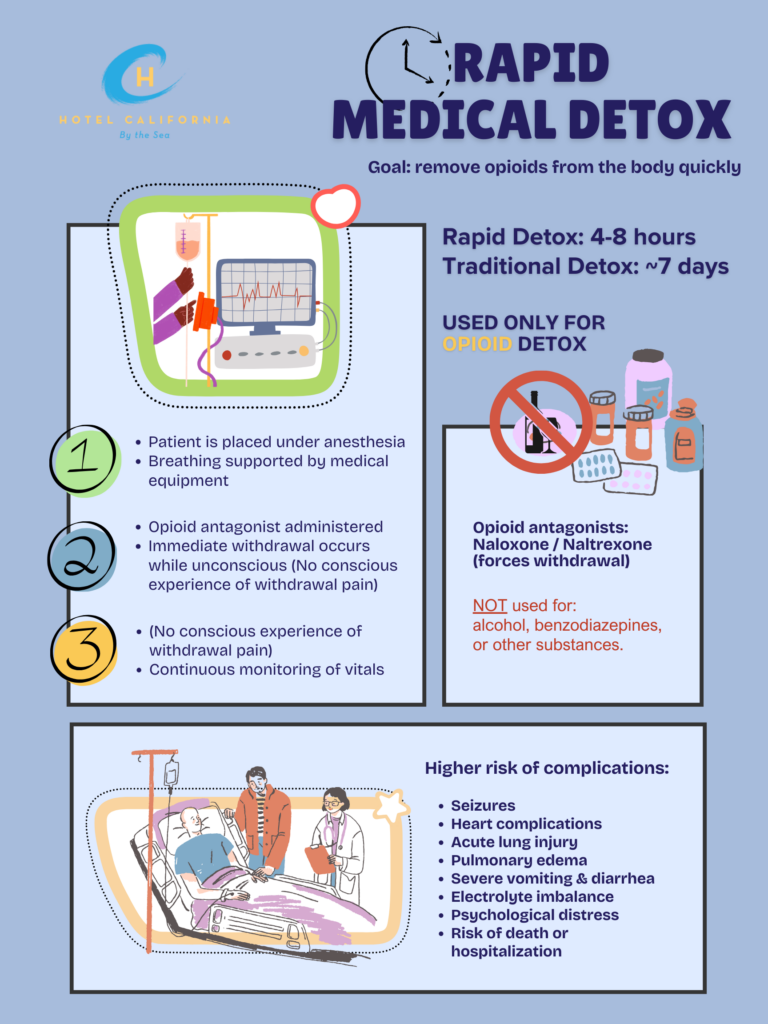
Adverse Side Effects of Rapid Detox
- Severe vomiting
- Diarrhea
- Low blood pressure
- Delirium
- Pulmonary edema
- Diabetic ketoacidosis
- Heart complications
- Trauma
- Psychological distress
- Electrolyte imbalance
- Excessive catecholamine release
- Acute lung injury
- Altered cardiopulmonary functioning
Other Types of Detox Programs and Methods
- Medical Detox – Traditional form of substance detox that provides 24/7 medical supervision while the body naturally removes drugs from the system.
- Detox outpatient – A form of detox from home with regular check-ins from a medical health provider.
- Rapid Detox – An experimental and high-risk form of detox that removes substances from the body quickly under anesthesia.
- Home Detox – A detox method for those with mild and less severe addictions and are able to detox at home without any medical supervision.
Check Your Insurance Coverage for FREE
Find out if your insurance covers addiction treatment in minutes. We accept most insurance!
Rapid Medical Detox vs Traditional Medical Detox
Medical Detox
Medical detox does not rush the body’s natural detoxification process timeline, which can take about a week or so to complete.
Medical detox does not pose any additional risks other than those already present during the withdrawal process.
Relief from withdrawal from medical detox can be provided with medications and natural support.
Medical detox is the gold standard of substance detoxification for opioid use disorder treatment recovery. It has been clinically proven effective.
Most detox is covered by insurance. The cost of medical detox ranges from $1,000 to $5,000.
Rapid Medical Detox
Rapid detox only takes a day or two, during which the opioids can be cleared from the system.
Rapid detox can put a person at risk for more severe withdrawal symptoms because a higher dose of opioid antagonist is prescribed. It comes with a high risk of death or hospitalization compared to traditional medical detox.
Rapid detox provides sedation during the procedure, which increases comfort during severe withdrawal symptoms. However, it does place more stress on the physical body during this procedure.
There is not enough evidence to support the idea that rapid detox is more effective than the traditional method of detoxification.
Rapid detox is considered experimental, making it more expensive and usually not covered under insurance because of the limited evidence supporting its effectiveness. The cost of rapid detox ranges anywhere from $10,000 to $20,000.
Risks of Rapid Medical Detox
Most medical professionals do not recommend rapid detox. It is generally considered an experimental treatment that has not gained FDA approval. Any procedure done under anesthesia can cause risks. There are also many risks that come with artificially accelerating detox because it can place more stress and strain on the body than necessary.
According to the CDC, rapid detox is not safe. There is still very little evidence that supports its effectiveness and it has been known to lead to more relapses than recoveries.
If it is so dangerous, why do people decide to do rapid detox? Some people are motivated by fear of withdrawal symptoms and would rather be unconscious than awake to experience them. Others are in a hurry to get back to their normal lives and believe a rapid detox will help them achieve their recovery faster. Despite its accelerated nature in allowing the body to be rid of drugs more quickly, it might not be worth the risks associated with this procedure.
Reach out to Hotel California by the Sea
We specialize in treating addiction and other co-occurring disorders, such as PTSD. Our Admissions specialists are available to walk you through the best options for treating your addiction.
Treatment for Opioid Use Disorder
Medical detox is often the first step in the recovery process. Depending on the severity of the addiction, detoxing substances from the body can be a painful and long process. Rapid medical detox can provide a quick and painless process without experiencing withdrawal symptoms. However, it is a dangerous process and it is generally not recommended by addiction treatment specialists.
Behavioral health treatment programs like Hotel California by the Sea offer traditional medical detox methods that have been clinically proven as effective in the addiction recovery process. We offer treatment at all levels including residential, PHP and IOP. We utilize evidence-based methods such as CBT, DBT and MAT. Hotel California by the Sea is dedicated to helping clients reach their goals in sobriety and overcome their addiction.
References:
https://www.addictioncenter.com/treatment/rapid-detox
https://unitedrecoveryproject.com/rehab-blog/rapid-detox
https://anrclinic.com/anr-vs-rapid-detox/
https://www.columbusrecoverycenter.com/treatment-programs/rapid-detox/
https://www.bicyclehealth.com/opioid-education/rapid-detox