
Brain Zaps: Causes, Symptoms, and Treatment Guide
Brain zaps are brief, electric shock-like sensations that some people describe as a jolt or buzz sensation inside the head. It typically occurs during antidepressant discontinuation syndrome. A cluster of symptoms can occur when a person stops using or drastically reduces the dosage of selective serotonin reuptake inhibitors (SSRIs) or serotonin norepinephrine reuptake inhibitors (SNRIs). SSRIs and SNRIs are the most common types of antidepressants.

The term brain zaps is informal and was coined by those who experience it. However, it has now become widely recognized in current clinical literature. The clinical explanation for the shiver or electric shock-like sensation is caused by a sudden reduction in serotonergic activity that disrupts normal electrical signaling patterns in the brain. This causes the brain to go into a shock as it tries to rebalance itself.
Brain zaps most often occur with antidepressant dose changes, missed doses or stopping medication use too quickly or abruptly. In a 2020 review, researchers found that about 42% of 780 people who had used antidepressants reported experiencing brain zaps.
What are Brain Zaps?
Brain zaps are sensory disturbances that feel like a brief electrical pulse in the head that can sometimes spread to the neck or body. They are not a formal diagnosis. They are just a symptom that people report experiencing, especially during antidepressant discontinuation or withdrawal.
They are often described as a shock or buzz originating in the head. Others describe it as a sharp crackling or flickering sensation like static discharge. The sensation is very quick and can be accompanied by a brief visual disturbance, flash of light or momentary feeling of dizziness.
For some, brain zaps are mild and can pass within a second. For others, the repeated zaps can interfere with concentration, sleep, driving or daily routines. The sensation of brain zaps can be unsettling, but in many cases it is linked to medication changes and will improve over time with professional medical guidance.
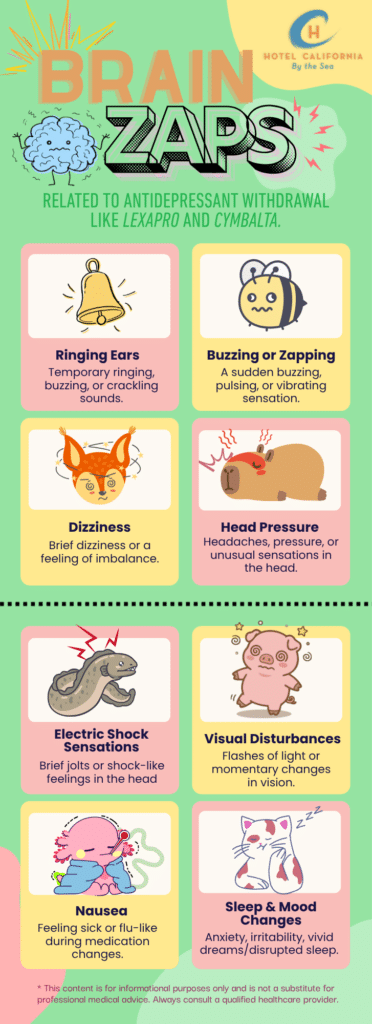
Common Brain Zaps Symptoms
- A quick shock-like sensation in the head
- Buzzing or pulsing
- Snapping feelings
- Dizziness or vertigo during the brain zap sensation
- Nausea or flu-like feeling during withdrawal
- Headache, head pain or pressure
- Ringing in the ears
- Vivid dreams or disrupted sleep
- Irritability or agitation
- Anxiety
- A whoosh or crackle sound in the head
- Brief changes in consciousness like disorientation or confusion
- Sensation as though the brain is skipping a beat
- Momentary euphoria sensation
- Seeing flashing lights
Why do Brain Zaps occur?
Scientists don’t know exactly how brain zaps happen. But it is generally linked to antidepressant withdrawal symptoms or a reduction in medication dosage. They happen most often when the nervous system is adjusting after a change in medication that affects serotonin, norepinephrine or other related neurotransmitter activity in the brain. The exact mechanisms are not known.
But the patterns of when they can occur include sudden stopping, missed doses, rapid tapering, medication switches or anything that could temporarily produce withdrawal symptoms. They are uncomfortable, but temporary symptoms of drug discontinuation and not a sign of neurological damage.
In some extreme cases, some experience brain zaps for several years before they go away. However, most people have them resolved within a few weeks to a month or so when their body has fully adjusted to the antidepressant medication.
Brain zaps, brain shivers, brain shocks or head shocks are all common names given to the phenomenon. Triggers for brain zaps include stress or anxiety, tiredness or insomnia, bright lights or moving the eyes or head too quickly from side to side.
The most common events that can trigger brain zaps include:
- Stopping antidepressant medications suddenly. Abrupt discontinuation gives the brain and body less time to adjust.
- Missing medication doses. Some medications can leave the body more quickly than others so a missed dose can be felt much sooner.
- Tapering too quickly. A taper for one person may be different for another person.
- Switching medications. Moving from one antidepressant to another can create a temporary gap or overlap effect if it is not carefully managed.
Check Your Insurance Coverage for FREE
Find out if your insurance covers addiction treatment in minutes. We accept most insurance!
Antidepressant Withdrawal
Brain zaps occur with several antidepressant classes, with the most popular being SSRIs and SNRIs. Symptoms can be short-lived and mild, while others experience more severe and longer-lasting effects.
Lexapro Brain Zaps
Lexapro is the brand name for escitalopram, an SSRI antidepressant medication. Lexapro brain zaps are among the most commonly searched experiences online. This also reflects the medication’s widespread use and frequency with which people encounter this phenomenon when using the medication. The label on the medication advises a gradual dose reduction whenever possible and lists brain zaps as a possible symptom of discontinuation.
Cymbalta Brain Zaps
Cymbalta is the brand name for duloxetine, an SNRI antidepressant medication. This medication impacts both serotonin and norepinephrine pathways; tapering plans should be individualized. Discontinuation symptoms are often discussed because Cymbalta is known to result in withdrawal reactions if tapering is not medically and professionally managed.
What can help Brain Zaps go away?
There is no official treatment for brain zaps. But the most helpful treatment to help manage them will depend on the cause. If the shocks started after a missed dose, dose reduction or stopping an antidepressant medication, the next step is to contact your medical provider. Your healthcare professional can help you discuss options such as a gradual taper, temporary return to a previous dose or changing the taper schedule. There is no one-size-fits-all remedy.
- Keep medication timing consistent. In order to avoid missing a dose, take medication exactly as directed and set reminders so you do not miss a dose.
- Avoid abrupt changes. Do not stop antidepressants suddenly unless a clinician or healthcare provider tells you to do so for safety reasons.
- Limit alcohol and recreational substances. They can worsen sleep, dizziness and mood stability.
- Avoid caffeine. Too much can cause jitteriness or anxiety in sensitive people.
- Move gently. Light movements and daily exercise.
- Manage your sleep. Poor sleep and insomnia can make sensory symptoms feel more intense and harder to tolerate.
- Switch medication. Talk to your provider about switching to a more tolerable medication or a longer-acting medication.
Reach out to Hotel California by the Sea
We specialize in treating addiction and other co-occurring disorders, such as PTSD. Our Admissions specialists are available to walk you through the best options for treating your addiction.
Treatment for Substance Use Disorder
Brain zaps can feel scary. But they are often a recognized symptom linked to antidepressant withdrawal. Experiencing withdrawal doesn’t necessarily mean a person has become addicted to the medication. However, there are some cases in which an addiction to antidepressants can occur and professional interventions are needed.
Hotel California by the Sea provides treatment for addiction to prescription medications. We provide treatment at all levels of care including detox, residential, PHP and IOP. We utilize evidence-based methods such as CBT, group therapy and EMDR therapy. Hotel California by the Sea is dedicated to helping clients reach their goals in sobriety and overcome their addiction.
References:
https://www.medicalnewstoday.com/articles/brain-zaps
https://lifestance.com/blog/brain-zaps
https://resources.healthgrades.com/right-care/migraine-and-headache/brain-zaps
https://www.health.com/condition/depression/brain-zaps
https://www.psychologytoday.com/us/blog/creativity-way-life/201107/fireworks-or-brain-zaps