
Managing Prozac Withdrawals: Symptoms, Duration, Solutions
Prozac withdrawals can happen when a person abruptly reduces or stops taking the antidepressant medication. In fact, more than half of people who quit antidepressants tend to experience withdrawal symptoms. Prozac, like many other antidepressants, is one of the most commonly prescribed medications in the U.S.

Many antidepressant medications like SSRIs and SNRIs can cause discontinuation syndrome when users decrease dosage or quit. One of the main reasons why long-term antidepressant use is so common is because people are afraid to stop taking them due to intense withdrawal or a return of symptoms of their depression and anxiety.
Fortunately, the likelihood of experiencing intense withdrawal symptoms with Prozac is fairly low compared to other selective serotonin reuptake inhibitors (SSRIs). Because the medication stays in the body for so long and is able to slowly expel itself from the body naturally, some people might not need to taper off the medication. Despite the lower risk, withdrawals from Prozac are still possible and can be both physical and emotional.
What are Prozac Withdrawals?
Prozac withdrawals are a cluster of symptoms that can appear after lowering the dose, missing doses, or stopping the antidepressant medication. It is an SSRI and official patient guidance recommends users not to stop it suddenly due to the risk of withdrawal symptoms.
Withdrawal is not the same as addiction. Antidepressants can cause physical dependence, but they typically do not create a pattern of craving and compulsive use associated with addiction. But for some people, SSRI withdrawal symptoms are temporary, mild and short-lived. For others, they can feel disruptive and impact daily life.
Prozac has a much longer half-life compared to other SSRIs. It has a half-life of about 4 to 6 days. It can take up to 25 days for the medication to be fully removed from the system. The slower and more gradual drop in medication in the system can reduce the chances of experiencing abrupt withdrawal symptoms. In general, withdrawal can begin up to 10 days after a decrease in dosage or discontinuation of medication.
A 2020 study recently found that severe withdrawal symptoms are less common with Prozac in comparison with other antidepressants. But if withdrawal does occur, it can typically last longer.
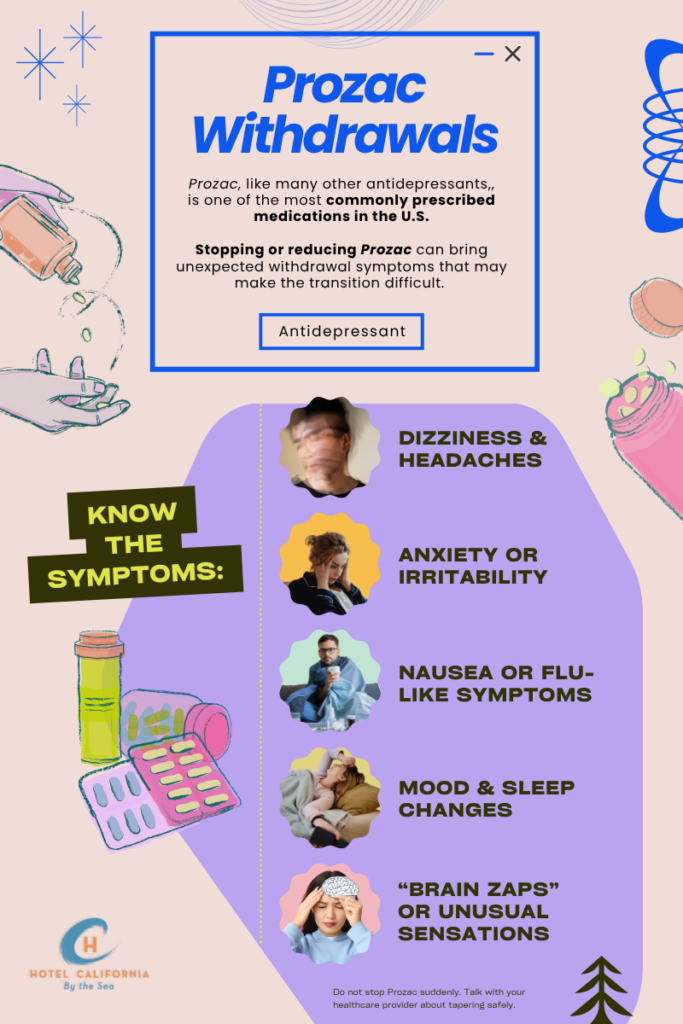
Common SSRI Withdrawal Symptoms
Withdrawal symptoms from SSRI medication can vary. Some people notice a few uncomfortable days, while others experience symptoms that come and go during a longer taper. When it comes to Prozac, withdrawal symptoms can appear later and last longer, which can sometimes lead to confusion with relapse of previous symptoms. Typically, withdrawal tends to be mild and only lasts a few weeks.
Typical withdrawal symptoms from antidepressants, including Prozac, can include:
- Mood changes – anxiety, mania, mood swings, agitation or emotional sensitivity
- Sleep issues – insomnia, nightmares, vivid dreams or restless sleep
- Flu-like symptoms – headaches, sweating, chills, muscle aches and nausea
- Gastrointestinal issues – upset stomach, changes in appetite or diarrhea
- Sensory changes – dizziness, lightheadedness, ringing in the ears and brain zaps
- Disruption in focus – brain fog, difficulty concentrating, memory lapses or feeling mentally slow
- Motor control – tremors, muscle tension, restless leg or difficulty with speech
- Blood vessel control – flushing and sweating
Check Your Insurance Coverage for FREE
Find out if your insurance covers addiction treatment in minutes. We accept most insurance!
When is it withdrawal and when is it a relapse of symptoms?
Withdrawal symptoms can overlap with symptoms of depression, anxiety and the original condition being treated by the antidepressant medication. Withdrawal symptoms will often appear after a dose reduction or stopping. Relapse of symptoms tends to occur more gradually and resemble the person’s earlier pattern of illness.
How do you know if it’s withdrawal or depression? Symptoms of Prozac withdrawal can be difficult to differentiate from symptoms of relapse depression. Discontinuation symptoms can include physical effects that aren’t commonly found in symptoms of depression. This includes dizziness, flu-like symptoms and experiencing abnormal sensations like brain zaps.
Discontinuation symptoms tend to resolve as the body begins to adjust to the medication. While in depression, the symptoms emerge slowly and only continue to get worse and more persistent.
Withdrawal symptoms can disappear quickly when the body adjusts to the correct dose of antidepressant, while treatment for depression will often take weeks to go into full effect. The symptoms of withdrawal might be new or different, whereas depression relapse symptoms will feel the same as they did before you started medication.
Timeline: How long do Prozac Withdrawals last?
How long Prozac withdrawals last depends on the dose, how long the person has taken the medication, how quickly the dose changes, individual metabolism and whether the symptoms are withdrawal or relapse. Generally, withdrawal symptoms can last up to 2 weeks.
- Week 1. Early symptoms of withdrawal will begin within a few days after full cessation of the drug. Some people actually feel very little change because the medication still remains in the body for a while.
- Week 2. Symptoms like nausea, headaches and brain zaps can occur.
- Week 3. Withdrawal symptoms will peak and can include anxiety, insomnia and mood swings.
- Weeks 4 -8. Symptoms will begin to ease. Some may linger for a few weeks or months.
Practical ways to manage mild Prozac Withdrawals
Medication planning is only one part of managing withdrawals from Prozac and other antidepressant medications. Helpful strategies include:
- Create a healthy sleep schedule. Go to bed and wake up around the same time even on weekends to create a routine sleep schedule.
- Reduce avoidable stimulants. Too much caffeine can often worsen anxiety and jitteriness. This can disrupt restful sleep.
- Diet. Eating regularly and having a healthy diet can be helpful. Skipping meals will only worsen dizziness, nausea and low energy.
- Movement. Walking, stretching or light physical activity can help mood and restlessness without overstimulating your body.
- Support. Tell a friend, partner or family member who can help notice changes and encourage you to seek professional care if symptoms escalate.
- Professional help. Speak with your healthcare provider about changing your medication, dosage or tapering off your antidepressant.
Reach out to Hotel California by the Sea
We specialize in treating addiction and other co-occurring disorders, such as PTSD. Our Admissions specialists are available to walk you through the best options for treating your addiction.
Treatment for Substance Use Disorder
Prozac withdrawals are often mild and manageable. The key is to separate the medication withdrawal from symptom relapse. Professional behavioral health programs like Hotel California by the Sea provide support for prescription medication addiction. We offer treatment at all levels of care, including detox, residential, PHP and IOP. We utilize evidence-based methods such as CBT, DBT and family therapy. Hotel California by the Sea is dedicated to helping clients reach their goals in sobriety and overcome their addiction.
References:
https://www.verywellmind.com/prozac-withdrawal-symptoms-timeline-and-treatment-4766892
https://www.medicalnewstoday.com/articles/prozac-withdrawal
https://www.health.harvard.edu/diseases-and-conditions/going-off-antidepressants
https://recovered.org/antidepressants/fluoxetine-prozac/withdrawal