
What is the relationship between Alcohol and Hormones?
Is there a relationship when it comes to alcohol and hormones? How does alcohol use affect hormones? How do hormones affect our daily lives? It turns out alcohol can have a profound effect on hormones. Alcohol abuse can be linked to hormonal disturbances that can result in stress intolerance, reproductive dysfunction, thyroid problems, immune abnormalities, psychological disorders and behavioral disorders.
Hormonal imbalance can be dangerous to our health. It impacts our overall well-being and even our quality of life. When alcohol enters the body, it passes through the small intestine and into the bloodstream. In as little as five minutes, the alcohol can travel to your brain and begin its disruption to chemical messengers that control multiple functions of the body. These chemical messengers are better known as hormones.
What are Hormones?
Hormones are chemical messengers that help control and coordinate various functions of the body’s tissues and organs. When a hormone system is working properly, a precise amount of hormones is released at an exact time. The body’s tissues then respond to those messages accordingly.
Our body has different types of hormones that perform different functions: estrogen, progesterone, testosterone, insulin and cortisol. Hormones impact metabolism, the regulation of our ability to manage stress, energy levels, electrolyte balance, growth and development as well as reproduction. They play a significant role in almost all aspects of our health and our lives.
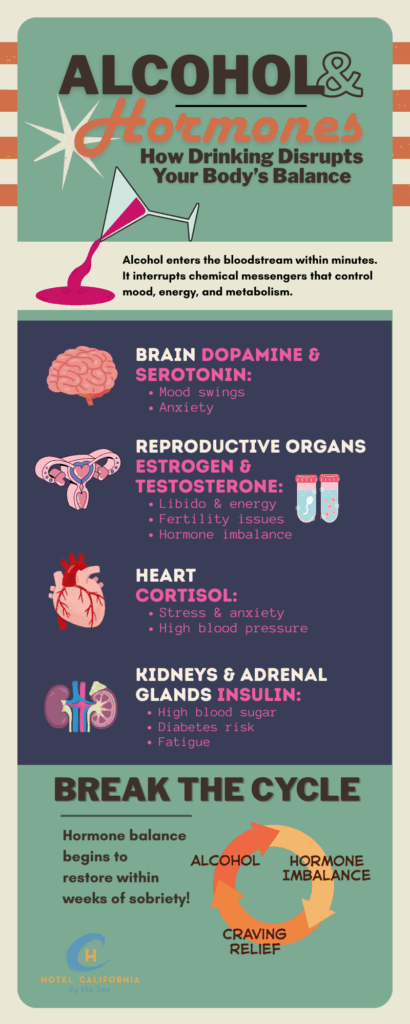
Hormones affected by alcohol abuse:
- Feel good hormones – dopamine, serotonin and oxytocin
- Stress hormone – cortisol
- Sex hormones – estrogen and testosterone
- Hormones that regulate blood sugar – insulin
- Hormones that are linked to bone growth
Hormones are produced and released by the endocrine system. This system in the body ensures proper communication between various organs. It interfaces with the immune and nervous system and is an essential part of maintaining a constant internal environment. Every organ and cell in the body connects with the endocrine system.
The endocrine system is essential in enabling our body to respond appropriately to changes in internal or external environments. It also allows our body to efficiently respond to stress and injury. It controls the stress response pathways and regulates the body’s physiological processes. These include metabolic processes, cardiovascular processes and immune functions.
When alcohol is abused, it can disrupt the endocrine system and some of the body’s most critical operating systems.
The relationship between Alcohol and Hormones
- Excessive alcohol use can raise cortisol levels leading to stress, weight gain and sleep problems.
- Alcohol abuse can impact insulin and thyroid functioning, which can lead to an increased risk of diabetes and metabolic issues.
- Alcohol use can lower testosterone levels in the body. It interferes with the way your body produces testosterone. This can lead to reduced muscle mass, reduced energy levels, impact mood and lower sex drive.
- Alcohol abuse can increase estrogen levels in women. This causes hormonal imbalances, leads to weight gain, mood swings, and an increased risk of estrogen-based cancers like breast cancer. It can also mess with a woman’s menstrual cycle, making her periods irregular, which can impact fertility and libido.
- Alcohol abuse can cause your blood sugar levels to drop too low or spike too high. This impacts your liver’s ability to manage blood sugar.
Check Your Insurance Coverage for FREE
Find out if your insurance covers addiction treatment in minutes. We accept most insurance!
Negative Impact of Alcohol Abuse on Hormones
Blood Sugar Levels
The main energy source for all of the body’s tissues and organs is sugar or what is known as glucose. The body gets glucose from food and breaks down glycogen stored in the liver. Blood sugar levels are controlled by insulin and glucagon, hormones that are produced by the pancreas. They work together to maintain a balance of glucose in the blood. Insulin lowers glucose levels while glucagon raises glucose levels.
Your blood sugar works to distribute energy from the food you eat to the rest of your body. When alcohol is added to the mix, it increases the presence of glucose in the body, causing blood sugar levels to spike and raising the risk of developing type 2 diabetes.
Reproductive Functions
Hormones are responsible for many aspects of human reproductive functions. It can impact male sexual behavior, maturation and sperm development. In females, hormones impact fertility, sexual maturation, distribution of body hair, regulate the menstrual cycle and maintain pregnancy.
When alcohol is excessively consumed, it can impact all of these functions, causing altered normal sperm structure and impaired sexual and reproductive functions. It can reduce male testosterone levels and even cause male breast enlargement. In females, it can lead to overproduction of estrogen, which increases the risk of cancers such as breast cancer and ovarian cancer.
Growth and Bone Structure
Hormones play an important role in maintaining adequate calcium levels in the body, which is necessary for growing strong bones and teeth. Alcohol consumption interferes with these growth hormones, adversely affecting bone metabolism due to nutritional deficiencies.
It can also hinder vitamin D metabolism, inhibit the activity of the formation of bone cells and limit the absorption of dietary calcium. This means stunted growth, weaker bones and a higher chance of disease like osteoporosis.
Cortisol
Alcohol use initially lowers cortisol levels temporarily. That’s why people feel a sense of temporary anxiety relief when drinking. But over time with continued alcohol use, cortisol levels will increase. It is especially common during alcohol withdrawal. Elevated levels of cortisol can increase blood pressure, increase stress and anxiety, cause digestive issues, cause mood swings and poor sleep. Imbalance in cortisol levels can also lead to stunted bone growth and bone deterioration.
Adrenal Glands
The adrenal gland produces a steroid hormone that helps you regulate metabolism. It helps support blood pressure as well as your immune system. Problematic alcoholic drinking behaviors suppress the functions of the adrenal glands and can cause adrenal fatigue, which decreases the body’s ability to fight off disease. It can cause an increase in food cravings leading to weight gain as well as an increase in blood pressure.
Reach out to Hotel California by the Sea
We specialize in treating addiction and other co-occurring disorders, such as PTSD. Our Admissions specialists are available to walk you through the best options for treating your addiction.
Treatment for Alcohol Use Disorder
One of the main reasons why people enjoy the feeling of alcohol is the temporary release of the feel good hormones like dopamine and serotonin. Unfortunately, their effects are very short-lived and with constant alcohol abuse, it can negatively impact other important hormones.
But with the cessation of alcohol, it is possible for hormones to balance out. In some studies, patients saw improvements within a few weeks of alcohol use disorder treatment. Others saw improvement in their appetite, which is associated with the thyroid. Mood and stress-related hormones can take longer to improve and rebalance and can take months and up to a year to return to normal.
Hotel California by the Sea provides a comprehensive treatment plan for those with alcohol use disorder. We offer treatment at all levels of care including detox, residential, PHP and IOP. We utilize evidence-based treatment methods such as CBT, DBT and EMDR therapy. Hotel California by the Sea is dedicated to helping clients reach their goals of sobriety and overcome their addiction.
References:
https://pmc.ncbi.nlm.nih.gov/articles/PMC5513689
https://www.verywellmind.com/alcohol-and-hormones-66570
https://riahealth.com/blog/alcohol-and-hormones
https://pmc.ncbi.nlm.nih.gov/articles/PMC3767933
https://www.mariongluckclinic.com/blog/hormones-and-alcohol-could-reducing-alcohol-help-with-hormone-balancing.html
https://www.mariongluckclinic.com/blog/how-does-alcohol-affect-your-hormones.html
https://www.ambrosiatc.com/alcohol-and-hormones/